

























































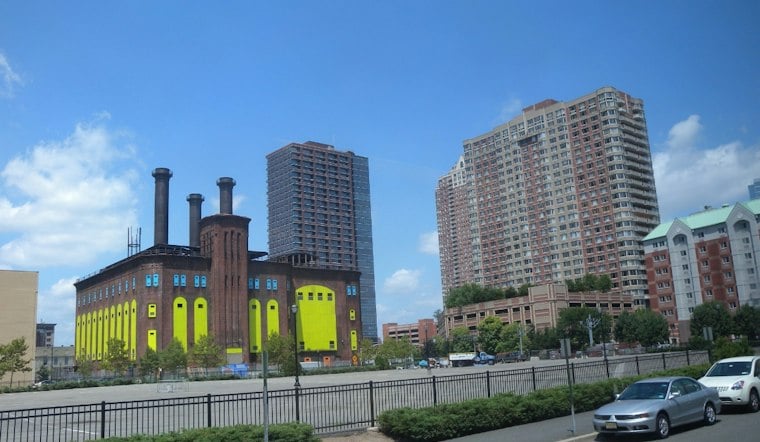
Jersey City is officially looking for someone to take on one of its most stubborn real estate puzzles: the century-old H&M Powerhouse, a hulking brick relic that has sat empty downtown for decades and is now, by the city's own admission, structurally unstable. The Jersey City Redevelopment Agency posted a request for proposals seeking a long-term redeveloper for the site, while separately seeking bids for a stabilization project.
According to Jersey Digs, the Powerhouse was declared unstable this year after visible structural cracks developed, and the JCRA's solicitation asks developers to submit plans that preserve the existing building rather than tear it down. The agency's formal RFP, posted September 16, covers two municipal tax parcels at 350 Washington Street and 80 Bay Street, inside the Powerhouse Arts District Redevelopment Area, as detailed by the Jersey City Redevelopment Agency. The deadline for full bids is 4 p.m. on December 3, with questions from potential developers due by October 27, and each proposal must include a non-refundable $1,500 submission fee, per Jersey Digs.
A Century of False Starts Finally Clears Title
The building's path to this point has been anything but straightforward. Opened in 1908, the H&M Powerhouse supplied coal- and steam-generated electricity to the newly built Hudson Tunnels, which eventually became the PATH system linking New Jersey and New York City by train, Jersey Digs reports. But the plant only generated power for 21 years before it was decommissioned in 1929, after which the Hudson & Manhattan Railroad repurposed the cavernous interior as equipment storage, according to Wikipedia.
Ownership complications dragged on for decades. Under a property swap finalized in 2011, the Port Authority of New York and New Jersey agreed to transfer its 55% stake in the Powerhouse to Jersey City in exchange for a parcel to build a replacement electrical substation, the same Wikipedia entry notes. Then-mayor Steven Fulop filed a lawsuit that led to a 2018 settlement in which the Port Authority agreed to convey the entire property to the Jersey City Redevelopment Agency once the new substation was complete, Jersey Digs reports. The Port Authority broke ground on that substation in 2023 and is now in the final phases of construction.
Racing To Stabilize A Building Already Scarred By Repairs
While the city solicits long-term redevelopment plans, a separate and more urgent effort is underway just to keep the structure standing. In October, the JCRA issued a request for bids for a 2026–2027 Hudson and Manhattan Powerhouse Stabilization Project, seeking contractors to install physical net stabilization and structural monitoring systems, with bids due October 29, according to a solicitation posted on Starbridge. It is not the first time engineers have had to intervene: during earlier stabilization work around 2009 and 2010, engineers determined the Powerhouse's original steel smokestacks were structurally unsalvageable and removed them, a change that altered the building's skyline silhouette from what longtime residents remember.
The building itself is no ordinary warehouse. Designed by architect John Oakman of Robins & Oakman and completed in 1908, the 46,000-square-foot Romanesque Revival structure was built with 28-inch-thick exterior brick walls and windows spanning 1,300 square feet each, among the largest on the East Coast at the time, per Preservation New Jersey. The building was added to the National Register of Historic Places on November 23, 2001, in recognition of its architectural, engineering, and transportation significance.
What The City Wants From A Developer
The JCRA's RFP lays out a fairly specific wish list. The agency aims to maximize the site's potential while benefiting the surrounding downtown neighborhood, and it will consider acquisition either through direct sale or a ground lease under a redevelopment agreement, Jersey Digs reports. Developers can submit proposals in person, by mail, or by email, and the agency says it prefers plans that keep development within the Powerhouse's existing historic footprint, though it will still consider proposals requiring amendments to the Powerhouse Arts District Redevelopment Plan. A selection date for the eventual redeveloper has not yet been set, according to the RFP.
Historic preservation advocates have long focused on protecting older buildings. Large-scale historic preservation projects require substantial resources, creating a familiar tension between preservation goals and redevelopment pressures.
There is precedent for success, though it comes with trade-offs. A comparable early 20th-century rail powerhouse in Long Island City, built to serve Pennsylvania Station's rail lines, was successfully converted into luxury residential units — though its original smokestacks were also removed during that redevelopment. For a building that has already lost its smokestacks and sat dormant for nearly a century, the Long Island City example offers a glimpse of what adaptive reuse could look like for Jersey City's own downtown landmark.





