

























































Jersey City is starting construction this week on a new kind of intersection fix designed to force drivers to slow down and take tighter turns at 17 of the city's most dangerous crossings. The work begins immediately, weather permitting, at the first three locations, with the remaining 14 to follow this fall and into spring 2027.
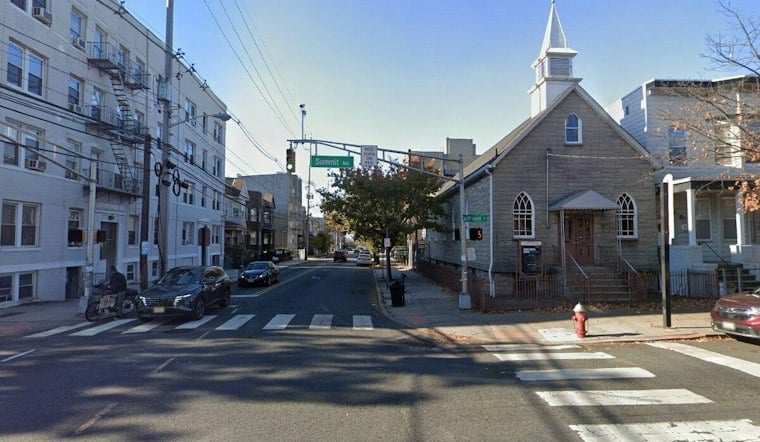
The program, known as turn hardening, was announced by Mayor James Solomon as the next phase of Jersey City's Vision Zero initiative, according to Hudson County View. Solomon said people have been hurt and killed at the targeted intersections, often because drivers turned too fast, and pledged that the city will continue building the treatments until all 17 locations are complete. The first three sites getting work this week are Central Avenue and Congress Street, Summit Avenue and Leonard Street, and Summit Avenue and Manhattan Avenue.
Why Turning Vehicles Are the Target
Turn hardening relies on physical traffic-calming elements, including speed humps and fixed barriers placed at intersection corners, to require drivers to make slower, tighter turns rather than sweeping wide through crosswalks. Wide, fast turns put drivers into direct conflict with people on foot or on bikes, while slowing those turns gives drivers more time to see pedestrians and cyclists before they cross paths. The city says hardened intersections let drivers still reach their destinations, just at slower turning speeds and with better visibility of people in the crosswalk.
Jersey City Department of Infrastructure Director Andy Kaplan said left-turn crashes are among the leading causes of pedestrian deaths and injuries on city streets, and that turn hardening is an established tool for addressing them. “We're using data to reduce the risk of another death on our streets,” Kaplan said, per the report. The city identified the 17 intersections as high-crash locations through its Vision Zero program, and officials say the selected sites represent a variety of intersection types across Jersey City.
The Numbers Behind the Push
Between 2019 and 2026, Jersey City recorded 1,824 left-turn or right-turn crashes involving injury or death, including seven fatal crashes and 80 crashes with suspected serious injuries, the same reporting shows. City officials have separately said Jersey City logged seven traffic deaths and 38 serious traffic injuries in 2025 alone, according to News 12 New Jersey. Solomon has described the turn-hardening effort as a first-of-its-kind program in New Jersey and among the leading efforts of its kind globally, saying the performance of the initial designs and devices will guide how the program expands in future years.
The remaining 14 intersections slated for treatment span neighborhoods across the city, including several stretches of Martin Luther King Drive at Warner Avenue, Union Street, Claremont Avenue and Ege Avenue. Also on the list are West Side Avenue and Boyd Avenue, Communipaw Avenue and Mallory Avenue, Central Avenue and Jefferson Avenue, Sip Avenue and Summit Avenue, Montgomery Street and Barrow Street, Christopher Columbus Drive and Warren Street, Marin Boulevard and 6th Street, Manila Avenue and 6th Street, Jersey Avenue and 6th Street, and Ocean Avenue and Danforth Avenue. City officials say they will provide updates as additional locations are scheduled.
Part of a Bigger Quick-Build Push
The turn-hardening rollout builds on a broader 2026 quick-build safety plan that calls for roughly 100 projects at more than 80 locations citywide, after the city evaluated more than 400 requested sites and prioritized the most dangerous ones first, according to NJ.com. That plan includes curb extensions at more than 30 intersections, rectangular rapid-flashing beacons at nine crossings, upgrades to more than 30 traffic signals, and an evaluation of 30 streets for all-way stop signs, with more than 15 expected to get them. The city has set aside $750,000 in its capital budget for signal maintenance, striping contracts and quick-build projects, and is also studying a citywide 20-mph speed limit.
One early example of the broader approach sits at Kensington Street and Bergen Avenue near P.S. 17, where the city installed an all-way stop along with painted bump-outs and plastic bollards to narrow the roadway, officials have said. Jersey City's traffic enforcement bureau, which began operating in May, has also played a role: Solomon has said summonses rose 300% within a month of the bureau's launch while crashes declined over the same period. Neighboring Hoboken, meanwhile, has gone nine years without a traffic fatality on its streets since adopting its own Vision Zero program, Mayor Emily Jabbour has said, a benchmark Jersey City officials have pointed to as they expand their own safety efforts, as reported by Streetsblog USA.





