

























































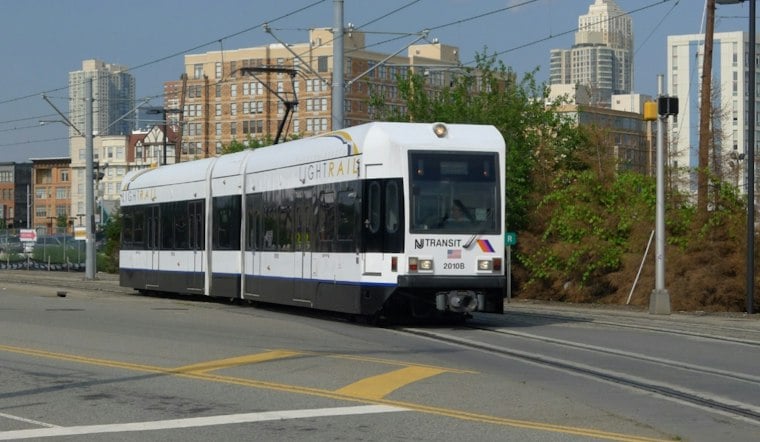
Jersey City's Planning Board voted 5-0 Tuesday to approve sweeping amendments to the transportation component of the city's master plan, the first update to that section since 2013. The plan touches nearly every corner of the city's transit network, from a proposed bus rapid transit line on John F. Kennedy Boulevard to a long-sought light rail infill station and a parking system overhaul that includes camera-based enforcement.
The vote capped more than a year of public outreach and planning led by the city's Department of Infrastructure, which was created in May 2022 to consolidate traffic engineering, transportation planning, architecture, engineering and sustainability functions under one roof, according to the City of Jersey City. As reported by Hudson County View, the department's director, Andy Kaplan, recused himself from the vote because he and his department helped develop the application.
Board chair Vidya Gangadin presided over the unanimous approval, while Ward E Councilwoman Eleana Little was absent from the vote, per the same account. Eli Guseman, an infrastructure department transportation planner who served as project manager for the study, told the board that the effort grew out of a need to bring the city's scattered transportation planning efforts under one cohesive vision. Jersey City has been developing the plan since summer 2025 and released the final version in June 2026, the outlet reported.
What Residents Told Planners They Wanted
Guseman said public outreach formed the basis of the study, with survey respondents favoring more transit and walking investment while opinions were more mixed on biking infrastructure. Community members told planners they wanted safer streets, better transit connectivity and more equitable transportation investments, and many called for stronger police and parking enforcement to address aggressive driving and illegal parking, according to the report.
Guseman also met with business improvement districts and community associations, and folded advocates and residents into stakeholder meetings that included the Municipal Utilities Authority, the outlet noted. He separately met with PATH, NJ Transit, the New Jersey Department of Transportation, Hudson County and neighboring municipalities to align the plan with regional priorities. Without new investment, the report found, the city's current transportation system would begin reaching its limits.
Bus Rapid Transit and a Long-Awaited Light Rail Stop
Among the plan's headline items is bus rapid transit along John F. Kennedy Boulevard, an effort Craig Guy and the Hudson County Board of Commissioners have advanced at the county level. Hudson County commissioners approved $150,000 in January 2026 for a feasibility study on the corridor connecting Jersey City and Bayonne, followed by a county-hosted public open house this month, according to Hudson County View.
Jack McKee, Hudson County's Complete Streets campaign manager, called the presentation “good work condensed into 15 minutes” and endorsed both the bus rapid transit plan and a proposed light rail station at 18th Street, per the meeting coverage. That infill station would fill a long-standing transit gap between Downtown Jersey City and Hoboken, an idea first floated by the private Holland Park development proposal near 18th Street and Jersey Avenue in 2021, according to Jersey Digs.
Greenways Face Competing Visions
The plan supports converting elevated rail corridors into greenways, naming both the Bergen Arches and the 6th Street Embankment as examples. The Embankment path gained legal footing after the City Council reviewed a 139-page settlement in October 2025 resolving decades of litigation, clearing the way to convert seven elevated rail blocks into park space and an East Coast Greenway link, Hudson County View reported.
The Bergen Arches corridor, however, remains contested. NJ Transit proposed a $22 million bus transitway along the abandoned rail corridor between Secaucus Junction and Jersey City in January 2026, a plan that has drawn scrutiny from local advocates who want the site preserved as an urban nature trail, according to Jersey Digs. The transportation plan also calls for extending light rail to the massive Bayfront development on the Hackensack River, where phase one broke ground in May 2025 on a 100-acre, nearly 8,000-home project backed by a proposed 0.7-mile elevated light rail extension along Route 440, per New York YIMBY.
Journal Square Growth and a New Public Plaza
The plan also includes a proposed public plaza on Bergen Avenue in Journal Square along with improvements to bus traffic in that neighborhood, which planners expect to see substantial growth alongside Jersey City's West Side and Bergen-Lafayette. That growth is already visible in private development: a proposed 54-story skyscraper at 2875 JFK Boulevard and the twin-tower One Journal Square project both incorporate public pedestrian plazas to handle rising foot traffic near the transit hub, according to New York YIMBY.
The recommendations are organized into short-, medium- and long-term time frames and include extending the bike lane network into more neighborhoods, developing the Hackensack River greenway and pursuing the JFK Boulevard bus rapid transit line. City officials say they will work with NJ Transit to improve Hudson-Bergen Light Rail and bus service, with the Port Authority of New York and New Jersey on broader transportation improvements, and with the state transportation department on redesigning Route 440.
Parking Overhaul and Enforcement Technology
The plan calls for a full parking system overhaul, recommending higher prices during high-demand periods, better regulation of loading zones and modernized enforcement, including exploration of camera-based enforcement for paid parking and loading zones. The City Council has already begun acting on that recommendation, authorizing a pilot program this month for automated, camera-assisted parking enforcement targeting double parking, blocked crosswalks and unauthorized commercial use of loading zones, according to Hudson County View.
The plan's emphasis on transit investment reflects the city's outsized reliance on buses, trains and light rail. A Wikipedia list ranks major U.S. cities with more than 100,000 residents by public-transit use, based on 2024 estimates, per Wikipedia.


