

























































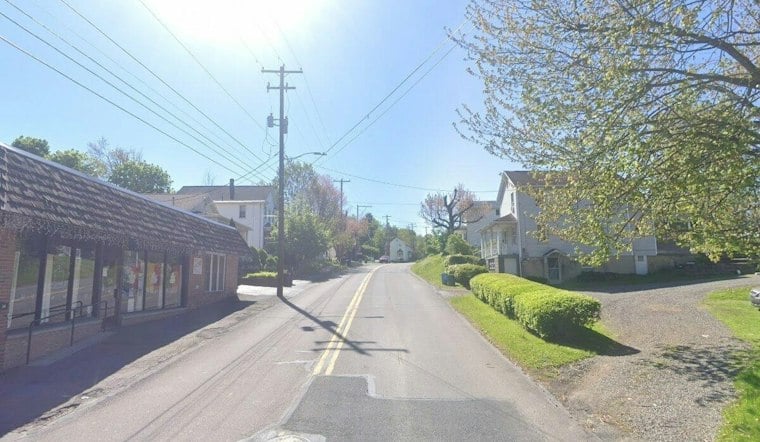
A Lackawanna County judge has rejected a developer's bid to force approval of a sprawling data center campus in Jessup, ruling that the borough acted within its rights when it twice denied the project. Judge Terrence R. Nealon sided with Jessup Borough on Oct. 22, shooting down Breaker Street Associates LLC's argument that its plans for a six-building data center campus had been automatically greenlit under state law.
According to WVIA Public Media, Nealon rejected the Conshohocken-based company's claim that its project was “deemed approved” under the Pennsylvania Municipal Planning Code after Jessup allegedly failed to issue a timely written denial. The judge found instead that the borough did not violate the planning code, because Breaker Street voluntarily resubmitted its land development plans twice, each time triggering a fresh 90-day review clock.
The dispute traces back to June 11, 2025, when Breaker Street applied to turn more than 200 acres along Breaker and Hill streets into a data center campus complete with an electrical switchyard and substation. Jessup's planning commission denied that initial application on June 24, 2025, because part of the proposed campus sat in a residential zoning district where data centers are not permitted.
Developer Resubmitted Twice, Then Cried Foul
Rather than appeal that first denial, Breaker Street resubmitted revised plans on July 23, 2025, and again on Oct. 2, 2025, in what the company described as efforts to address the issues raised. But Nealon found those two resubmissions included significant changes substantial enough to restart the 90-day decision period each time — undercutting Breaker Street's later argument that the borough had simply run out the clock on it.
On Oct. 17, 2025, Jessup's planning commission issued another written denial, this time listing seven specific deficiencies. The Lackawanna County Regional Planning Commission flagged that the application lacked a traffic study, erosion and sediment control plans, stormwater management plans, and will-serve letters from utility companies confirming service could actually be provided to the site.
The regional commission's review also found Breaker Street planned to build in areas not zoned for data centers, including a switchyard and substation slated for residentially zoned land. The application reportedly omitted the tree species planned for the campus, left out exterior building designs, and gave inadequate information on required parking spaces, according to the findings cited by WVIA.
Developer Claimed Approval Was Automatic
Breaker Street argued that the planning commission never issued a sufficiently specific decision on its original June 11 and July 23 applications, and the company maintained the project should be treated as deemed approved as a result. On June 18, 2026, the company escalated the fight by filing an appeal and mandamus complaint against Jessup Borough Council, alleging the borough failed to issue valid written decisions within the required 90-day window, as detailed by PennLive.
Nealon rejected that theory, too, finding that Breaker Street presented no evidence Jessup had compelled it to resubmit its applications. In other words, the developer's own choice to revise and resubmit — not any failure by the borough — reset the deadline each time, according to the judge's ruling. Jessup official Gregg Betti said the borough was pleased with the outcome and felt it was in the right, per WVIA's reporting.
Part of a Statewide Pattern Over Data Center Deadlines
The Jessup case lands amid a wider wave of Pennsylvania disputes over so-called deemed-approval deadlines for data center projects. Under the Municipalities Planning Code, a written decision on subdivision and land-development plans generally must be made and communicated to an applicant within 90 days, and missing that window can automatically approve an application, according to Babst Calland. Two Commonwealth Court opinions in June 2024 affirmed deemed approvals in separate land-use cases, underscoring how high the stakes can be for municipalities that miss a filing deadline or issue a vague denial.
Jessup itself has been wrestling with how to regulate the industry, adopting a zoning amendment in August 2025 that it later re-amended in November 2025 to define and regulate data centers, according to the Times-Tribune. The borough is also fending off a separate challenge from Sunnyside Road Associates, which received conditional approval for a 50-foot-tall data center in June 2026 but has separately appealed the denial of a variance that would have allowed a 70-foot structure in a district capped at 50 feet, per the Times-Tribune's coverage.
Elsewhere in the state, Danko Holdings II and Fishlips LLC are pressing a Commonwealth Court challenge arguing that inaction by Muncy Township supervisors resulted in deemed approval of their own data center conditional-use application. That petition, reported by PennLive, claims Pennsylvania's deemed-approval statutes can deny the public a conditional-use hearing and strip municipalities of the ability to attach reasonable conditions to projects — a tension playing out in towns like Jessup as companies race to build the energy-hungry infrastructure demanded by the data center boom.
Richard Williams and Kevin Walsh Jr., attorneys for Breaker Street Associates at Hourigan, Kluger and Quinn in Kingston, did not return calls for comment, according to WVIA. Under Pennsylvania's Municipalities Planning Code, parties generally have 30 days to file a land-use appeal after a decision or deemed decision, and filing such an appeal does not automatically halt the action being challenged.





