

























































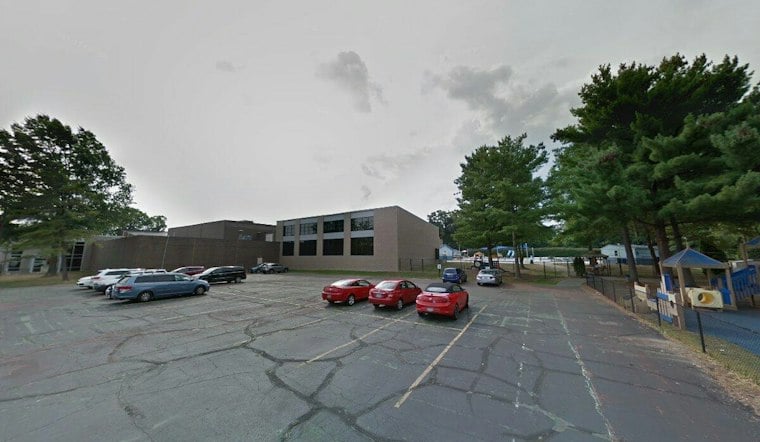
JewishAkron has put its longtime home at 750 White Pond Drive up for sale for $2.5 million, a listing that covers the 130,000-square-foot Schultz Campus but not the roughly 50 acres of surrounding land and wetlands that come with it. The organization’s interim chief operating officer, Lanny Levine, says the nonprofit is exploring a sale-leaseback arrangement in which a buyer would own the property while JewishAkron continues to operate there as a tenant.
The listing, first reported by the Akron Beacon Journal, comes as JewishAkron works through a sustainability plan that its board authorized in the spring amid what it has described as dwindling organizational numbers and ongoing financial losses, according to Akron Jewish News. Levine said property-related operating and maintenance costs are not sustainable relative to the income the campus generates, and the nonprofit has already received expressions of interest in a sale-leaseback, though he said he could not disclose who is involved.
Built in 1961 according to the Summit County Fiscal Office, the Albert L. and Janet A. Schultz Campus for Jewish Life is more than just an office complex — it houses the Shaw Jewish Community Center, The Lippman School, the Thom and Lisa Mandel Early Childhood Education Center, and Beth El Congregation, all operating under the JewishAkron umbrella. Jewish Family Service of Akron also has a location on the campus, though it operates as a separate organization. Thousands of community members use the campus on a regular basis, and JewishAkron currently employs 187 people there — 76 full-time and 111 part-time.
Deficits, a Maxed-Out Line of Credit and a Shrinking Footprint
The financial picture behind the listing has been building for months. The nonprofit's board approved deficit budgets in six of the past seven years and had been using a line of credit to cover employee salaries, the same Akron Jewish News reporting states. That $1 million line of credit through Westfield Bank was tapped out at more than $900,000, prompting the board to approve pulling $1 million from JewishAkron's $1.9 million unrestricted endowment to pay it down. The organization also reported a $1.25 million cash-flow deficit in October of the prior year.
By June, the outlet reported, JewishAkron was projecting a $191,000 deficit budget and nearly a half-million-dollar cash-flow deficit for the following two quarters — even after cost-cutting measures. Levine told the organization's annual meeting that JewishAkron wanted to shrink its 120,000- to 140,000-square-foot footprint to roughly half that size. As one such cost-saving step, the indoor pool was slated for a temporary closure in August, deferring an estimated $60,000 to $100,000 in repairs, though JewishAkron has said publicly it remains committed to maintaining a strong aquatics program as planning continues, per a statement on the organization's own news page.
What a Sale-Leaseback Could Mean for the Schools
Levine has framed a potential sale-leaseback as a way to buy time rather than force an abrupt disruption, saying it could give the schools room to prepare for whatever comes next. The Lippman School, which serves kindergartners through eighth graders, has 96 students enrolled. Levine said parents should not worry about the future of educational programming at this stage, and JewishAkron says it plans to continue childhood education and other programming regardless of how the real estate situation resolves.
Whether the surrounding 50 acres — including wetlands — get sold alongside the main campus depends on what a buyer wants, according to the reporting; a combined deal and a separate transaction for the land are both on the table. Summit Commercial Real Estate Advisors is representing JewishAkron in the sale. The organization's community Q&A page, last updated Oct. 23, attributes its financial pressures to rising operating costs along with the size and age of the facility itself.
JewishAkron's Apology and a Broader Caution to the Community
JewishAkron has acknowledged missteps in how it has communicated the situation. In its online statement, the organization apologized for unintentionally omitting Jewish Family Service from an earlier communication about the campus's future, calling it one of the most important partners in the community. JewishAkron has also said it is engaged in a planning process aimed at strengthening the organization and creating a sustainable future for Jewish life in the area, while cautioning that some decisions touch multiple organizations, finances and real estate matters that remain confidential.
Leaders say they are evaluating a range of programs — some may stay unchanged, others could be discontinued or altered — and that designated gifts will continue to be used according to their original terms. Levine was blunt about the uncertainty ahead, saying JewishAkron does not yet have all the answers and will not make promises until it knows what is actually feasible.
How Other Nonprofits Have Handled Similar Deals
JewishAkron would not be the first Jewish institution to lean on a sale-leaseback to steady its finances. In 2018, Denver's Staenberg-Loup Jewish Community Center sold its 9-acre property and leased it back for $1 a year for the next century, a deal detailed by The Denver Post that wiped out $14.3 million in debt after local charities and donors raised $16 million to stabilize the center. Closer to home, Cleveland Clinic sold 24 Ohio and Florida properties to Minneapolis firm MedCraft in a sale-leaseback the health system said would cut maintenance costs and free up money for patient care, though terms and sale price were not disclosed, according to cleveland.com.
The pressure driving these deals is not unique to Akron. Nonprofit seniors-housing and skilled-nursing operators are grappling with wage increases, labor challenges and the high cost of capital, forcing many to consider selling property to more financially stable entities, according to Seniors Housing Business. In one comparable case, Portland's Parkview Christian Retirement Community sold its 6-acre campus to a for-profit buyer in March 2024 after failing to find a qualified nonprofit buyer. For JewishAkron, whether any of that becomes the template for White Pond Drive remains an open question — one that Levine says will depend on feasibility the organization has not yet determined.





