

























































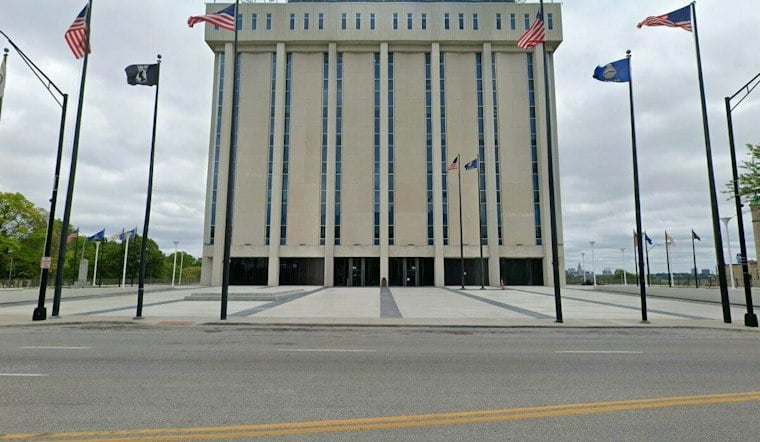
A three-acre patch of overgrown land near the Quindaro ruins in Kansas City, Kansas has become the latest battleground between longtime state Senator David Haley and the local government he has clashed with for more than a year. The property, owned by Haley's company Village East, owes more than $337,000 in unpaid fees and property taxes, according to the Unified Government, which this week attempted a fourth tax sale of the parcel.
Haley, who has represented District 4 in the Kansas State Senate since 2001 after six years in the Kansas House, is the registered agent and an investor in Village East, according to KMBC. He has represented the Wyandotte County district in Topeka since 1995, making him one of the longest-serving members currently in the state legislature, per Ballotpedia. Now his company's unpaid tax bill, and his account of how it piled up, sits at the center of a dispute that has already landed in front of a Wyandotte County judge.
The Unified Government attributes most of the debt to the demolition of a dangerous building on the property, the station reports. Haley tells a very different story: he says officials prevented Village East from obtaining a permit to demolish what he considered a structurally sound building, then arranged a demolition themselves at roughly three times the cost he would have paid. The Unified Government, for its part, says the dispute extends well beyond that single demolition fee.
A Tax Bill Dating Back to 2009
Per the Unified Government's statement, delinquent property taxes on the parcel date back to 2009, and Village East has paid no property taxes on the property since 2019. Scott Harding, speaking for the county's position, said the unpaid taxes shift the financial burden onto other taxpayers. Haley maintains he supports paying property taxes and says an agreement had been reached covering payment of back taxes, with Village East agreeing to pay roughly $18,000 in taxes and penalties while the separate demolition fee remains in dispute.
A Wyandotte County judge denied Haley's effort to keep the property off the tax sale list, clearing the way for this week's sale attempt. The property is now part of the Unified Government's land bank, which held more than 4,300 vacant and tax-foreclosed lots across Wyandotte County as of early 2026, with a heavy concentration in the historic northeast Kansas City, Kansas neighborhood surrounding Quindaro Boulevard, according to Wyandotte News Daily. Under Kansas law, property that lands in a municipal land bank is exempt from state and local property taxes going forward, and county treasurers must wipe out all accrued delinquent taxes, penalties, and interest once the land bank takes ownership, per the Kansas Office of Revisor of Statutes.
Haley Points to a Planned Visitors Center
Haley alleges the Unified Government is maneuvering to take the Village East property so it can be used for a planned visitors center near the Quindaro ruins, and he provided an artist's rendering of such a center to back up his claim, the station reports. He says Village East accepts the idea of a visitors center going in nearby but wants compensation and opposes simply losing the property outright. Haley and Village East are now taking the Unified Government to court, both to try to keep the land and to argue that the demolition of the building was illegal in the first place.
The land sits immediately beside the Quindaro Townsite, established in the 1850s as a free-state port town that served as a vital Underground Railroad station for enslaved people seeking freedom, a site recognized nationally for its historical significance, as Hoodline has previously reported. The Unified Government launched a Quindaro Neighborhood Master Plan initiative in May 2026, holding public sessions through this month to shape future land use, tourism, walkability, and historical preservation around the townsite, according to the Unified Government of Wyandotte County and Kansas City, Kansas — a timeline that aligns with Haley's claim about a visitors center taking shape in the area.
A Separate Fraud Lawsuit Looms Over the Senator
The property fight is unfolding alongside a separate legal battle involving Haley. He is accused of health insurance fraud in a pending lawsuit, and the Unified Government has referred the matter for possible criminal prosecution, per KMBC's reporting. The Board of Public Utilities removed Haley as its board chair in 2025 over the dispute, after an ethics investigation found he had enrolled his long-term partner on BPU health insurance without providing required marriage documentation, according to the Community Voice. Haley has contended he received oral administrative approval for the arrangement years earlier.
The Unified Government filed its civil lawsuit against Haley in Wyandotte County District Court in January 2026, seeking to recover health benefit payouts disbursed to his partner on allegations he falsely listed her as his spouse, according to the Sunflower State Journal. In June 2026, a Wyandotte County District Court judge denied Haley's motion to dismiss that lawsuit, ruling that factual disputes over his enrollment representations must proceed toward trial; Haley had represented himself pro se in arguing for dismissal, per the Kansas Judicial Branch's case record.
Redevelopment pressure around Quindaro Boulevard has been building on multiple fronts. Developers broke ground in January 2026 on Quindaro Crossings, a project acquiring dozens of land bank vacant lots along the boulevard to build single-family infill housing, and the BPU and Unified Government have separately entered pre-development option agreements for a proposed $13.6 million sale and conversion of the former Quindaro Power Station into a 200-megawatt data center facility, according to The Beacon. Whether Village East's three acres end up folded into that broader push, or stay in Haley's hands, now rests with the Wyandotte County courts.




