

























































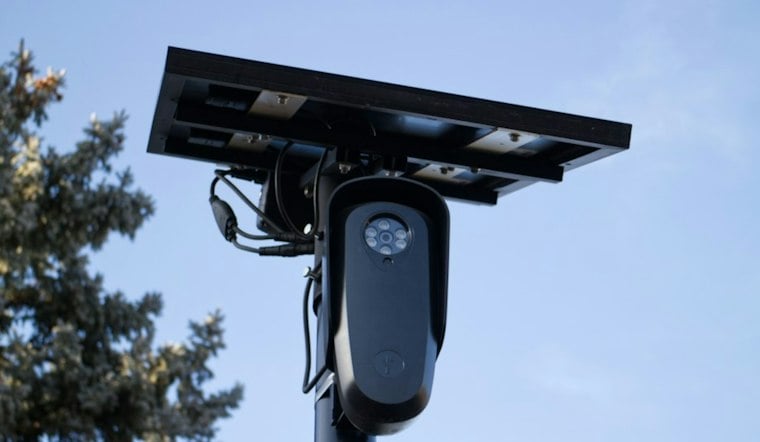
Kyle's license plate-reading cameras are set to be covered. The city council voted 6-1 against terminating the city's Flock Safety contracts, a decision that comes as the Central Texas city moves toward letting voters weigh in on the technology next year.
The later 4-3 vote to cover the cameras, reported by KXAN Austin, means Kyle's Flock camera network will be covered while the city works toward a non-binding ballot question in May 2027. That question would ask voters whether Kyle should continue using license plate reader technology at all, though the station notes the referendum results would not require the council to maintain or cancel any contract, according to a separate report from Community Impact.
The debate isn't new. At a meeting on September 5, 2026, Councilmember Claudia Zapata made a motion to cancel two of the city's three Flock contracts, arguing the move would save Kyle roughly $381,000 a year, according to KXAN's reporting. KXAN reported that the motion failed in a 6-1 vote, with Zapata as the only member in support.
Council Unanimously Agrees to Let Voters Decide
Despite the disagreement over how Zapata's cancellation push ended, both outlets agree on what came next — councilmembers unanimously voted to consider placing the non-binding Flock question before voters in the May 2027 election. The city's fiscal year 2026-27 budget, approved afterward, maintains all three Flock contracts, according to Community Impact's coverage of that budget process.
Money has been part of the backdrop throughout. Per the Texas Tribune, Kyle has not received its 2026 state grant of $205,000, including $80,000 meant to help pay for 32 of the city's cameras, as Texas rescinded broader state funding for Flock programs in late August. At least 14 Texas cities and counties shut off more than 900 Flock cameras after that funding disappeared.
Kyle’s debate is part of a wider Texas retreat: by mid-September, two dozen Texas cities and counties had taken steps to remove ALPRs or end Flock contracts. Nearby examples include Pflugerville, which ended its contract and covered its cameras, and Leander, where police stopped using the cameras and Flock data after the council directed the city to discontinue the program. Other communities have chosen a different path: League City and Laredo moved toward nonbinding ballot questions.
Residents Split on Privacy, Crime Concerns
Kyle residents have shared concerns about the cameras during council meetings and online, KXAN reported. Speakers including Yvonne Flores-Cale and Melisa Medina each raised questions about how data collected by the cameras is used and where that information ultimately goes. On the other side, resident Lauralee Harris raised concerns that removing or covering the cameras could lead to an increase in crime.
Kyle Police Chief Jeff Barnett told the station the department has received no formal complaints alleging misuse of the Flock system. Barnett also disclosed that one of Kyle's cameras had previously been cut down, and that the city is responsible for replacing it. He pointed to cases where the technology helped officers locate stolen vehicles, including one instance where license plate readers helped quickly locate a stolen vehicle that had a five-month-old baby inside, and other instances where the technology helped locate children, per KXAN's reporting.
Kyle's ALPR policy outlines how the system's data is handled, with non-relevant data deleted after 31 days. Each search of the system requires a registered ID, case number and reason, per that same city document. Kyle does not own the equipment outright; as one city official put it in comments reported by the Hays Free Press, “We do not own this equipment. We rent this equipment,” meaning the gear would go back to Flock if the contracts weren't renewed.
Austin’s recent experience illustrates why questions about data access have become part of the debate. A 2025 city audit of Austin’s Flock pilot found that the contract could potentially allow the company to retain data for use by other law-enforcement agencies, contrary to the city’s stated intent to limit access to city employees. The audit concerned Austin’s program, not Kyle’s, but it shows how contract terms and access controls can become central issues beyond the cameras’ investigative uses. Austin’s audit report examined its 40-camera pilot.
Part of a Statewide Reckoning
Kyle's standoff is playing out alongside similar fights across Texas. The Texas Tribune reported that College Station's council voted 4-2 to renew its Flock agreement for another year, while Laredo's council voted 7-2 to set its own nonbinding referendum for May.
Privacy advocates have raised broader objections to the technology beyond any single city's contract, pointing to its ability to scan all passing vehicles and build a database accessible to law enforcement agencies well beyond local jurisdictions, the Tribune reported. The cameras use artificial intelligence to log details like license plate numbers, vehicle models, colors and even bumper stickers, according to the same Tribune report.
For now, Kyle's cameras are set to be covered, and the city says it plans to give voters an opportunity to weigh in on the technology's future when the May 2027 ballot question comes before them.




