

























































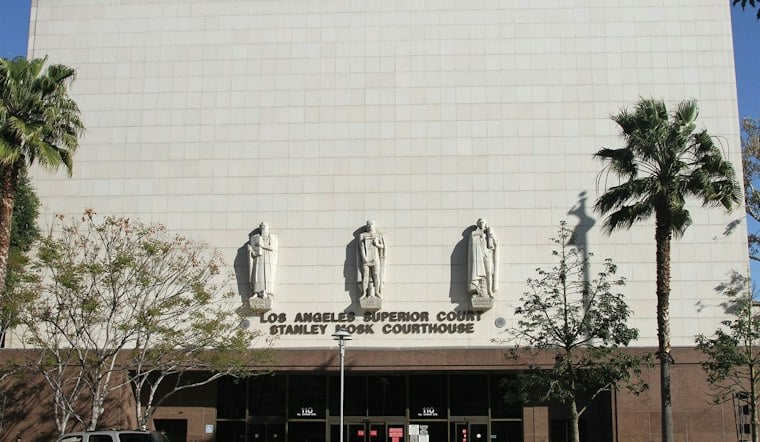
Hundreds of Los Angeles County residents have filed a lawsuit accusing Essity, Edgewell Personal Care and Johnson & Johnson of selling Carefree panty liners that allegedly contained a forever chemical linked to cancer, even after California banned the practice. The suit, filed on October 9 at the Superior Court of Los Angeles County, also names grocery chain Gelson’s Markets for stocking and selling the products.
The residents allege Carefree liners were intentionally made with PFOA, a chemical in the PFAS class, and that the companies continued selling them even after California law banned the manufacture, sale and distribution of menstrual products intentionally made with PFAS starting January 1, 2025. The filing was first reported by Manufacturing Dive, which covers the industrial and consumer-goods sectors. The plaintiffs point to an independent lab test from 2024 that reportedly found PFOA in one or more of Carefree’s five product layers, and they allege the products have continued to incorporate the chemical since that test.
The lawsuit alleges that residents wore the liners for up to eight to 10 hours during their menstrual cycles, and that PFOA exposure through external genital tissue caused a range of injuries, including cancer, thyroid, cholesterol, liver, metabolic, reproductive, hormonal and developmental harm. Plaintiffs are seeking compensatory damages for past and future physical pain, mental and emotional distress, and medical and related expenses, according to Manufacturing Dive’s reporting. They’ve also accused the manufacturer defendants of negligence in designing, testing and selling Carefree products allegedly containing PFAS, and of negligence and fraud for failing to disclose a PFAS-free alternative or warn that the liners contain PFOA.
A Years-Long Paper Trail on PFAS in Carefree
This isn’t the first time Carefree has faced this exact accusation. A separate case, Ecological Alliance LLC v. Edgewell Personal Care Brands LLC, was filed in September 2024 in California Superior Court, alleging that Edgewell failed to appropriately warn customers about the presence of forever chemicals in its products, according to Bloomberg Law. That complaint specifically named perfluorooctanoic acid, or PFOA, and claimed people use the liners for eight to 10 hours each day.
Separately, plaintiffs identified as Custodio and Dubey sent a 60-day notice to the California Attorney General and various district and city attorneys in February 2024 before suing Edgewell that September, and Bloomberg Law reported that they requested dismissal of that case in 2025. The Ecological Alliance case sought an injunction compelling Edgewell to provide Proposition 65 warnings along with civil penalties, according to a summary from ArentFox Schiff, which noted the complaint alleged Edgewell failed to include any warning whatsoever on its Carefree panty liners.
Independent testing cited in that earlier litigation found PFOA leaching from the menstrual pads at about 756 parts per trillion per hour, per a report from The Guardian. That same report described the litigation as seeking either removal of PFAS from Carefree products or a warning label on the packaging.
How Carefree Changed Hands Over the Years
The ownership history of the Carefree brand stretches back more than a decade. Johnson & Johnson owned the feminine products business, including Carefree and its subsidiary McNeil-PPC, until Edgewell Personal Care acquired the brand from J&J on October 23, 2013. Edgewell held onto Carefree for over a decade before completing the sale of its North America feminine care business to Stockholm-based Essity on February 4, 2026.
Essity’s own press release describes the deal slightly differently, stating the company completed its acquisition of Edgewell’s feminine care business, including the Carefree, Stayfree and o.b. brands, on February 2, 2026, according to Essity. The purchase price for the assets totaled $340 million, and the deal included a broad product portfolio of liners, pads and tampons along with a production facility in Dover, Delaware. An Essity North America subsidiary now owns the Carefree brand and feminine products business.
Essity spokesperson Amy Bellcourt said the company does not intentionally add PFAS chemicals to Carefree products, and that Carefree stands behind its products. Bellcourt also noted that Carefree’s ingredients are printed on the package, and Essity said it plans to vigorously respond to the lawsuit’s claims. Edgewell and Johnson & Johnson did not respond to requests for comment before Manufacturing Dive’s report was published.
What California's Proposition 65 Requires
The legal backbone of these cases is California’s Proposition 65, formally known as the Safe Drinking Water and Toxic Enforcement Act of 1986, which requires businesses to warn California consumers about exposure to chemicals that can cause cancer, birth defects or other reproductive harm. The California Office of Environmental Health Hazard Assessment oversees the law’s implementation and is required to publish a list of chemicals known to cause health issues.
PFOA was added to that list as a reproductive toxin in November 2017, and the state classified it as a carcinogen effective February 25, 2022, according to a listing notice from the California Office of Environmental Health Hazard Assessment. Beyond Proposition 65, a separate state law known as AB 2515 bans the manufacture, distribution and sale of menstrual products containing intentionally added PFAS as of January 1, 2025, according to the bill text published by the California Legislature. The same law is set to prohibit the sale of menstrual products containing other PFAS above a limit that has not yet been determined, beginning in 2027.
PFAS, sometimes called forever chemicals, belong to a class of roughly 15,000 compounds that have drawn growing scrutiny for their persistence in the environment and the body, as The Guardian has reported. Scrutiny of menstrual product safety isn’t limited to PFAS, either — research published in 2024 found that multiple brands of tampons sold in both the United States and Europe contained harmful metals such as lead, arsenic and mercury, according to FOX 11 Los Angeles. Carefree’s ownership trail, which passed from Johnson & Johnson to Edgewell and most recently to Essity, has become a recurring detail in coverage of the brand’s legal troubles, as Yahoo News has also noted.


