

























































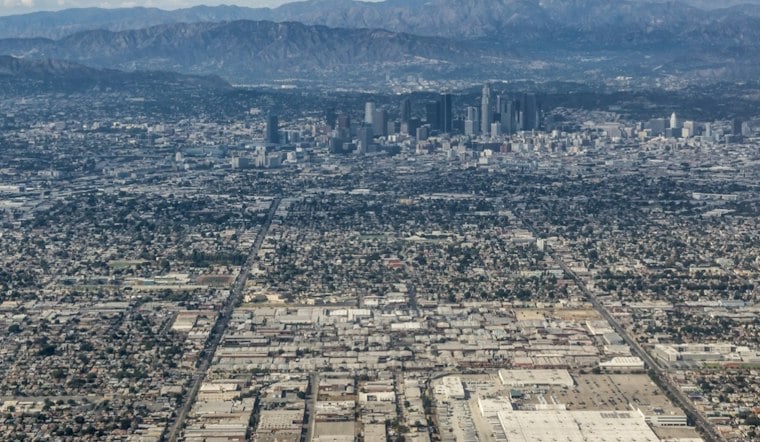
Homes in Los Angeles County sold for 66.8% more than homes in the surrounding suburbs in June, a gap wide enough to give Los Angeles the largest urban-core price premium relative to its suburbs among the 21 biggest U.S. metropolitan areas. The comparison measured Los Angeles against Riverside, San Bernardino and Ventura counties, and it came paired with an even starker figure: buyers in L.A.'s urban core pay an 84.7% premium per square foot compared with those surrounding areas.
L.A. Tops Every Major Metro, Just Edging Out New York
According to an analysis reported by the Los Angeles Times, Los Angeles ranked first in price premium compared with its suburbs among the 21 biggest U.S. metropolitan areas, narrowly beating out New York City for the top spot. By comparison, the premiums elsewhere were far smaller: Phoenix homes in the city center cost 27% more than in its suburbs and exurbs, while Dallas-Fort Worth's gap was just 11%. In Denver, San Antonio and Detroit, the pattern actually flips, with suburban homes more valuable than those in the city proper, the Times reported.
Redfin chief economist Daryl Fairweather, cited in that same Times report, pointed to a mix of forces reshaping the math since the pandemic. Return-to-office policies have shifted prices back up in city centers nationally, she said, while soaring gas prices have made living in car-dependent suburbs more expensive than it used to be. Fairweather also noted that young adults starting families often drive housing demand, and that suburban home supply can shrink or shift as baby boomers pass away or relocate.
A Premium That Shrank, Then Snapped Back
The gap isn't static. In the years before the pandemic, the price premium for homes in L.A.'s core typically ran between 67% and 72%, per the Times' analysis. From 2021 to 2023, as buyers chased more space and newly available remote-work arrangements, that premium shrank to as low as 53%. It has since fully recovered to pre-pandemic levels, landing back near where it started.
Generally, Southern California home prices get cheaper the farther out you go, and that pattern tracks with where the region's jobs sit. L.A. and Orange counties hold key job centers, especially for high-paying professional work, with roughly 96,000 people working in Burbank and 54,000 in El Segundo, according to 2024 census data cited in the Times' reporting. Demographer Hans Johnson of the Public Policy Institute of California told the paper that getting from the exurbs into the urban core or nearby suburbs is genuinely difficult in both Los Angeles and New York, and that urban California combines high incomes with tremendous inequality.
Orange County Remains the Region's Priciest Market
Orange County, counted as its own urban area in the analysis, remains the region's most expensive housing market, with average home prices higher than Los Angeles County's. The median Orange County home sold this year for $1.25 million, or $692 per square foot, the Times reported — more than double the median price in L.A.'s suburban and exurban areas. In job centers and luxury communities like Irvine and Costa Mesa, average home prices sit near $1.5 million.
Separate reporting from the Orange County Register found the county's median home price hit a record $1.22 million in March, up 2% year over year and 21% higher than four years earlier, when the Federal Reserve was still running its cheap-money policies. The newspaper also noted that the estimated monthly payment for a typical Orange County buyer that month was $5,921, assuming a 6.1% average mortgage rate and a 20% down payment. Inventory has improved somewhat — homes for sale jumped 32% year over year through March — but supply remains 38% below 2019 levels. By June, the median price for an existing single-family home in Orange County had reached $1.49 million, according to FOX 11 Los Angeles, which also found San Bernardino County had the region's lowest median single-family price among Southern California's six main counties, at $508,080.
Inland Counties Feel the Squeeze Too
Even as L.A.'s core pulls away from its suburbs, the Inland Empire has not been spared rising costs. The Times' separate reporting on inland housing anxiety found that Inland Empire home prices have risen faster in recent years than Los Angeles home prices, driven in part by people migrating inland in search of more affordable, larger homes.
That migration has consequences. The Inland Empire has seen increased in-migration from more expensive adjacent communities, and more than 60% of residents in San Bernardino, Riverside and Kern counties now call housing affordability a big problem, the same Times report found. A 2022 UC Riverside study found that only 31% of Inland Empire households could afford to purchase a median-priced home, and by 2024, more than 41% of households in both San Bernardino and Riverside counties were considered housing-cost burdened. Rents have climbed too: the median rent for a one-bedroom apartment in the Riverside-San Bernardino metro area was $1,959 this year.
Research from the UCLA Lewis Center adds broader context to the squeeze unfolding across both coastal and inland Southern California. Many large metropolitan areas face an acute shortage of housing, which is driving up prices broadly, according to the UCLA Lewis Center for Regional Policy Studies. Households priced out of expensive urban neighborhoods are increasingly pushed to the outer reaches of metropolitan areas, where they find cheaper housing but face far longer commutes.


