

























































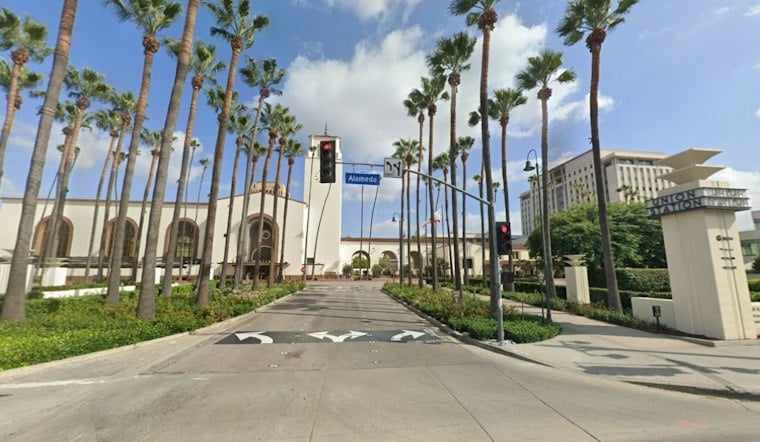
The California High-Speed Rail Authority has finalized its environmental review for the Los Angeles-to-Anaheim segment, the last stretch of the system's first phase, locking in a plan that keeps high-speed trains sharing tracks with Amtrak and Metrolink rather than building separate dedicated lines through some of Southern California's busiest rail corridors.
The roughly 30-mile corridor's recommended approach, called Shared Passenger Track Alternative A, would route bullet trains alongside existing passenger service between Los Angeles Union Station and the Anaheim Regional Transportation Intermodal Center, according to a report from Urbanize LA. The plan calls for approximately 30 miles of new and upgraded track along with overhead contact systems, maintenance infrastructure, and traction power facilities, according to the California High-Speed Rail Authority, which identified the alternative as its preferred option under federal environmental law and the proposed project under the state's own review process.
Eight existing grade crossings in Anaheim will remain at street level rather than being separated from the corridor, a decision the authority's own environmental documentation ties directly to minimizing both environmental impacts and cost. The agency's final environmental document also weighed building a light-maintenance facility at either 26th Street in Vernon or 15th Street in Los Angeles alongside the decision to leave those Anaheim crossings alone, per the authority's standard-responses filing. Despite that, the corridor is still slated to get full grade separations at Pioneer Boulevard, Norwalk Boulevard, Los Nietos Road, Cerritos Avenue, and State College Boulevard, according to Urbanize LA's report.
Stops and Stations Left Out of the Final Plan
The final report omits intermediate stops at Norwalk/Santa Fe Springs and Fullerton, a change from earlier planning stages, per Urbanize LA's reporting. Those intermediate stops were reportedly at risk of being dropped because of cost concerns as far back as 2025, and the project separately requires modifications to passenger rail stops in Commerce, Buena Park, Fullerton, and Norwalk, according to the same report. Project cost has also been blamed for the cancellation of a proposed BNSF rail yard in Colton, Urbanize LA reported, tying together several of the budget-driven changes that have reshaped the corridor's footprint.
The California High-Speed Rail Authority Board is expected to vote on a final decision regarding the report's items later this month, according to Urbanize LA's report.
A Funding Gap That Could Hit Before the Decade Ends
The timing of the final environmental review lands amid a far more urgent financial warning for the broader project. The authority could exhaust its current funding resources as soon as December 2027 without additional financing, according to an inspector general's warning reported by CBS News. The agency faces a $9.5 billion funding gap over the next five years, and borrowing to cover that shortfall could tack on an additional $3.6 billion to $6.6 billion in interest costs, the station reported.
The financial strain has already forced changes to the authority's equipment plans. The agency cut its train order in half, from six trainsets down to three, with options for 19 more that carry no guarantee, and the revised procurement terms now require those trains to be delivered and ready for testing no later than February 2030, per the same CBS News account. The authority's 2026 business-plan schedule has also slipped, with the target window moving from 2032–2033 to as late as September 2034, the station's report notes. California High-Speed Rail still aims to start service on its initial operating segment in the early 2030s and continues work on a corridor of more than 100 miles in the Central Valley, though the system overall has faced questions about whether it will ever reach Los Angeles.
Some of that financial pressure traces back to missed federal deadlines. The authority missed a federal grant requirement to execute a train contract by December 31, 2024, and the Trump administration responded by clawing back $4 billion in funding previously allocated to the project, per CBS News. The agency then missed a second, court-promised deadline of December 1, 2025 to execute that contract, and it dropped its lawsuit against the federal government two days before Christmas, the station's report states.
Union Station and the Vernon Rail Yard Fight
The L.A.-to-Anaheim corridor's northern end connects to plans for Link Union Station, a separate project that would add eight new run-through tracks for regional, intercity, and high-speed rail trains south of Los Angeles Union Station, according to filings with the California Environmental Quality Act database. Those run-through tracks are considered key to the broader plans for California's high-speed rail system, Urbanize LA reported.
That Union Station work has become entangled in a legal dispute over a proposed expansion of BNSF's Malabar rail yard, which Urbanize LA's report describes as intended to facilitate the Link Union Station project. The City of Vernon filed a lawsuit targeting that proposed expansion after the Metro Board approved a Supplemental Environmental Impact Report for the Link Union Station Project's Malabar Yard Mitigation by an 8–0 vote on November 21, 2025, according to the City of Vernon.
How Brightline West's Troubles Compare
California's bullet train isn't the only Southern California high-speed rail effort under financial strain. Brightline West, which would run between Las Vegas and Rancho Cucamonga, has experienced its own setbacks, including a rising price tag that has climbed from $9 billion to $20.1 billion, according to the Las Vegas Review-Journal. The company now aims for late 2029 service, a target pushed back from its original goal of operating in time for the 2028 Los Angeles Olympics.
Brightline West's Florida counterpart has teetered on the verge of bankruptcy, but the station's report notes that Brightline West operates as a separate entity and that the Florida company's financial troubles have no bearing on the Nevada-to-Southern California project. Brightline West is funded by a $3 billion Federal Railroad Administration grant and $2.5 billion in private activity bonds issued by Nevada and California, and it is still awaiting word on a separate $6 billion federal loan application, the outlet reported. The planned 218-mile system would connect a station on Las Vegas Boulevard with a station in Rancho Cucamonga, where riders could reach downtown Los Angeles by connecting to Metrolink. Even so, construction activity at Brightline West's Las Vegas station site appears to have stalled after sewer work began and a parking garage project got underway, per the same report.





