

























































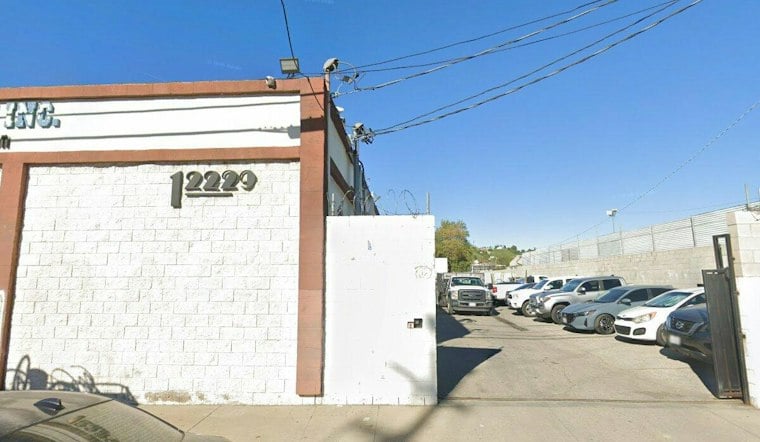
Dennys Rene Rivas-Williams spent years cutting and fabricating engineered-stone countertops in Pacoima and across Los Angeles County before his lungs failed. He was diagnosed with silicosis and ultimately underwent a double-lung transplant — and now a California jury has weighed in on who should be held responsible for his illness, returning a verdict against Caesarstone Ltd. and Caesarstone USA, Inc.
A Diagnosis That Upended a Life
According to court records reviewed by Trellis.law, Rivas-Williams worked from about April 2015 to June 2022 as a cutter, fabricator and installer of stone countertops, with Caesarstone Ltd. and Caesarstone USA Inc. named among the defendants in his lawsuit. Doctors diagnosed him with silicosis, and medical records tied his illness to engineered-stone fabrication and cutting, according to reporting from the Los Angeles Times. He later received a double-lung transplant in January, the paper reported, after doctors said the 36-year-old's lungs had been destroyed by his work.
Before his civil case reached a jury, Rivas-Williams had already fought for help through the workers' compensation system. Nearly two years after he first filed a claim, he and AmTrust reached a settlement in June, though his attorney did not disclose the amount publicly, per the Times. That slow, contested path through workers' comp is notable given what researchers found statewide: only 13% of California countertop workers with silicosis had workers' compensation benefits when they were diagnosed and treated, the Times reported.
Jury Verdict, As Reported
Multiple reports describe a California jury verdict in Rivas-Williams's favor, though the total and how it was divided differ between accounts. As reported by StreetInsider, the headline figure cited was a $67.7 million verdict. A separate account from Kalkine Media put the jury's total award at approximately $67.3 million, with Caesarstone assigned 69.1% of the fault, corresponding to roughly $46.5 million of that total. The exact judgment, the fault allocation, and how the damages break down have not been confirmed against a primary court record, so readers should treat the precise dollar figures as reported rather than settled.
A Wider Pattern of Verdicts
This case did not emerge in isolation. Just days earlier, on October 21, a separate jury assessed a $33 million verdict on behalf of plaintiffs Jose Luis Martir Navarro and Silvia Rebeca Gudiel Garcia in another artificial-stone silicosis case against Caesarstone, according to a release from Brayton Purcell LLP. That jury found both Caesarstone entities liable for product-liability design defect under the risk-benefit test, the firm said.
Earlier this year, a Santa Monica jury assessed a $47,035,380 verdict against Dal-Tile Distribution, LLC and Dal-Tile, LLC in a case brought by the family of Wilmer Ruben Martinez Paredes, according to Environment+Energy Leader. That jury awarded $2,035,380 in economic damages and $45 million in noneconomic damages, finding both Dal-Tile entities liable for negligence, product-liability design defect and failure to warn, and assigning each entity 3% of fault. Martinez Paredes's former employers were found 70% at fault in that case, while four already-settled defendants — including Caesarstone and Cambria — were each assigned 6%.
The Material at the Center of the Crisis
At the heart of these cases is the composition of engineered stone itself. At least 90% of the material is respirable crystalline silica, with the remaining roughly 10% made up of dyes, resins, glues and heavy metals, according to the Brayton Purcell release. Artificial-stone silicosis is described in that release as preventable, progressive, incurable and fatal, with no known cure.
The scale of the problem in California has been tracked for years. The California Department of Public Health had identified 156 cases of engineered-stone-related silicosis as of early July 2024, including more than 90 in Los Angeles County, the Los Angeles Times reported. More than a dozen California workers who cut countertops have died from the disease in recent years, per the same reporting. Separately, a study published at NEJM Evidence found that from January 2019 through June 2026, the state health department identified 592 cases of silicosis among workers fabricating crystalline silica-containing engineered-stone countertops.
Regulators Move, Slowly
California's countertop fabrication industry employs at least 9,000 people statewide, according to the California Labor Lab at UCSF, which has described those workers as being at risk of accelerated silicosis — a severe, incurable and potentially fatal disease. Workplace investigations have found respirable crystalline silica exposures many times above the permissible exposure limit among fabrication workers, the lab reported.
State regulators have begun responding. On May 21, 2026, California regulators voted to initiate emergency rulemaking targeting artificial-stone products containing more than 1% crystalline silica, according to the Brayton Purcell release. The following day, Cal/OSHA and staff of the Occupational Safety and Health Standards Board found that workers involved in artificial-stone fabrication and installation face significant risks from respirable crystalline silica and that the crisis continues to worsen, according to the California Department of Industrial Relations. A related petition requested that the state prohibit the fabrication and installation of engineered stone containing more than 1% crystalline silica; the standards board reportedly granted that petition in part and asked Cal/OSHA to initiate emergency rulemaking, per the department's own regulatory filings.
For Rivas-Williams, the legal fight traces back to work he performed cutting and fabricating stone across Los Angeles County, the kind of labor that regulators now say continues to put thousands of California workers at risk. Whatever the final judgment amount turns out to be once court records are confirmed, his case adds to a fast-growing list of California verdicts holding engineered-stone manufacturers accountable for a disease doctors say has no cure.





