

























































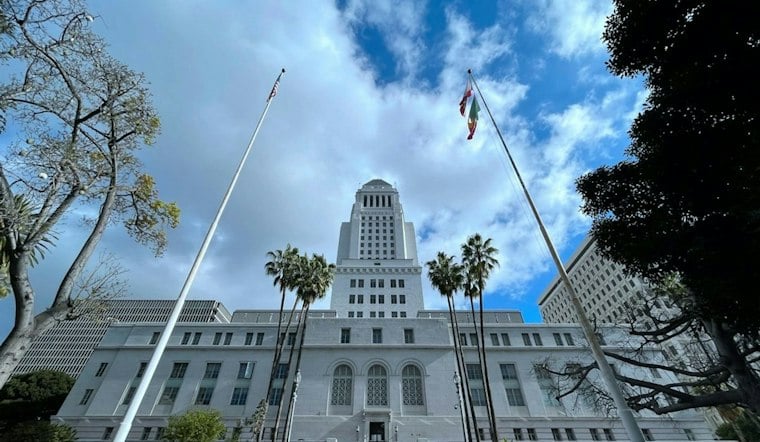
Los Angeles voters head to the polls Tuesday to decide the fate of a city board that has quietly run streets, sidewalks and sewer work since 1905. Measure LA would hand more authority to the director of Public Works and open the door for the City Council to change or even eliminate the five-member Board of Public Works altogether, a shift supporters call overdue streamlining and critics call a dangerous concentration of power.
The Board of Public Works has been overseeing work on streets, sidewalks and sewers since 1905, according to the Los Angeles Times. Its five members are full-time city employees who each earn slightly less than $200,000 a year, and together they oversee more than 5,500 people working across city bureaus and offices, per the same report. Those bureaus handle everything from sanitation and street lighting to engineering and graffiti removal. The mayor appoints all five board members, and the board approves more than 85% of the city's construction contracts.
The board generally convenes Mondays, Wednesdays and Fridays at Los Angeles City Hall, and its workload can be substantial. At one recent 2.5-hour meeting, commissioners reviewed seven bids for sidewalk repairs ranging from a low of $1.9 million to a high of $2.47 million, the Times reported, and approved all discussed items unanimously. The same meeting included a Bureau of Engineering request to increase the budget for a Pacific Palisades storm drain project ahead of El Niño storms, and a Bureau of Street Services discussion about removing protected trees for a Mulholland Drive project, with replacement planting planned.
What Measure LA Would Actually Change
Measure LA would establish a capital infrastructure plan and shift the city to a two-year budget cycle, according to California Choices. Currently, the city is not required to have a capital plan for infrastructure projects at all, per the November 2026 Voter Information Pamphlet; the measure would require one to be established by ordinance. The ballot pamphlet also explains that the proposed amendment would expand the Public Works director's responsibilities to include contract administration, construction and maintenance oversight, permits and capital infrastructure planning.
Crucially, the measure would authorize the City Council to change the board's composition or eliminate it entirely by ordinance, per the pamphlet. That would require a two-thirds Council vote, subject to a mayoral veto that could only be overridden by a three-fourths vote. Supporters say eliminating the board outright would specifically require a two-thirds vote of the 15-member Council. Under the same framework, a future Council would need 10 votes to change or eliminate the board, or 12 votes if the mayor vetoed the move.
Even if the board survives, it would retain some duties under the proposed amendment, including approving contract awards, conducting authorized hearings, approving project specifications jointly with the director, and recommending public works plans, according to the pamphlet. Passage of Measure LA itself would not immediately dissolve the board — it would simply set the stage for a later Council discussion about changing or eliminating it.
Fragmented System or Essential Check?
Los Angeles City Council member Katy Yaroslavsky has said the current system is fragmented and lacks clear authority, according to the Times. She pointed to a long-running intersection repair project on La Cienega Boulevard in her Fairfax district that she has sought information about, arguing that with one person in charge, people know who can be held accountable. Council President Marqueece Harris-Dawson made a similar point in June 2026, saying projects can bounce between street lighting and engineering bureaus without any single person responsible for resolving the problem. Council member Bob Blumenfield has echoed the concern, saying multiple-bureau projects can be slowed by siloed work.
Supporters argue that it takes the city years to repave streets, fix sidewalks and streetlights, and address ongoing maintenance — delays they say passage of Measure LA would help fix by leading to better city services and quicker infrastructure repairs. The city's own estimate for making the switch is steep: the city administrative officer projects the two-year budget cycle and capital infrastructure plan will require $4 million to $6 million in one-time costs for system upgrades, staff training and outside expert consultations.
Former Board Members Push Back
Not everyone who has served on the board is convinced. Monica Rodriguez served on the Board of Public Works from 2013 to 2016, where she focused on overhauling procurement to help small, women-owned and minority-owned businesses compete for city contracts. She has said a single director would not know everything that today gets coordinated among bureaus, and that staffing resources remain a key issue regardless of who holds authority. Rodriguez has gone further, warning that concentrating authority in one person could increase the risk of corruption at the expense of transparency.
Valerie Lynne Shaw, who served on the board from 1996 to 2013, has described it as a coordinating mechanism for infrastructure projects. Former board members have said sharing the workload across five people enables regular interaction with elected officials and the private sector that a single director might not replicate. Opponents of the measure say the board manages billions of dollars in infrastructure projects while maintaining public accessibility, and they fear that eliminating it and placing authority in one person could invite graft.
That fear isn't hypothetical in California municipal government. San Francisco's former Public Works director was sentenced to seven years in federal prison in 2022, with federal prosecutors saying at the time, per a Justice Department release, that his prison sentence was punishment for more than a decade of public corruption. Los Angeles County, for comparison, already runs its public works operations under a single director, Mark Pestrella, rather than a board.
A Quiet Campaign, So Far
Despite the stakes, the campaign around Measure LA has been notably low-key. A search of the City Ethics Commission database showed no spending by groups supporting or opposing the measure, the Times reported. The Los Angeles City Council first discussed potential board changes back in June 2026, well before the measure landed on Tuesday's ballot.
Measure LA isn't the only charter amendment facing voters this cycle. Measure EE, also on the November ballot, includes higher penalties for campaign finance violations and would allow the full Council — which currently is required to meet three times a week — to instead meet at least once weekly. Measure LA needs only a simple majority of those voting on it to pass, and if it does, the real fight over the Board of Public Works' future would likely begin at City Hall rather than end there.





