

























































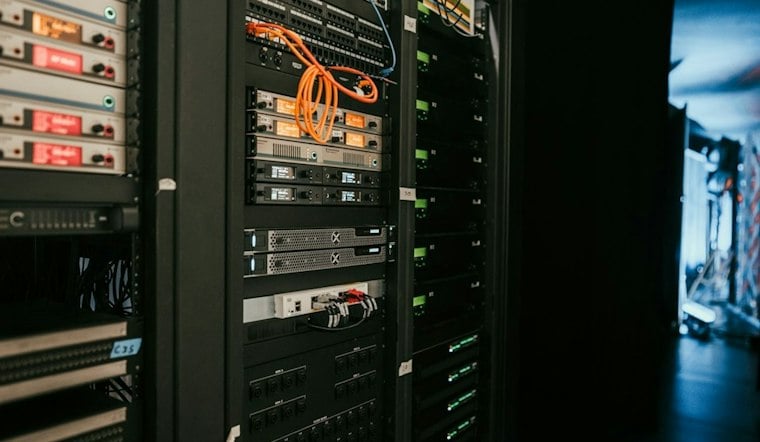
Lafayette City Council has approved an 18-month moratorium on new data center applications, giving staff time to figure out whether the city's rules are even equipped to handle the industry's water, power and noise demands. The pause blocks applications for building new data centers in the city during that window.
City officials said the temporary ban gives them more time to consider permanent regulations and to research potential impacts on Lafayette's resources and the environment, according to the Daily Camera. The move comes less than two months after Lafayette adopted a new land-use code in September that, as written, treats data centers equally regardless of their size, peak electrical demand or water consumption profiles.
A Land-Use Code With a Blind Spot
That one-size-fits-all approach is exactly what's prompting the second look. Lafayette city staff will use the moratorium period to determine whether the land use code adequately addresses data centers and their impacts, rather than letting new applications move forward under rules that may not have been built with server farms in mind.
Erin Poe, Lafayette's deputy attorney, put it bluntly: the current definition of a data center in city code is not, maybe, as robust as we would want, and it contains little regulation of resource use and utility impacts. The code does lay out what counts as a data center in the first place, defining it as a facility for which the primary purpose is the storage, processing, or transmission of digital data, including high-density computing, server farms, artificial-intelligence training or inference, or facilities relying on industrial-scale cooling infrastructure.
Who Gets a Seat at the Table
City staff expect to involve the city's Sustainability and Resilience Advisory Board and the Planning Commission as they work toward potential regulations. Any new rules that emerge from that process could eventually go before the City Council for consideration, though what those rules might look like remains an open question.
Lafayette's move slots it into a fast-growing list of Colorado communities hitting the brakes on data centers this year. Some local Colorado governments hit pause by enacting moratoriums to research what local regulations make sense, as Colorado Newsline has reported, and Lafayette's 18-month timeline matches the one Broomfield adopted in July for any data center using 10 megawatts of power or more.
A Statewide Pattern of Pauses
The list keeps growing. Commerce City's City Council passed a six-month moratorium by a 7-1 vote in September, while Thornton approved a one-year timeout the same week on a 5-3 vote covering any data center larger than 50,000 square feet, according to the Denver Post. Loveland adopted its own one-year pause to give staff time to develop regulations, the same report notes.
Denver was ahead of the curve, approving a one-year moratorium on new data centers back in May and planning to convene community advocates and experts to help shape potential regulations. That effort has since taken shape as a 26-member working group of citizens and experts tasked with making policy recommendations on data center growth, per the Colorado Sun. Longmont took a different approach entirely, voting in June to cap data center energy usage at 5% of the region's grid, or 100 megawatts, specifically targeting hyperscale facilities. Lochbuie went furthest of all, passing a moratorium that at five years is the longest in the state.
One day after Lafayette's final passage, Grand Junction's City Council voted 6-0 to block development and pre-development steps for large data centers for up to a year, according to the Grand Junction Daily Sentinel. That same outlet reported a Magellan Strategies poll, published in September, found 82% of Colorado voters opposed data centers in their own cities or towns. Not every city is slamming the door, though: Aurora, Colorado's third-largest city, rejected a moratorium in August and instead began developing regulations for a later vote.
Why the Concern Over Water and Power
The resource questions driving these pauses are not abstract. Many data centers use large volumes of water to cool and protect their computer hardware, and when they tap existing drinking-water utilities, that reliance adds to a water utility's service load, according to the Colorado Sun. Artificial intelligence has been the main driver of the exponential growth in hyperscale facilities straining those systems.
Electricity may be the bigger constraint, however. Rapid data-center growth could account for as much as 20% of Colorado's total electricity use, according to Colorado Politics, which also reported Colorado Energy Office Director Will Toor's assessment that water is not a really big issue or constraint on data center development compared with energy demand. Lafayette's moratorium gives the city room to weigh both pressures before locking in rules that would otherwise apply uniformly to any facility, big or small, that comes knocking.





