

























































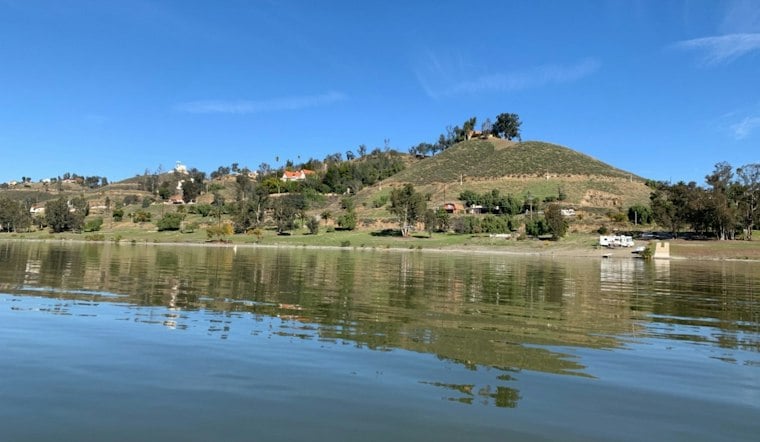
Lake Elsinore's city council voted unanimously to extend its temporary data center moratorium by 10 months and 15 days, keeping a freeze on new facilities in place while staff rewrite zoning rules that officials say were never built to handle server farms. The extension, approved Tuesday, came just days before the original 45-day pause was set to expire during the week of October 5.
The city's initial moratorium was enacted in late August, as reported by The Press-Enterprise. City officials said the extension aims to address the significant impacts data centers could bring to the community, even though no data center has actually been proposed within Lake Elsinore city limits. Councilmember Steven Manos confirmed that point directly, saying no data centers are currently proposed for the city.
The move follows a familiar statutory playbook. Under California Government Code Section 65858, local governments can enact 45-day urgency moratoriums by a four-fifths vote, then extend them for up to 10 months and 15 days after a public hearing, followed by one more year — capping any single freeze at two years total. Lake Elsinore is using that window to update local rules that do not adequately regulate data-center impacts.
A Fairgrounds Project Looms Nearby
Even as Lake Elsinore has no pending application, a related project a short drive away has stirred plenty of local anxiety. The Lake Perris Fairgrounds board has agreed to let a developer study the feasibility of building a data center on a 5-acre portion of the state-owned property, with the larger project also including a helipad and parking garage. Santa Ana-based Global Stack USA, the firm behind the proposal, has said the data center itself would be roughly the size of a shipping container and would not rely on municipal water for cooling.
That hasn't stopped pushback from residents, who have raised concerns similar to those voiced in Lake Elsinore. Global Stack USA has pursued a broader strategy of placing container-sized “edge” data centers on public fairgrounds statewide, with plans for as many as 70 sites by 2030, framing them as dual-use infrastructure that could aid first responders during disasters, according to the Los Angeles Times. Similar resistance has emerged in Kings, Tulare and Ventura counties, the paper reports.
Complicating matters further, Lake Perris Fairgrounds falls under the jurisdiction of the governor-appointed 46th District Agricultural Association Board rather than any city planning department. As Hoodline previously reported, a citywide ban recommended by the Perris Planning Commission would not actually govern the fairgrounds project, since state-owned property sits outside municipal zoning authority entirely.
What Residents Told the Council
Public concern has been building in Lake Elsinore since before the original moratorium passed. Per the city report, residents have raised substantial environmental, public health and economic concerns about data centers, and eight speakers voiced support for a moratorium during the council's August 26 session.
Resident Barbara Myles told the council the city should set the tone for how data centers enter communities. City attorney Barbara Liebold noted that the city legally had to impose the initial 45-day pause before it could be extended further. Tim Sheridan encouraged the public to keep raising data center concerns with representatives in Sacramento and Washington, D.C., saying the issue deserves attention at the local, state and federal levels alike. Michael Carroll, meanwhile, said he supported having independent city employees research data centers and called the moratorium an important step for the city.
Why Cities Are Moving So Fast
The city report cited by Lake Elsinore officials lays out why: existing rules do not adequately regulate data center intensity, utility demand, operational characteristics, environmental impacts or cumulative impacts. The report also found that a modern AI data center can use as much power as roughly 100,000 homes, that data centers could account for up to 12% of U.S. electricity consumption, and that they could consume 32 billion gallons of water nationally by 2028. The report further noted that data centers often rely on fossil-fuel generation and diesel backup systems, which emit high levels of nitrogen oxides and fine particulate matter, and that noise from the facilities has caused reported sleep disruption, headaches and reduced quality of life among nearby residents.
Those local worries track with statewide numbers. The California Energy Commission projects that data centers already draw about 1,000 megawatts statewide — roughly 2% of peak demand on the California ISO grid — and forecasts that figure could climb to 4,500 megawatts, or 9% of peak demand, by 2040. A July 2026 survey by the Public Policy Institute of California found 73% of state residents oppose building AI data centers in their own communities, with 63% citing potential environmental harm, according to prior Hoodline reporting on the statewide trend.
State lawmakers have also stepped in. California lawmakers passed Assembly Bill 2383 and Senate Bill 886 and sent them to the governor; the bills would direct the California Public Utilities Commission to write rate rules preventing data center developers from pushing grid upgrade costs onto residential utility customers, according to Cali Energy.
A Growing List of California Bans
Lake Elsinore is far from alone in hitting pause. Monterey Park, Coachella and Calexico have all outlawed data centers outright, while the Perris City Council is set to consider a permanent ban of its own on October 13 after already approving a temporary moratorium. Coachella Valley cities have approved short-term pauses as well, citing the need to craft data center planning rules or draft permanent bans.
Elsewhere in Riverside County, Palm Springs extended its own moratorium to two years on September 30, and Indio's moratorium runs through October 16, 2027. Monterey Park's path offers a preview of where some of these fights could end: 88.34% of voters there passed Measure NDC, permanently banning data center construction citywide, and a 250,000-square-foot data center was proposed there. The backlash is also becoming a legal risk for developers, as Fennemore Law has discussed.
For now, Lake Elsinore officials say the extended freeze simply gives the city breathing room to study the issue before any developer comes knocking. Lake Elsinore officials said the developer behind the fairgrounds-adjacent interest has already agreed not to build a data center within city limits, leaving the next chapter of the fight centered squarely on the state-owned fairgrounds property next door.





