

























































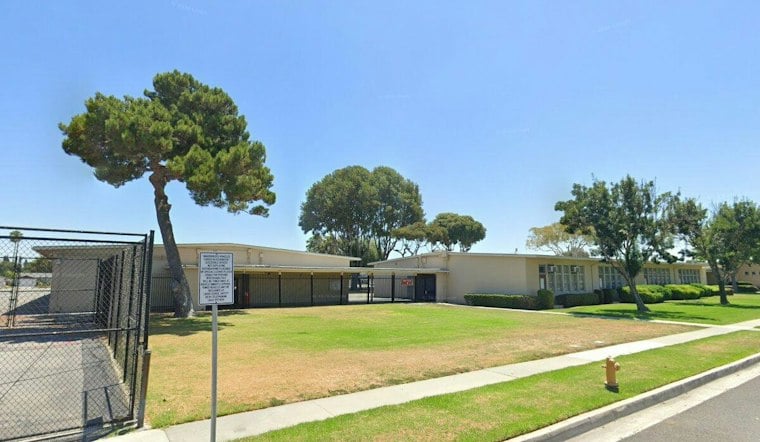
Nearly 30 parents and students gathered outside Monroe Elementary School in Lakewood on Friday to confront Long Beach Unified School District over months of unexplained headaches, nosebleeds, fatigue and dizziness among students sharing one fourth-grade classroom. The protest capped weeks of frustration for families whose children were relocated to the long-shuttered campus in August when Patrick Henry Elementary's upper grades moved there as a temporary swing site during renovations.
Monroe Elementary had sat closed for more than 13 years before Patrick Henry's older students began using it this school year, according to the Long Beach Post. Within weeks, students in one fourth-grade classroom began reporting headaches, nosebleeds, fatigue and dizziness, and the classroom teacher reported feeling dizzy as well. Four students experienced nosebleeds over a two-week span, according to a district letter cited by the outlet.
What the Testing Found — and What Got Left Out
LBUSD hired an outside company to conduct environmental testing in the classroom, with the work beginning on September 30. The testing measured temperatures reaching 102.6 degrees on the hottest days and found higher-than-recommended humidity, with the report stating that heat and moisture may explain the symptoms families reported. Testers also measured low levels of carbon monoxide and human-made chemicals, including paint-related compounds, along with low mold spore levels — but consultants recommended retesting for mold because open windows during the initial testing could have skewed the readings, the Long Beach Post reported.
That retesting recommendation never made it into the message LBUSD sent to families. The district emailed parents saying the tests found no ongoing health risks, but the email omitted the consultants' call for mold retesting. Parents only learned about that recommendation after one parent obtained the full report. Ricky Marengo, whose fourth-grade daughter has experienced headaches, said parents were kept in the dark.
A Pattern Parents Say They Recognized Too Late
Katie Jakemer began organizing after noticing a pattern of symptoms repeating across multiple families, later sharing videos about the issue on social media. Classes continued in the building throughout testing, though some students were temporarily moved elsewhere. According to LBUSD spokesperson Eric Mitchell, some students are set to return to their original classroom on Monday. The district tested only the original classroom of concern and does not plan further testing at this time, even as parents have requested additional testing of all classrooms and a second expert opinion.
Some families chose to keep their children home Friday rather than send them back into the building, citing both safety concerns and a desire to send a message to the district. Sofiya Tormo kept her daughter home that day, saying she wanted to know her daughter was safe at school. Andrew Prickett's fourth-grade daughter has had multiple nosebleeds during the school year, prolonged enough that she was picked up from school and that her pediatrician grew concerned. Prickett said he found it difficult to understand how parents could trust the district again, and other parents told the Long Beach Post that weeks of seeking answers have left them frustrated and fearful.
The Infrastructure Gap Behind the Swing Space
Monroe Elementary's reactivation traces back to LBUSD's long-running effort to modernize aging campuses. Patrick Henry Elementary's own HVAC air conditioning installation was pushed to 2027 amid rising construction costs and multi-year bond issuance schedules, according to CBS Los Angeles, which also reported that LBUSD is managing a phased HVAC rollout across 23 remaining campuses without air conditioning. Long Beach voters approved $1.5 billion through Measure E in 2016 and another $1.7 billion through Measure Q in 2022 to fund HVAC and facility upgrades, per the Long Beach Unified School District, which notes more than 80% of district buildings are over 50 years old.
District bond materials point to a 2018 Harvard University study finding that student learning decreases by 1% for every 1-degree increase in classroom temperature, underscoring the stakes of delayed air conditioning installations in non-air-conditioned classrooms.
Regulatory Blind Spots on Mold and Heat
California's Cal/OSHA regulation, approved on June 20, 2024, and effective July 23, 2024, requires employers to provide cool-down areas and water once indoor workplace temperatures reach 82 degrees, according to the California Department of Industrial Relations. But that standard protects employees, not students, and California law requires school facilities to be kept in good repair without setting statutory limits on airborne mold spores or mandating routine classroom mold testing, according to the Law Firm of Melinda J. Helbock. California also requires school-facility inspections.
Open questions remain about why the district's email to families omitted the consultants' mold retesting recommendation, whether LBUSD will expand testing to other Monroe classrooms, and how the district intends to manage heat exposure while Patrick Henry's renovation continues.
Part of a Broader Reckoning Over Aging Campuses
The Monroe situation lands amid wider upheaval in the district: LBUSD has also proposed closing Gompers Elementary in Lakewood and Edison Elementary in downtown Long Beach after enrollment dropped below 60,000 for the first time since the early 1980s, as Hoodline previously reported. For now, families like Marengo's, Tormo's and Prickett's are left waiting to see whether the district expands its response beyond the single classroom already tested.





