

























































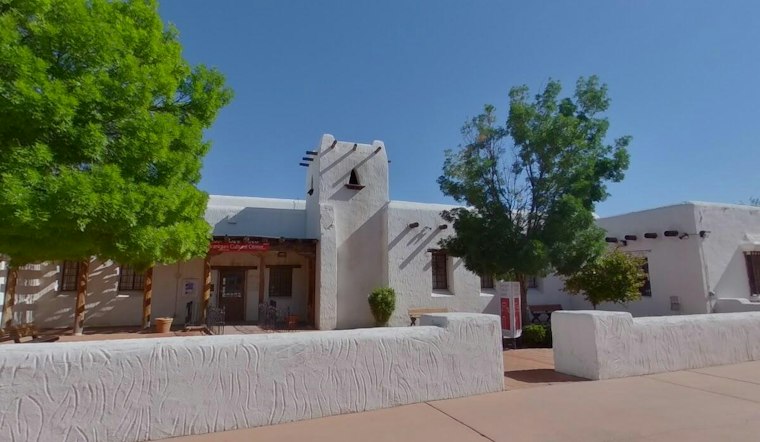
Las Cruces has adopted a new ordinance that forces owners of long-vacant buildings to register their properties with the city and pay annual fees that climb as high as $8,000, part of a push to get hundreds of empty buildings back into use. The city has identified 424 vacant properties within its limits, and officials say the goal is simple: stop neglect, cut down on nuisance conditions, and nudge owners toward actually doing something with the land or buildings they're sitting on.
According to KTSM 9 News, the Vacant and Abandoned Property Maintenance Ordinance applies to residential and commercial properties that haven't been lawfully occupied or in operation for at least two consecutive years. For multi-tenant residential or commercial buildings, the threshold kicks in once at least 50 percent of the units or leasable space has sat empty for that same two-year stretch. Separately, KRWG reported that the city council voted unanimously to approve the measure, while the Organ Mountain News described the ordinance as scheduled for consideration and possible adoption that same day — the two accounts differ on whether the vote had already happened or was still pending.
What Owners Now Have to Do
Under the ordinance, qualifying property owners must register annually with the city, per KTSM's reporting. That registration requires current contact information, and owners must identify measures they'll take to keep the property compliant with maintenance standards. The Organ Mountain News reported that registering owners would also need to provide property identification details, disclose known liens or pending litigation, and supply a 24-hour emergency telephone number.
The city's Community Development Department will administer the program and maintain an online public registry, according to KTSM. That registry is meant to be publicly accessible, the Organ Mountain News noted, giving residents and potential buyers visibility into which properties in their neighborhoods are sitting idle.
Fees Climb Fast the Longer a Property Sits Empty
The fee structure is designed to escalate the longer a property stays vacant. For residential properties, KTSM reports the registration fee starts at $500 in the first year, rises to $1,000 in the second year, and jumps to $2,000 annually beginning in the third year. KRWG's reporting on the same fee schedule described it slightly differently, saying residential fees start at $500 and move to $2,000 per year in the third year.
Commercial and qualifying multi-tenant properties face steeper costs: $2,000 in the first year, $4,000 in the second year, and $8,000 annually starting in the third year, per KTSM. KRWG similarly reported that commercial fees move from $2,000 up to $8,000 per year, while the Organ Mountain News noted that annual registration fees could run as high as $8,000 for buildings and land left vacant for extended periods. KRWG also reported that the ordinance would only penalize properties vacant for more than two years that don't qualify for an exemption, such as being listed for sale at a fair price, and that the measure sets up an appeal process for owners who want to contest their status.
Exemptions Exist, But Don't Erase the Registration Requirement
The ordinance does carve out some relief. Property owners may qualify for temporary fee exemptions when they're taking qualifying steps toward construction, rehabilitation, sale, or leasing, according to KTSM. Owners may also qualify when certain legal proceedings affect the property, and owners of qualifying historic properties can get a temporary exemption while actively working through the city's preservation process. All exemptions require city approval, and none of them eliminate the underlying registration requirement or the city's authority to address unsafe conditions, KTSM reported.
City officials framed the ordinance as a tool to address vacant buildings and underdeveloped properties and the effects they have on surrounding neighborhoods and businesses, according to KTSM. One official told KRWG the aim is to “get these properties back into reuse and get them reactivated and get them redeveloped and get them contributing to the community.” More broadly, the city says it wants to strengthen owner accountability, reduce the impacts of neglected properties, and encourage reinvestment in existing neighborhoods and commercial areas, per KTSM's reporting. The City of Las Cruces describes the ordinance's purpose similarly on its own property page, saying it's meant to address long-term vacancies, reduce deterioration and nuisance conditions, and encourage owners to return properties to productive use.
Albuquerque Has Tried a Narrower Version
Las Cruces isn't the first New Mexico city to try taxing vacancy into submission. Albuquerque's Downtown Vacant Premises Ordinance requires owners to register properties annually once they've sat unoccupied for more than nine months, according to KOB. But that rule only covers a narrow slice of downtown, applying to buildings between First Street and Eighth Street, bounded by Gold and Copper, the station reported. Fees there range from $1,000 to $5,000 a year based on the ground floor's square footage, and the revenue is funneled back into downtown revitalization efforts, per KOB. A separate city planning page lists a different annual vacant building maintenance license fee of $200 plus a $14 technology fee, a discrepancy that underscores how patchwork these vacancy rules can be even within a single city.
For now, Las Cruces property owners are left watching how the newly adopted rule gets applied to the city's hundreds of long-empty buildings, with the registry and its escalating fees meant to be the lever that finally gets some of those properties moving again.





