

























































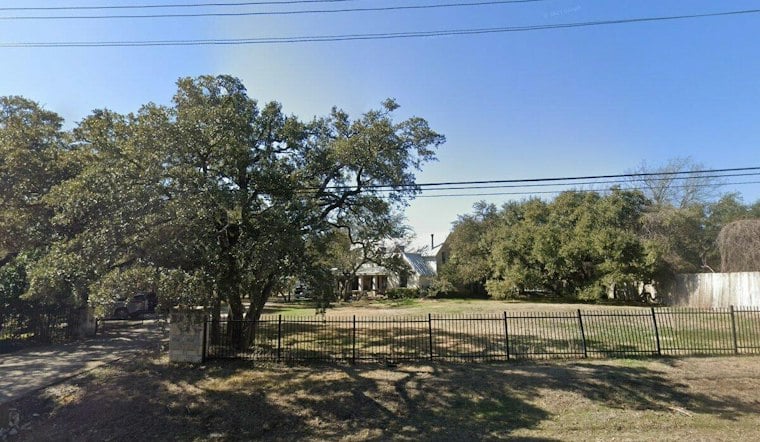
Leander City Council voted unanimously Thursday to approve a special use permit for The 75 Oaks, clearing the way for the small urban farm to keep selling eggs, plants and dairy — and teaching workshops to toddlers, schoolkids and adults — for the next decade. The 2.39-acre property keeps goats and sheep and draws more than 250 families from 14 Central Texas communities every week.
The vote, held Oct. 15, capped more than a year of uncertainty for owner Leeza Tierney, who told council she felt relieved after worrying about the farm's future, according to Community Impact. Tierney acquired the property in 2019, and her family started raising chickens during the COVID-19 pandemic before the operation grew into the farm store and classroom space it is today.
The scramble for a permit traces back to a September 2025 code inspection that found the farm store lacked a certificate of occupancy, the outlet reported. Rather than shutting down, The 75 Oaks worked with city staff to find a way to stay open, ultimately submitting a special use permit application in June 2026. Tierney said the permit mechanism let the farm pursue a path to remain open for the community it serves, and the Leander Planning and Zoning Commission approved the request before it reached the full council.
A Packed Hearing With No Opposition
More than 80 community members spoke or submitted positions in favor of the farm, and no one spoke against it, the same report notes. Residents who traveled from Leander, Liberty Hill, Georgetown and Lago Vista praised the farm for its fresh food, non-traditional classroom setting and the sense of community it fosters. Dozens of attendees reportedly wore shirts reading “Save Our Farm” to the meeting, according to a photo caption accompanying the report.
Resident Ashley Wagner said the farm enables learning, working together and forming lasting connections, while Cindy Hoelscher said it nourishes people beyond just the body. Andy Hogue, president of the neighboring Oakridge HOA, described the property as a natural transition that separates the neighborhood from nearby commercial developments — a framing that appeared to carry weight with council members weighing the farm's place amid Leander's growth.
How The Farm Fits Its Zoning
The property is zoned single-family urban or manufactured home, and city documents state that homes in that category may keep small animals such as goats when the property spans at least three acres — though The 75 Oaks sits on 2.39 acres. Tierney told the council that pick-up traffic is contained on the property through advance ordering windows and roughly 550 feet of internal circulation, with visits lasting anywhere from seconds to a few minutes. Under the newly approved permit, the farm can continue operating without making any alterations, though possible future changes could include paving a drive-through for the farm store, striping customer parking, or adding a site plan with a sidewalk.
The farm also doubles as Leander's only Nice native plant nursery, specializing in plants suited to Texas' climate and ecosystems, and reportedly spends $40,000 annually with locally owned Leander businesses. Its name comes from the number of oak trees on the property.
A Broader Push For Urban Farm Rules
Leander Mayor Na'Cole Thompson said the city is working to create an ordinance that would allow property owners to operate urban farms more broadly if certain requirements are met — a sign that The 75 Oaks' permit fight may not be the last of its kind in the fast-growing suburb. Other Texas cities have wrestled with similar questions. San Antonio took an incremental approach, amending multiple existing codes rather than writing a single comprehensive ordinance, according to Urban Ag News, a process that took nearly a year from drafting through approval. The city ultimately permitted urban farms by default citywide except in single-family residential zones, where operators must still apply for a special use permit, as reported by the San Antonio Report.
That same outlet noted that an Austin urban farm in a single-family district was once shut down after neighbors complained about odor and the city uncovered additional code violations, though the farm eventually reopened once Austin passed its own agriculture ordinance and the operation met the required standards. Under Texas law generally, whether residents can keep livestock such as goats and sheep within city limits depends on local ordinances, according to the Texas State Law Library's guide on backyard animals.
Closer to home, council members also addressed Horizon Park Boulevard, the road serving the area, which city leaders said is in poor condition and will most likely become a future capital improvements project, per Community Impact's reporting. For now, though, the focus remains on The 75 Oaks itself — a farm that, after a year of bureaucratic uncertainty, has a decade of breathing room to keep its goats, sheep and classrooms running.





