

























































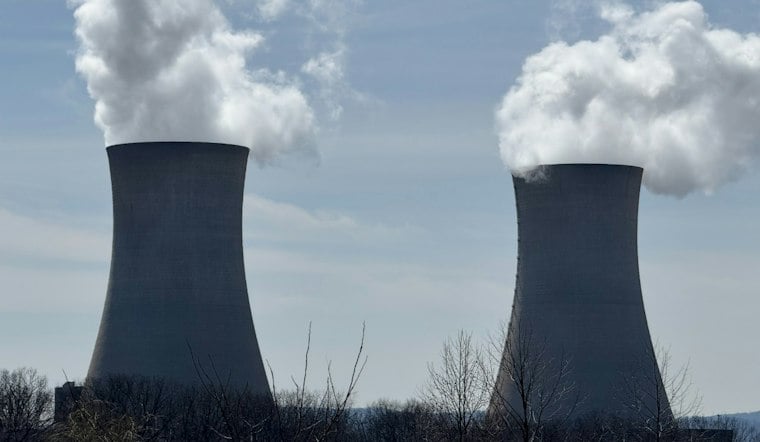
Google has signed a 20-year power-purchase agreement with Constellation Energy to buy electricity from the Limerick nuclear plant in Montgomery County, backing an upgrade that will add 348 megawatts of capacity to the facility. The deal pushes Limerick's maximum output up by about 15 percent, a boost that regulators and local officials have been anticipating since Constellation first announced plans for the uprate.
According to the PHILADELPHIA.Today, the Limerick upgrade is scheduled to roll out between 2028 and 2032 and is expected to create at least 2,500 construction jobs. Limerick's two reactors began operating in 1986 and 1990, and they hold federal licenses that run through 2044 and 2049, respectively. The plant sits on roughly 600 acres along the Schuylkill River and employs nearly 800 people, making it a fixture of the local economy long before artificial intelligence data centers entered the picture.
A Six-Site, $4.3 Billion Push Across Three States
Limerick isn't the only plant involved. Constellation Energy, which operates the facility, has included six nuclear sites across Pennsylvania, New Jersey and Illinois in the broader deal, and the company says it will invest at least $4.3 billion across those locations. Together, the six sites are expected to add 890 megawatts to the PJM grid, the regional transmission organization based in Montgomery County that coordinates electricity for 67 million people across 13 states and Washington, D.C., per the same report.
One of those other sites is much closer than Illinois might suggest — Constellation's 43%-owned Salem Generating Station in Lower Alloways Creek, New Jersey, will gain 97 megawatts under the same uprate plan, according to The Philadelphia Inquirer. Public Service Enterprise Group owns the remaining 57 percent of that plant. Alongside the 890-megawatt uprate agreement, Google and Constellation also signed a separate 15-year supply deal for 2,700 megawatts of electricity drawn from Constellation's existing PJM nuclear fleet, a commitment reported by Utility Dive as evidence that tech companies are chasing multi-decade contracts to lock in firm, zero-carbon power for energy-hungry data centers.
Google says the agreement supports its regional data centers, including sites in Ohio and Virginia, tying a Montgomery County power plant directly to compute capacity hundreds of miles away.
Uprates, Not New Reactors
An uprate means squeezing more output from equipment already in the ground rather than building new reactors — modernizing turbines, steam generators and control systems instead of pouring new concrete. Constellation first announced the Limerick uprate in July 2025, and federal regulators approved a related $167 million digital modernization project at the plant in January, which the company calls the first large-scale digital safety system upgrade at an operating U.S. nuclear plant. Crews will install those systems during planned refueling outages.
Nationally, uprates under Constellation's $4.3 billion plan carry an estimated cost of just over $4,800 per kilowatt, a figure Canary Media cites as proof that upgrading existing reactors is faster and less risky than building new ones — and it helps advance a federal target of adding 5 gigawatts of carbon-free nuclear capacity by 2029.
Jobs and Local Spending Around Pottstown
Robert Bair, president of the Pennsylvania State Building and Construction Trades Council, estimates the Limerick upgrades will create at least 2,500 local construction jobs. Constellation says outage work brings thousands of extra skilled workers into the area, and that influx typically means increased business for hotels, restaurants and shops around Pottstown.
Part of a Bigger Scramble for Grid Power
The Google-Constellation agreement lands amid a broader wave of hyperscaler nuclear deals across the PJM grid. Just a week before the Google announcement, Constellation signed a 20-year power-purchase agreement with Amazon to support a $3 billion, 190-megawatt expansion at Maryland's Calvert Cliffs nuclear plant, with that uprate slated to come online between 2030 and 2032, according to Engineering News-Record. It followed Constellation's landmark 2024 agreement with Microsoft to restart Three Mile Island's Unit 1 — renamed the Crane Clean Energy Center — a deal backed by a $1 billion federal loan commitment reported by The Guardian. That reactor had been retired in 2019 for economic reasons before tech-driven demand made restarting it viable.
The pressure behind these deals is severe. PJM Interconnection has projected a 6,831-megawatt capacity shortfall for the 2028/2029 delivery year, as data center electricity demand across its 13-state footprint is forecast to triple to nearly 30 gigawatts by 2030, according to the Richmond Times-Dispatch. That demand has already driven PJM's wholesale capacity market prices up more than 1,000 percent between 2024 and 2026, clearing at a record price cap of $325 per megawatt-day for the 2028/2029 auction.
Constellation has framed the Google agreement as a direct response to PJM's proposed Bring Your Own Power policy, which pushes large data center developers to procure or fund their own new generation capacity rather than leaning on the existing grid. Regulators and consumer advocates have voiced concerns about large industrial power users shifting infrastructure costs onto residential ratepayers, a tension that is likely to keep shaping how these deals get structured in Pennsylvania and beyond.
Beyond the power purchases, Google and Constellation also established an expanded five-year technology alliance to deploy Google Cloud and Gemini Enterprise AI software across Constellation's operations, aiming to optimize uprate execution, grid dispatch and load-shaping capabilities, according to EnergyChoiceMatters. Load-shaping tools like these would let data center facilities temporarily curtail non-essential power draw during high-stress grid events — a small piece of software married to a very large concrete-and-steel investment in Limerick Township's backyard.





