

























































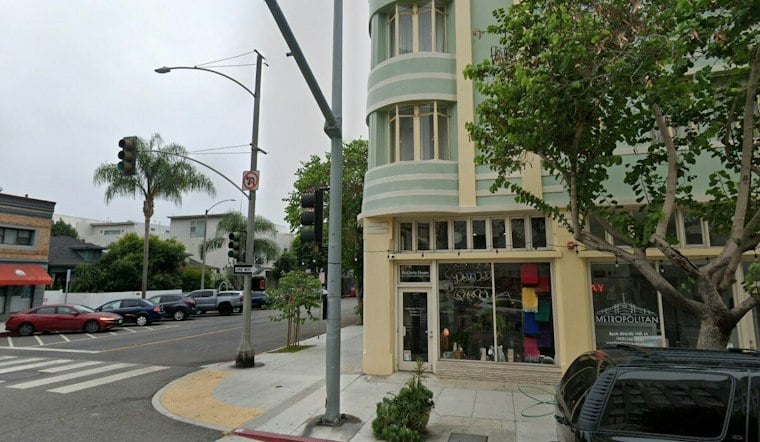
Michael Mosselli and Marty Meier borrowed $11,850 from a company called Woodmere Capital in February 2026 to keep their Long Beach paint-and-sip studio afloat. By September, a collection agency said they owed $34,800 — nearly three times what they had received. The couple eventually shuttered their shop, Brushstrokes + Beverages.
A Lifeline That Became a Trap
Mosselli and Meier's case, first reported by the Los Angeles Times, shows how merchant cash advances — marketed to small-business owners as fast, flexible funding — can leave a business facing repayment demands that exceed the cash it received. Their Woodmere Capital contract described the transaction as something other than a loan and required them to turn over a portion of future sales. The Times reported that the paint-and-sip business's income had fallen by more than half as customers stayed away amid rising grocery and gas prices.
Under the terms Woodmere Capital set, the couple were scheduled to repay $300 daily, an amount that later increased to $405, over roughly two months — a repayment window the company itself estimated at almost two months. Had they kept paying on schedule, they would have handed over more than $20,000 on an advance of $11,850. Eventually, Mosselli and Meier stopped automatic withdrawals.
Liens, Threats and a Mounting Balance
After the couple halted payments, their contract included penalties for default and for blocking the company's access to their bank account. Woodmere Capital is a New York-based company, according to the Times.
Justin Miller, who identified himself as head of Woodmere Capital operations, told the paper that businesses can request a reconciliation to recalculate daily repayments based on recent sales.
How Merchant Cash Advances Work
Merchant cash advances swap a lump sum for a cut of future receipts, said Kara Bruce, as cited by the Times, and companies in the space often blast business owners with dozens of texts, calls and emails a day to market their products, per Bruce. The funding can land in an account in as little as a day — a key selling point, since government-backed small-business loans can take 30 to 90 days to come through, per the Times. But speed comes at a cost: according to NerdWallet, these advances typically carry factor rates of 1.1 to 1.5 instead of conventional interest. Repayments are often fixed daily or weekly withdrawals taken regardless of how much the business actually earns, NerdWallet notes.
Scott Stewart, chief executive of the Innovative Lending Platform Assn., told the Times that advances can genuinely help small businesses cover unexpected expenses, and said bad actors who load companies with unsustainable debt are probably a minority within the industry. Small businesses with little collateral increasingly turn to nonbank finance companies for this kind of funding, and even retail giants Amazon and Walmart partner with third-party companies offering merchant cash advances, according to the Times. David Chase, however, told the paper that merchant cash advances as usually administered tend to harm the small businesses that take them, and attorney John-Patrick M. Fritz said they tend to accelerate existing financial trouble rather than resolve it, per the Times.
California's New Licensing Law
Gov. Gavin Newsom recently signed a California bill requiring merchant cash advance companies to become licensed, the Times reported. Supporters say licensing will let the state investigate and penalize unfair or deceptive practices, while industry representatives who opposed the bill argued that added regulation could make it harder for the sector to provide a needed financial lifeline, according to the Times.
California has passed laws regulating merchant cash advances since 2018, when SB-1235 began requiring, starting January 1, 2019, that providers disclose the full terms of small-business financing products, according to deBanked. That earlier law exempted depository institutions like banks and credit unions, as well as loans above $500,000. A separate state law passed in 2023 bars small-business lenders from charging certain fees, including payment-processing fees. As deBanked explains, even a straightforward-looking advance — say, $10,000 with a $1,000 fee requiring $11,000 in receivables back — can carry hidden costs that aren't obvious up front. Merchant cash advance companies can also file a UCC-1 that serves as public notice or a lien on specified business property, per deBanked.
A Growing Pattern in Bankruptcy Courts
Attorney Stella Havkin told the Times she has handled small-business bankruptcy cases involving merchant cash advances that increased from an estimated 5% of her caseload in 2018 to at least 70% currently, and said the small businesses she sees caught up in these debts typically have no more than a few employees. That trend echoes national bankruptcy data: according to Bloomberg Law, bankruptcy filings showing debt to merchant cash advance firms surged in 2023 and peaked the following year at more than 230 filings nationwide. Analysts estimate the U.S. market for these advances at roughly $20 billion, with some predicting it could exceed $30 billion in the near future and potentially reach $35 billion by 2030, Bloomberg Law reports. The market has grown enormously since 2014, when merchant cash advances nationwide totaled about $8.6 billion before more than doubling by 2019.
Courts don't treat these products consistently. Bloomberg Law notes there is a body of caselaw recategorizing merchant cash advances as loans, but the practice is not universal or automatic. Businesses that can't keep up with repayments sometimes take out additional advances to cover the shortfall, a practice known as stacking that has increasingly preceded collapse, according to Bloomberg Law. In one case the outlet cited, a Houston bankruptcy judge allowed a trustee to pursue claims that an advance funder had violated usury laws by disguising a loan as a purchase of future sales.
A Federal Reserve survey, as reported by the Times, found that merchant cash advance applications rose from 8% of small-business financing requests in 2023 to 12% in 2025. The survey also found that 1 in 10 merchant cash advance applicants were denied, while 4 in 10 government-backed loan applicants were turned down in 2025. LendingTree separately found that 12% of merchant cash advance applicants were denied, compared with 40% of applicants for SBA loans or SBA lines of credit. Government-backed small-business loans typically include interest-rate caps that merchant cash advances do not, and the industry as a whole operates as a largely unregulated financial sector not subject to many of the state and federal oversight rules that apply to regulated banks.
Long Beach Resources for Small Businesses
The City of Long Beach says its Inclusive Business Navigators Program provides free technical assistance, workshops and business coaching or advising to small businesses. The city also provides information about loan programs for businesses. City of Long Beach business advising and loan program information provide details.





