

























































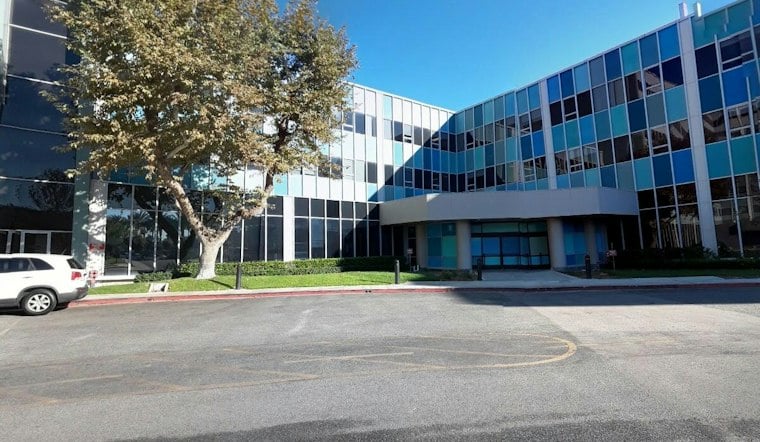
Surgeons at MemorialCare Orthopedic & Spine Institute at Long Beach Medical Center performed their first robot-assisted shoulder replacement on October 14. MemorialCare described it as the first use of the ROSA Shoulder System for patients in South Los Angeles County in a Long Beach Post Brand Stories article commissioned and paid for by the health system; the newspaper’s editorial staff had no role in producing it. A Los Angeles Times B2B report also described the procedure, drawing on information from MemorialCare. These reports document the hospital’s announcement, not independent evidence that the technology improves patient outcomes.
A planning and guidance tool, not an autonomous surgeon
The manufacturer says the ROSA Shoulder System uses a patient’s CT scan to create a three-dimensional model for surgical planning, then provides real-time feedback during the operation to assist with navigation and implant placement. The surgeon remains in control, according to the Zimmer Biomet product description. That assistance is the relevant distinction: the robot supports parts of the procedure, rather than independently performing the replacement.
Regulatory clearance is another piece of context, but not a finding that patients fare better. Zimmer Biomet said the U.S. Food and Drug Administration granted 510(k) clearance on May 22, 2026, for an advanced version of the ROSA Shoulder System, which the company described as supporting preparation of both the glenoid and humerus for anatomic and reverse replacement. That clearance announcement, from the manufacturer, concerns the device’s regulatory status; it does not establish comparative clinical benefit or show that the Long Beach procedure used that advanced version.
Precision is not the same as proven long-term benefit
Research cited in the coverage points to a distinction between placing an implant accurately and demonstrating better results for patients. A study indexed by PubMed reported that digital planning, navigation and patient-specific instruments improved implant-positioning accuracy in some studies, while evidence connecting those tools to better long-term clinical outcomes remained limited and robotic shoulder systems were still in early investigational phases. A separate review of navigation in reverse shoulder replacement reported favorable surgical outcomes, but navigation findings should not be treated as proof of benefit from a specific robotic system; see the review in PubMed Central.
For the Long Beach procedure, the available reporting describes the system and the hospital’s regional-first claim but does not provide comparative patient data on complications, recovery or long-term function. The clinical question, therefore, remains broader than whether the technology can guide implant placement: whether that assistance translates into meaningful and durable benefits for patients.
A separate robotics milestone at the same hospital
Long Beach Medical Center had previously reported a different robotics milestone: in a post published March 26, 2025, MemorialCare said medical director Andrew Wassef had completed his 2,000th Mako-assisted joint replacement, involving a knee replacement. That was a separate hip-and-knee robotics program, not the ROSA shoulder procedure, according to MemorialCare. The two events show the hospital’s use of distinct robotic platforms in orthopedic surgery; neither milestone by itself establishes that robotic assistance produces better outcomes.


