

























































A Long Beach homeowner who wanted an accessory dwelling unit in her backyard decided to skip traditional construction altogether, paying about $65,000 for a factory-built home that arrives folded and opens up on site. Leslie Davis says she chose the Boxabl Casita specifically to avoid the headaches and high costs that typically come with building from scratch, but the process still came with its own set of complications once the unit landed on her property.
A Factory-Built Studio That Unfolds On Site
As reported by KTLA, Davis now uses her roughly 360-square-foot Casita as both a studio and an office. The unit comes with appliances, air conditioning and a fully equipped kitchen with substantial storage, according to the same report, and Davis told KTLA the home included a washer and dryer as well. The Casita Studio is a 361-square-foot model.
Davis paid about $65,000 for the home itself, a price that excluded site preparation and city requirements, per KTLA's reporting. Boxabl advertises a Casita starting price of $60,000, with a turnkey price of about $150,000 once installation and site work are included — a gap that lines up with outside warnings that the advertised factory price typically excludes transportation, foundations, utility hookups, permits, engineering, inspections, site preparation and landscaping, according to offsitebuilder.com.
Permitting, Not Construction, Was The Hard Part
Davis told KTLA that permitting was the biggest challenge of the entire project, and that city requirements called for different arrangements and digging that made the approval process a lengthy one. She still described the finished home as quiet, comfortable and easier than building from scratch, though she criticized the standard flooring and countertops for not being as high-end as she wanted, the station reported.
Long Beach's own guidance backs up what Davis experienced. A new detached ADU may use factory-built housing approved, listed and labeled by California HCD, or manufactured housing approved, listed and labeled by HUD, but it still must comply with zoning setbacks, height limits, building-code fire-separation distances and other site-specific requirements, according to the city's ADU FAQ. The city also directs applicants to review its ADU planning information before applying for a building permit, noting that its materials are based on state ADU law. Long Beach separately runs a Pre-Approved Accessory Dwelling Unit Program, which the city says can help owners understand construction costs and design planning, with some plans and permit applications eligible for over-the-counter approval.
Inside Boxabl's Approach To Factory-Built Housing
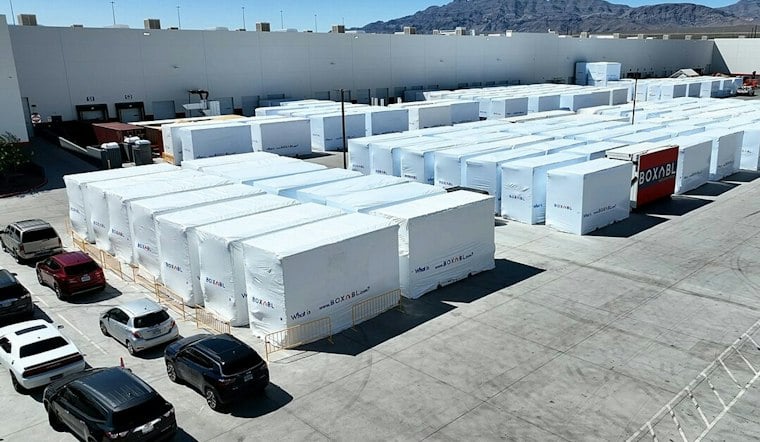
Boxabl builds complete homes inside a factory, folds them, and then delivers them to properties, using standardized building modules the company says can be combined into different kinds of homes and buildings. KTLA's Rich Demuro, who authored the report, had visited Boxabl's factory outside Las Vegas five years before publication, in 2021. Davis recommended that prospective buyers tour that Las Vegas factory themselves before committing to a home.
Boxabl builds complete homes inside a factory, folds them, and then delivers them to properties, using standardized building modules the company says can be combined into different kinds of homes and buildings. KTLA's Rich Demuro, who authored the report, had visited Boxabl's factory outside Las Vegas five years before publication, in 2021. Davis recommended that prospective buyers tour that Las Vegas factory themselves before committing to a home. Boxabl co-founder Galiano Tiramani told KTLA that the company spent several years developing regulatory approvals, research and development, and engineering before moving into sales mode, and said Boxabl aims to eventually use its technology to build nearly every type of building. Boxabl says it has delivered hundreds of units, per KTLA's reporting, though figures on total production vary by source. A Boxabl founder has said the company produced over 700 houses. A 2026 report from the Las Vegas Review-Journal put the figure at 806 Casitas manufactured and 318 delivered across 10 states as of mid-May. The Review-Journal also reported that Boxabl, launched in 2017, says it has built more than 800 homes overall.
A Company Still Posting Losses As It Scales Up
The Review-Journal reported that Boxabl posted a net loss of about $57.5 million for 2025, and that the company warned in a May 13, 2026, SEC filing that those losses were likely to continue as it expands production and facilities. Boxabl's lineup includes the 361-square-foot studio Davis chose along with 722-square-foot one- or two-bedroom units, the Review-Journal noted.
A 2023 Insider report also noted that roughly 8,000 customers had made down payments on Casitas it described as a 375-square-foot model costing about $60,000 apiece — a figure that differs from the 361-square-foot studio listed on Boxabl's current product page — and that the company's factory had produced 400 homes during its first year of operations.
Foldable Homes As A Niche, Not A Replacement
Industry analysis suggests foldable construction may be best suited to specific uses rather than mainstream neighborhoods — think temporary workforce housing, emergency response, glamping resorts, hunting camps, vacation rentals and permitted backyard ADUs, according to offsitebuilder.com. That same analysis concluded foldable homes will likely remain a specialized product serving select markets rather than replacing conventional site-built or modular housing anytime soon, even as the format offers the appeal of unfolding and occupying a structure within hours instead of weeks in the right setting.
Visible ceiling hinges and seams are part of the tradeoff, KTLA noted of the Davis build, a reminder that a folded home doesn't entirely disappear into a conventional look once it's unpacked. For Davis, the finished product has settled into daily use as a quiet workspace, even if the path to get there ran through city hall as much as through Boxabl's factory floor.




