

























































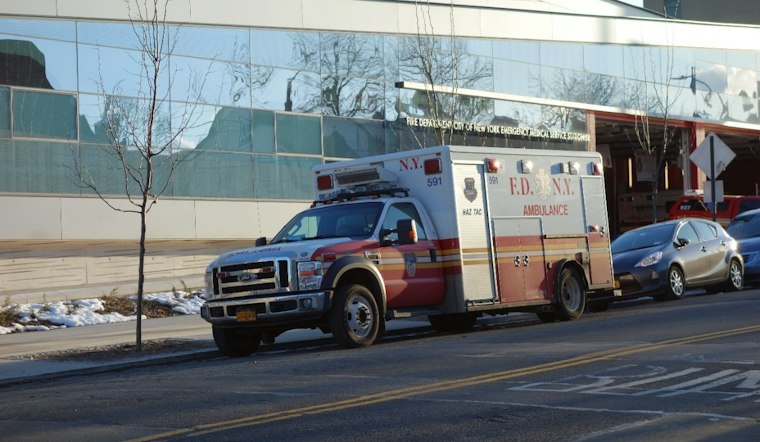
A Long Island family is demanding answers after their mother died, claiming that when they called 911 for an ambulance, a medic told them she did not need to go to the hospital. The family has not identified exactly what happened next, but they say they are left wondering whether a different response could have changed the outcome.
The family brought their account to CBS News New York, which reported that relatives called 911 for an ambulance for their sick mother and were told by a medic that she did not need hospital care. The outlet's investigative unit took up the case after the family sought answers about what led to her death. The report was filed by Mahsa Saeidi, who covered the story for the station.
What New York Guidance Says About Refusing Care
The circumstances of the mother's death, including her identity, age, location, medical condition and the date she died, have not been disclosed in the available reporting. It is also not independently verified whether a medic actually told the family that she did not need to go to the hospital, nor is it established whether she was assessed on scene, whether she or someone on her behalf refused transport, or whether EMS personnel followed required protocols. No ambulance provider, responding personnel or 911 call details have been identified, and no investigation or disciplinary action has been confirmed.
New York State's own EMS guidance, cited in connection with refusal-of-care situations, states that competent adult patients have the right to refuse treatment. The same guidance instructs EMS personnel to try again to persuade a patient to go to a hospital, consult medical direction as required by local protocol, and complete a prehospital care report documenting the encounter, according to the New York State Department of Health. It remains unclear whether that guidance applied to this particular case.
A Wider Pattern of Ambulance Access Concerns
The Long Island family's account lands amid broader scrutiny of ambulance response and refusal practices elsewhere. The American College of Emergency Physicians has developed guidance meant to help EMS medical directors and crews manage high-risk refusals, according to a paper hosted by the National Institutes of Health's PMC repository. Separate research published on ScienceDirect recommends that EMS medical directors routinely review high-risk refusal charts as part of ongoing quality-improvement efforts.
In Maine, the gaps in emergency response have proven lethal in at least one documented case. Rachel Worster Hunter died at her home in Macwahoc Plantation on Jan. 8, 2025, after ten ambulance departments declined or were unable to respond to her 911 call, according to the Bangor Daily News. Her husband, Michael Hunter, called 911 at 9:21 a.m. that day, and she died shortly after 10 a.m. while the family waited for help. Macwahoc Plantation later signed a $9,400 ambulance contract with the town of Lincoln in the wake of her death, the newspaper reported.
The same Bangor Daily News reporting found that about 14% of Maine residents live in areas with no ambulance coverage at all, according to state EMS director Wil O'Neal. A state commission had recommended $350 million in funding over five years to shore up emergency medical services, but the Maine Legislature instead approved a one-time $31 million boost that did not close the gap. In Ontario, a cancer patient told CP24 that a 911 operator said she did not sound sick enough to dispatch an ambulance, prompting her to take an Uber to the hospital instead, according to CP24.
No outcome, response or statement has been provided by the ambulance agency involved in the Long Island case, nor from the hospital, public officials, or family members beyond the initial allegation. For now, the family's search for answers about their mother's death remains unresolved as they continue pressing for accountability.



