

























































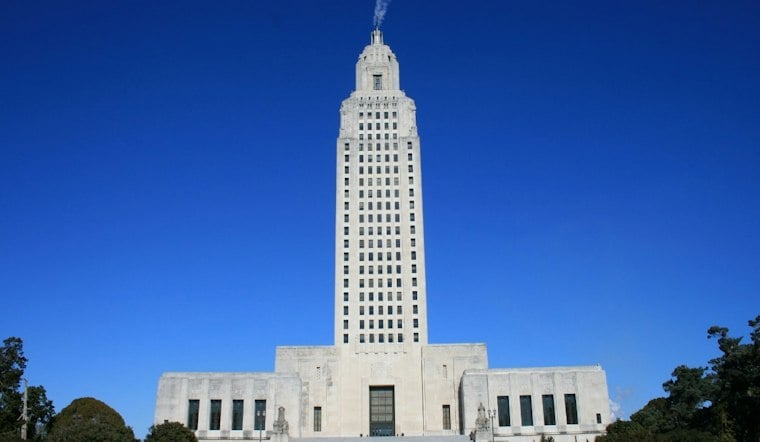
Louisiana voters head to the polls Nov. 3 to decide whether the state constitution should permanently bar companies tied to foreign adversaries like China, Russia, Iran and North Korea from forcing the sale of private property here. The measure, known as Amendment 8, cleared the Legislature without a single dissenting vote earlier this year, but it has drawn pointed objections from critics worried about who gets to define an adversary in the first place.
What Amendment 8 Would Actually Do
The proposal would prohibit a foreign adversary or an agent of a foreign adversary from using Louisiana's private expropriation laws to force the sale of private property, according to Louisiana Illuminator. A yes vote would mean companies under partial or whole ownership or direction of a foreign adversary could no longer use those expropriation laws to compel a property sale, while a no vote would leave current rules unchanged and keep the prohibition out of the constitution. State Rep. Charles Owen of Rosepine authored the measure, introducing it as House Bill 192 on Feb. 18, 2026, according to Ballotpedia.
Owen has framed the amendment as a way to let Louisiana property owners protect themselves, saying it would “allow citizens, if they want to cordon off their property [to prevent] any possibility of a foreign adversary ever expropriating it,” per the same account. Lawmakers moved quickly and unanimously: the state House approved the bill 100-0 on April 21, and the Senate followed with a 36-0 vote on May 21, sending it to the Nov. 3 ballot.
Existing Law Already Restricts Foreign Buyers
Louisiana law already prohibits foreign adversaries from buying or leasing immovable property in the state, and a companion statute bars foreign adversaries from expropriating property located within 50 miles of a military base, according to legislative digests filed with the Louisiana State Legislature. That companion law defines foreign adversaries by identification from the U.S. Treasury Department, which maintains a list that currently includes China, Cuba, Iran, North Korea, Russia and the regime of Nicolás Maduro in Venezuela. An agent of a foreign adversary, under the same law, is defined as anyone under the power, direction, management or policies of a federally identified foreign-adversary country or person.
Louisiana's constitution currently prohibits property from being taken or damaged by private entities except for a public and necessary purpose, a standard reporting from NOLA.com notes Amendment 8 would build on by adding an explicit foreign-adversary carve-out. The Public Affairs Research Council of Louisiana has published an edited, non-partisan explanation of the amendment for its voter guide without taking a position on its passage.
Supporters See a Guardrail, Critics See Vague Boundaries
Supporters describe the amendment as a guardrail against future expropriation attempts by a company connected to a foreign adversary, arguing Louisiana needs a firewall against foreign influence to protect both the state and the country. No evidence has surfaced that a company connected to a foreign adversary has actually attempted to expropriate property in Louisiana, meaning the amendment is framed as a preventive measure rather than a response to a documented case.
Opponents counter that Louisiana would not control the list of countries deemed adversaries, since that designation flows from federal authority. They warn a future presidential administration could add countries or regimes that state leaders don't necessarily consider threats, and that the amendment's broad language could end up blocking expropriation for an important project. Critics have also argued that the definition of an agent of a foreign adversary could sweep in companies with only minority foreign ownership or financing, rather than outright foreign control.
Louisiana Joins a Broader National Push
Louisiana's measure fits into a fast-growing national trend. Lawmakers across the country have cited concerns about food security, supply chains and national security as reasons for restricting foreign land ownership, and other states have already enacted similar rules, particularly for agricultural land or property near military installations. In 2025 alone, legislators introduced 194 bills related to foreign land ownership restrictions across 38 states, with 15 states enacting new laws and 10 more advancing legislation through at least one chamber, according to Multistate.
By the end of the 2025 legislative session, 28 states had some form of restriction on foreign land ownership, with most of those laws enacted since 2023, according to the National Agricultural Law Center. Texas introduced the most bills of any state in 2025, with 20 proposals and one enactment, Senate Bill 17, which bars governments, individuals and entities from designated countries from acquiring any interest in Texas real property, and lets the governor add countries to that list. Idaho took a similar approach with House Bill 356, expanding restrictions beyond farmland to forestland, water rights, mining claims and mineral rights for people and entities tied to foreign-adversary countries. Despite the legislative surge, the Law Center's 2025 recap noted that actual enforcement activity under these state laws remains limited.
What Happens Next
Early voting on Amendment 8 and the rest of Louisiana's ballot runs Oct. 20-27, excluding Sunday, Oct. 25, with Election Day set for Tuesday, Nov. 3, per NOLA.com. If approved, the amendment would formally prohibit private companies considered foreign adversaries, or their agents, from expropriating property anywhere in Louisiana. If rejected, the state's current expropriation rules would remain in place without the added constitutional protection, as outlined by New Orleans CityBusiness.


