
























































A 62-year-old Louisville man is behind bars after police say he told an officer he wanted Kentucky Governor Andy Beshear dead and threatened to target children at a bus stop before turning a gun on himself. Kevin Burch was charged with second-degree terroristic threatening following a phone call with a Lyndon Police Department officer on October 14, according to court documents.
Burch had called a crisis hotline that day, and when a Lyndon officer got on the phone with him, he allegedly said he wanted Governor Beshear dead and that the governor needed to be dragged into the street and publicly executed at Hurstbourne Parkway and Shelbyville Road, court documents state, as reported by WHAS11. He also said that before killing himself, he would take people out and target people in government, and possibly children at a bus stop, according to the same court records.
Police later contacted Burch in a parking lot, where he admitted he had a loaded handgun in his vehicle's console, court documents say. The station's report notes that Burch had previously called and made similar statements before, according to court documents.
What Kentucky Law Says About the Charge
Burch is currently charged with second-degree terroristic threatening, a Class D felony under Kentucky Revised Statutes § 508.078 that carries one to five years in prison and fines up to $10,000 upon conviction, according to Cooley Iuliano Robey, PLLC. Class D felonies represent the lowest felony tier in the state's criminal code.
Kentucky law can elevate the charge to a Class C felony, punishable by five to ten years in prison, if a suspect intentionally makes physical preparations — such as gathering firearms or ammunition — to carry out a threat against specified school-related groups or people lawfully on school property or at school-sanctioned activities, according to the Kentucky General Assembly. Whether Burch's admitted possession of a loaded handgun in his vehicle console could factor into that enhanced charge remains an open question, as does how his initial call to the crisis hotline will affect any mental health evaluation. It is also unclear whether federal agencies will join the investigation.
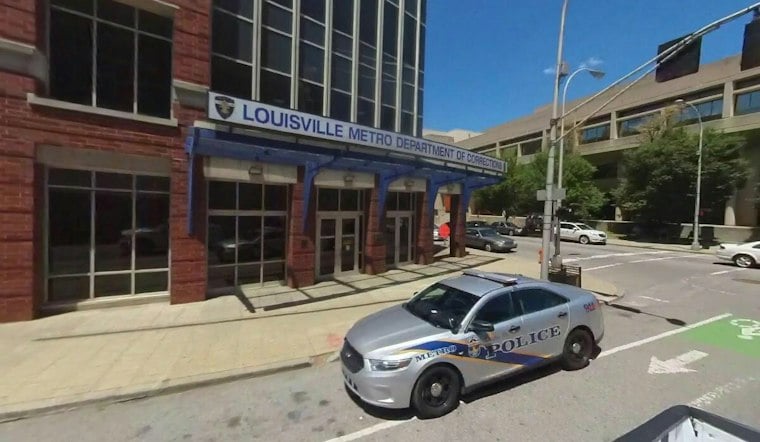
Burch is being held at the Louisville Metro Department of Corrections on $2,500 bond and is expected to attend a preliminary hearing on October 26.
A State With a History of Threats Against Its Governors
Kentucky remains the only U.S. state where a sitting governor was assassinated, after Governor-elect William Goebel was shot near the Capitol grounds on January 30, 1900, proclaimed governor by the legislature the following day, and died three days later, according to the National Governors Association. That history has shaped how seriously Kentucky law enforcement treats threats against its chief executive.
Beshear himself has faced prior threats during his tenure. In May 2020, an effigy of the governor was hanged from a tree on Capitol grounds during an armed protest against statewide COVID-19 health orders, as reported by PBS News; that incident led state officials to revise security procedures and protest rules on the grounds. In April 2020, Kentucky State Police arrested a man over online threats against Beshear and state police troopers, according to PBS News.
Part of a Broader National Pattern
The case also lands amid a documented rise in threats against public officials nationwide. Threat assessment cases recorded by the U.S. Capitol Police involving potential harm or concerning communications directed at public officials reached 14,938 in 2025, up from 9,474 in 2024, according to the Institute for Strategic Dialogue. A separate ten-year analysis found that federal charges for threatening public officials rose from an annual average of 38 between 2013 and 2016 to 62 per year between 2017 and 2022, with ideologically motivated threats comprising nearly half of all cases, per the Combating Terrorism Center at West Point.
That shift has come with a financial cost: spending on security by federal political committees and campaigns exceeded $40 million during the 2023-2024 election cycle, a fivefold increase over the past decade, according to a report cited by ClickOnDetroit. Hoodline has previously reported on similar Kentucky cases, including a Louisville tailgate threat arrest charged under the same statute.





