

























































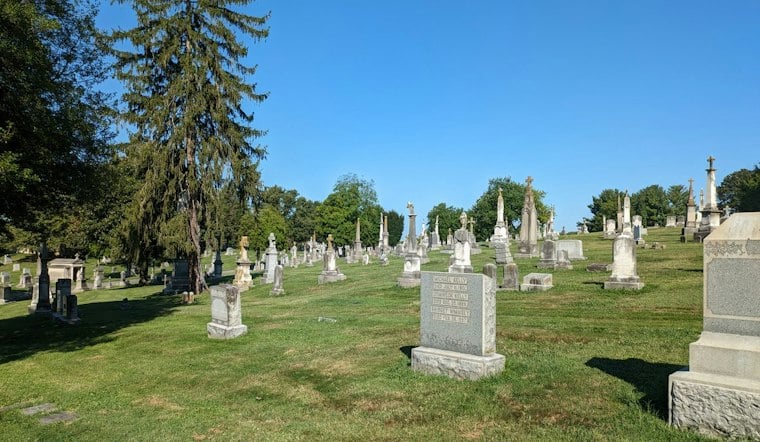
At St. Louis Cemetery in Louisville, generations of Black Catholics have been buried in graves with no headstones, no markers, and until recently, no way for descendants to find them. Now a group of Bellarmine University students is changing that, using geographic information systems and GPS units to map rows of graves.
The effort is part of the Unmarked Graves Project, led by Deacon Ned Berghausen and Linda Fitzgerald in partnership with Bellarmine University, according to WLKY. Berghausen has spent years working to identify the Black Catholics buried at St. Louis Cemetery, the station reports, and the student involvement marks the latest chapter in that long effort. As WYFF reported, Michele Abee Biskis, an assistant professor of environmental studies at Bellarmine, said the project can restore dignity to people and families.
Last year, Bellarmine students studying geographic information systems helped map the cemetery's East Plot and Section X, two historically segregated areas, the station's report notes. During the fall 2025 semester, six students from Biskis's GIS class worked in the classroom and at the cemetery itself, according to The Record. The students took information gathered from ground-penetrating radar and converted it into GPS coordinates, using those coordinates to mark rows of graves across the cemetery.
Turning Radar Data Into Findable Rows
That conversion work paid off: students were able to mark 40 rows, making it possible for descendants to use row and grave numbers to locate specific burial sites, per the same account. Using a grid system, the students worked to locate and mark rows of graves and make sure none were missed, the station's report adds. The students were set to return to St. Louis Cemetery Wednesday to continue using GPS units to locate and mark more graves, and are expected to complete this portion of the project by the end of the semester.
The scale of the task is significant, though the exact numbers depend on which count you look at. The Record reports that 1,589 individuals are buried in the cemetery's T and X sections, while Spectrum News 1 has put the number of unmarked graves of free and enslaved Black people at the cemetery at 1,630, and WDRB has cited 1,634 known people buried there. These burials were in a segregated section designated for Black Catholics between 1867 and 1937, according to Spectrum News 1.
Families Searching for a Place to Grieve
For families, the stakes behind the mapping are deeply personal. Deen Hooper said families may not know where relatives buried at the cemetery ended up or whether they have a place to visit, per WYFF. Sam Safly said family members buried at the cemetery should know that they are there, and that they are seen, the station reported.
The present-day St. Louis Cemetery opened in 1867, and close to 50,000 burials have taken place there since, according to the Archdiocese of Louisville. Berghausen previously completed a 13-month project, finished in 2024, to identify people buried in the once-segregated section during that 1867-to-1937 window, The Record reports. He now plans to partner with Bellarmine history students on a separate project that would use historical records to write the stories of the Black Catholics buried in the cemetery, according to the same report.
Mapping Burial Sites by Name
A separate mapping effort described by WDRB is planned to use GPS in Strozier's map and match gravesites with burial names, so people could search for specific graves. For families still searching St. Louis Cemetery's rows for a name, making those graves easier to find can't come soon enough.



