

























































Twenty-six objects that have never before traveled together to the United States are now sitting in galleries just off the National Mall, giving Washington, D.C. visitors a shot at Islamic art masterworks without a transatlantic flight. The pieces, on loan from the Musée du Louvre, range from a brass basin inlaid with silver and gold to a bronze lion likely used as a fountain spout, and they're drawing attention for a run that lasts only a few more months.
The exhibition, titled “From the Louvre: Masterpieces of Islamic Art,” is on view at the Smithsonian's National Museum of Asian Art through January 18, 2027, according to a Smithsonian news release. It marks the first time these 26 works have been shown together in the U.S., and as WJLA notes, the show offers a rare opportunity to experience Islamic art without making the trip to Paris. The objects span roughly 1,200 years of history and a geographic sweep that stretches from Spain to India, per the museum's own exhibition page.
What's on Display in Galleries 23 and 24
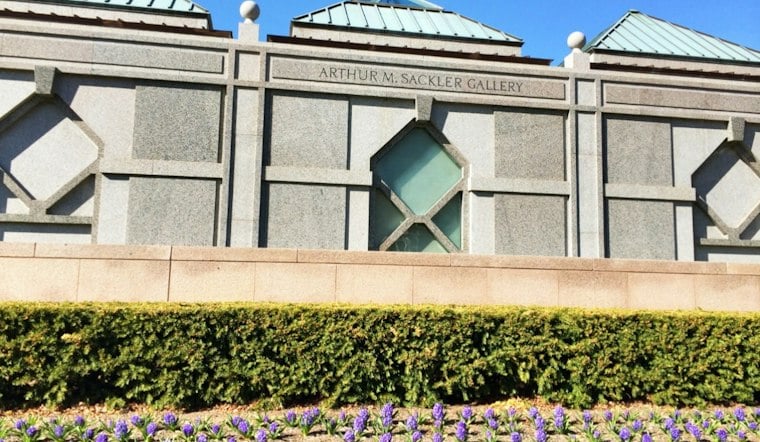
The show is housed in the East Building, Sublevel 1, Galleries 23 and 24, at 1050 Independence Avenue SW, divided into six distinct areas, the museum's exhibition page states. Visitors will find paintings, metalwork, jade, ceramics, glass and architectural elements throughout the space, the Smithsonian's release notes, with several pieces showcasing craftsmanship in gold, silver and other precious materials.
Among the standout objects are a Syrian-Egyptian basin inlaid with silver figures, an Andalusian bronze lion known as the Lion of Monzón, and a jeweled portrait of a Persian king, according to the museum's exhibition description. The centerpiece may be the Baptistery of Saint Louis, a 14th-century brass basin inlaid with silver and gold that was later used to baptize King Louis XIII in 1606, the Smithsonian release states.
A Century-Long Institutional Bond
The exhibition is co-curated by Dr. Souraya Noujaim, director of the Islamic Art Department at the Musée du Louvre in Paris, and Dr. Simon Rettig, associate curator for the Arts of the Islamic World at the National Museum of Asian Art, according to the museum's exhibition page. It's organized jointly by the two institutions, the museum confirms, and it highlights what WJLA describes as a century-long partnership between the Louvre and the Smithsonian.
That relationship goes back to the National Museum of Asian Art's founder, Charles Lang Freer, and his friendship with French curator Gaston Migeon, according to Smithsonian Magazine. The ongoing collaboration between the two museums is also central to the show's framing, according to The Art Newspaper, which reports that Washington will be the exhibition's only stop.
Why These Pieces Are Here Now
Part of what made the loan possible was renovation work underway in Paris that allowed the objects to travel abroad, combined with the museum's longstanding institutional ties to the Louvre, according to the Washington Diplomat. The exhibition also digs into a broader question: how objects come to be regarded as masterpieces in the first place, through artistic mastery, historical use, exchange between cultures and public reception over time, per the Smithsonian's release.
For D.C. visitors, the show is a chance to see centuries of craftsmanship from across the Islamic world gathered in one place, with Washington as the exhibition’s only stop. With the run set to close January 18, 2027, it gives local museumgoers a few months to take in artifacts that curators on both sides of the Atlantic have spent years preparing to share.





