

























































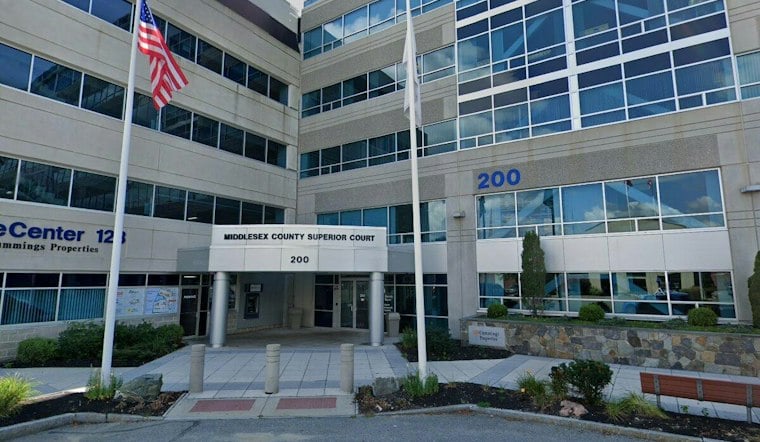
A Middlesex Superior Court jury has convicted a Lowell man of voluntary manslaughter, not murder, in the November 2022 stabbing death of a Lowell father of five inside a home on Princeton Boulevard. Jurors rejected prosecutors' request to find Jacob Dwyer guilty of second-degree murder, instead concluding he acted unlawfully but without malice when he killed 36-year-old Christopher Dubey. Dwyer was 26 at the time of the killing.
Dubey suffered two stab wounds to the chest and abdomen and was pronounced dead at Lowell General Hospital, according to the Boston Herald. The hospital's main campus on Varnum Avenue operates as an American College of Surgeons-verified Level III Trauma Center serving emergency patients across the Merrimack Valley, according to Tufts Medicine. Dubey was described in the Herald's reporting as a Lowell resident and father of five.
How the Confrontation Unfolded
According to the Herald, Dubey entered Dwyer's Princeton Boulevard home on November 8, 2022, after Dwyer's girlfriend asked him to help calm an argument between the couple. The girlfriend told police she watched Dubey enter the home and, minutes later, saw Dwyer carrying him out bloodied. Dubey reportedly told the girlfriend that he had punched Dwyer, per the police report cited by the Herald, while Dwyer told police he was scared and stabbed Dubey.
Responding Lowell officers were flagged down on the day of the stabbing by a passing driver who was transporting Dubey as he suffered from his wounds, according to a statement from the Middlesex District Attorney's Office. The office's preliminary investigation found that Dubey had arrived at the home after receiving a call indicating assistance was needed because Dwyer was acting erratically, and noted that all parties involved were known to one another.
Defense Leaned on Victim's Violent Past
At trial, Dwyer testified that he asked Dubey to leave, was attacked in a cramped entryway, and feared losing consciousness during the struggle before he pulled a knife from his pocket. His attorney, Lorenzo Perez, said the defense called four witnesses who testified about Dubey's prior violent acts, describing Dubey as an aggressor with a history of assaults.
That strategy relied on a specific Massachusetts evidentiary rule. Under the state Supreme Judicial Court's 2005 ruling in *Commonwealth v. Adjutant*, defendants claiming self-defense may introduce evidence of a victim's prior specific violent acts to establish who was the initial aggressor, regardless of whether the defendant knew about those acts beforehand, according to Justia Law. The distinction between murder and manslaughter in Massachusetts hinges on malice: second-degree murder requires proof of malice aforethought, while a voluntary manslaughter conviction reflects a jury finding that mitigating circumstances, such as sudden heat of passion or excessive self-defense, negated that malice, per Degiacomo & Mikhlin, P.C.
Case's Long Road Through Middlesex Courts
Dwyer's case began with a district court charge of assault and battery with a dangerous weapon causing serious bodily injury. The Middlesex District Attorney's Office said Dwyer was initially arraigned in Lowell District Court and ordered held pending a dangerousness hearing. A grand jury later returned a second-degree murder indictment, and the case proceeded in Middlesex Superior Court. The original 2022 prosecution was led by Assistant District Attorneys Daniel Harren and Terence Kiernan, alongside Victim Witness Advocate Dora Quiroz.
Perez said the parties could not reach a plea agreement over dropping the murder charge and recommending a manslaughter sentence, pushing the case toward trial. He said that after four years of litigation, two weeks of trial, and numerous motion hearings, attention has now shifted to finding a reasonable sentence. Perez added that Dwyer and his family were grateful for the verdict, while he personally struggled with it and with the prosecution of the case.
Sentencing Set for Tuesday
Dwyer is scheduled to be sentenced Tuesday at 2 p.m. Voluntary manslaughter carries a maximum sentence of 20 years in state prison with no mandatory minimum, giving the sentencing judge broad discretion. The Middlesex District Attorney's Office has sought a 15-year sentence, and Perez said he expects prosecutors to renew that recommendation at the hearing.
Middlesex County, the most populous county in Massachusetts, sees its major felony prosecutions overseen by the Middlesex District Attorney's Office across 54 constituent cities and towns, including Lowell. The office's caseload places it among the largest regional handlers of violent felony indictments in New England.





