

























































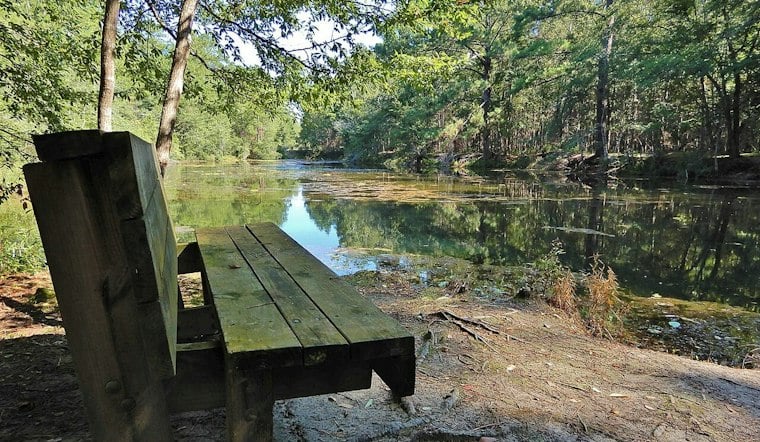
North Carolina State Parks and The Conservation Fund have announced the acquisition of a 3,005-acre tract in Robeson County near Fair Bluff, land that will become part of Lumber River State Park. The addition sits along the Lumber River's west bank near the South Carolina border and is meant to protect that stretch of riverbank while opening up public access to a scenic section of the waterway.
The deal pushes Lumber River State Park's total acreage to 16,594, a jump that, as reported by 947qdr.com, surpasses Dismal Swamp and Stone Mountain state parks and makes Lumber River the second-largest unit in North Carolina's state parks system. Only South Mountains State Park remains larger. The news was also covered by WWAYTV3, which covered the park's leap in statewide ranking.
The acquisition unfolded in two linked transactions. The Conservation Fund purchased the property from a willing private seller using a $4.05 million grant from the North Carolina Land and Water Fund along with private fundraising, according to the same 947qdr.com report. State Parks is then acquiring the land from The Conservation Fund with a $3.6 million grant from the federal Land and Water Conservation Fund, supplemented by $234,375 from the state's Parks and Recreation Trust Fund.
A River Already Flagged as Endangered
The Lumber River stretches 115 miles through Columbus, Robeson, Scotland and Hoke counties, carrying dual distinction as a National Wild and Scenic River and a North Carolina Natural and Scenic River. Earlier this year, the river landed at No. 4 on American Rivers' list of the nation's Most Endangered Rivers, a ranking noted in the same local coverage of the acquisition. The river basin's extensive wetlands provide habitat for rare and endangered plant and animal species, and the waterway has served as a resource for regional communities for generations, including the ancestors of the present-day Lumbee Tribe.
This is not the first time state and conservation dollars have flowed toward protecting land along the Lumber River. Back in November 2024, the Robesonian reported that Robeson County had been approved for grants adding more than 3,400 acres to North Carolina state parks across several counties, including land tied to Lumber River State Park and the protection of N.C. Wildlife Resources Commission game lands.
New Access Points Along the River
Visitors reach Lumber River State Park through three primary access areas spread along its length: Princess Ann in Orrum, Wire Pasture in Maxton, and Chalk Banks in Wagram. The newest of the three, Wire Pasture, opened this summer just minutes from the Lumbee Tribe Cultural Center and the University of North Carolina at Pembroke, giving paddlers and hikers another entry point into the park's growing footprint.
With the 3,005-acre addition set to become part of the park, the land will help protect the river's west bank while widening the public's ability to paddle, fish and explore one of the state's most ecologically significant waterways.





