

























































Andrew Hernandez was sentenced to life in prison without the possibility of parole on Monday after pleading guilty to first-degree murder for strangling his cellmate, 51-year-old Michael Campbell, with a shoelace inside their shared cell at Upstate Correctional Facility in Malone. Campbell's mother and sister delivered emotional testimony in court, carrying his ashes as they addressed the man who killed him.
According to WPTZ, Campbell's mother, Joan Scotchmer, told the court, “This is my son Michael. All he wanted was to come home.” Campbell had been serving a 20-year-to-life sentence for stealing a van, according to his mother, as the station reported. Hernandez made no statement of his own during the proceeding, per the same account.
Campbell was found dead in the cell on April 6, state investigators say. New York State Police, who responded to the Malone facility around 4:30 p.m. for a report of an unattended death before confirming foul play, later determined through an autopsy that Campbell had been strangled, according to a New York State Police announcement.
A Violent History Predating the Cell Assignment
Hernandez's presence in a maximum-security facility traces back to 2001, when he shot his mother, Janice, in the back of the head with a .22-caliber rifle in Guilderland after severe hearing loss derailed his lifelong goal of enlisting in the Marines once he turned 18. He turned himself in at Guilderland Town Hall at 11 p.m. on Oct. 15, 2001, to report the killing, according to The Altamont Enterprise.
In November 2013, Guilderland Police Officer Nick Ingle disclosed to the school board that Hernandez had written out a detailed plan before the killing to attack Guilderland High School with guns, take one girl hostage, and shoot first responders — using his mother's murder as a test of whether he could kill, the Enterprise reported separately. At the time, the killing had been publicly described as a purely domestic matter.
Part of a Deadly Stretch in Upstate Facilities
Campbell's killing was not an isolated event inside New York's prison system. It was the first of three inmate homicides that occurred within a five-day span across state facilities in April, alongside fatal altercations at Riverview Correctional Facility and Gouverneur Correctional Facility. The Gouverneur altercation was between cellmates, while the Riverview fight occurred in a dorm area, according to Daily Voice.
Those deaths reignited a political fight over New York's 2022 HALT Solitary Confinement Act. Assemblyman Matt Simpson and other lawmakers renewed calls to repeal the law, arguing that restrictions on isolated housing had created unchecked violence behind bars, according to WAMC. The HALT Act restricts how long and under what conditions the state can place incarcerated people in segregated housing.
Understaffing, Strikes and a Surge in Assaults
The clash over solitary confinement rules didn't begin with these deaths. In February 2025, roughly 15,000 New York corrections officers staged an unauthorized wildcat strike across nearly 42 state facilities over dangerous working conditions, prompting Governor Kathy Hochul to deploy the National Guard and temporarily suspend parts of the HALT Act, according to Albany Law School's Government Law Center. Officers cited extreme understaffing and limits on disciplinary isolation as primary drivers of deteriorating safety — a dispute Hoodline covered at the time.
The agency began tracking staff and inmate harassment as separate categories from physical assaults earlier this year.
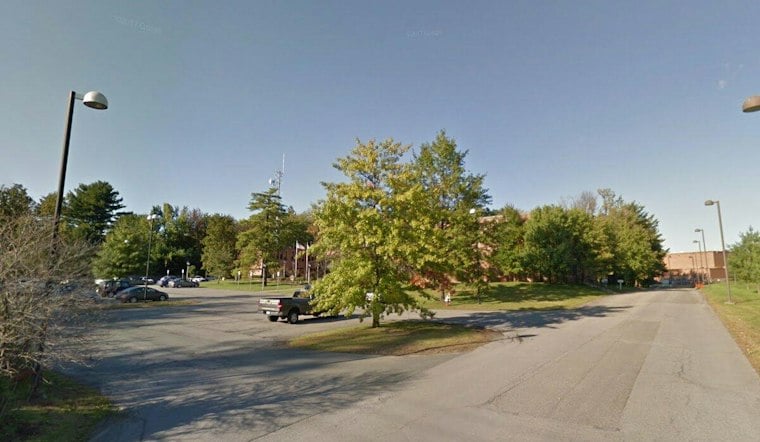
Upstate Correctional Facility, where Campbell died, was built in 1999 as a maximum-security prison specifically designed for double-celling incarcerated people in disciplinary housing units for up to 23 hours a day — a design that has remained a focal point in debates over solitary confinement reform, per Albany Law School.
New Transparency Rules Now in Effect
In December 2025, New York enacted Senate Bill 8415, requiring the corrections department to post a public website notice within 24 hours of any incarcerated person's death and to release relevant video footage to state oversight investigators within 72 hours. The law was detailed by Prison Legal News.
For Campbell's family, though, Monday's sentencing closed a case that began with a van theft conviction and ended with a strangling in a cell shared with a man who had killed before.




