

























































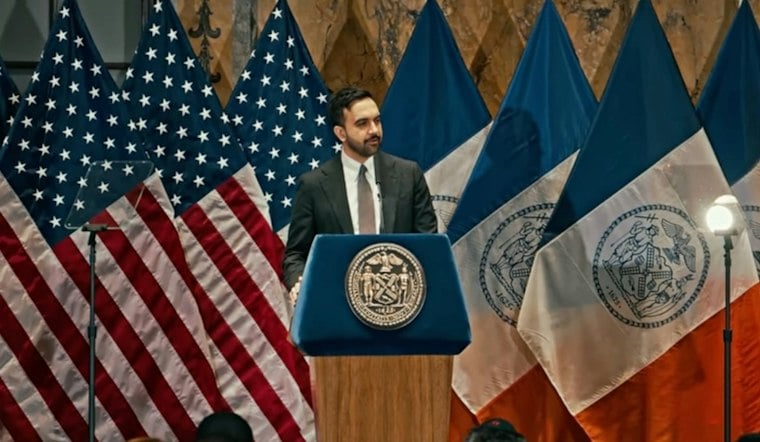
Mayor Zohran Mamdani wants to give New Yorkers the power to sue companies directly over unfair and abusive business practices, a move that would let tenants, gig workers, consumers and small businesses bypass government enforcement and head straight to court. The bill, known as the POWER Act, is set to be introduced on Mamdani's behalf by City Council Member Harvey Epstein at the Council's stated meeting Thursday.
The proposal, as reported by amNewYork, would create a municipal private right of action under New York City's consumer protection law, letting individuals and organizations pursue claims over unfair methods of competition and unfair, deceptive, abusive or unlawful business practices without waiting on city regulators. Under the plan, tenant unions could sue landlords over deceptive trade practices, taxi drivers could challenge financing companies over unconscionable loan terms, and consumers could seek relief from predatory for-profit schools. The acronym itself stands for “People and Organizations Winning Economic Relief,” according to NYC.gov.
Mamdani said New Yorkers need a legal pathway to seek recourse when they're wronged by unfair business practices, per the same amNewYork report. Department of Consumer and Worker Protection Commissioner Sam Levine called the proposal one of the greatest expansions of consumer and worker rights in New York City history, while Epstein said the measure would expand the reach of the city's consumer protection law and create a faster path to justice.
Closing a Decades-Old Gap in State Law
The bill targets a specific hole in New York State law. Under General Business Law Section 349, enacted in 1970, private individuals can only sue over “deceptive” business practices, while the authority to prosecute “unfair” or “abusive” conduct belongs exclusively to the state Attorney General, according to the Legal Aid Society. Earlier attempts to close that gap at the state level, including a 2021 bill from State Senator Leroy Comrie, failed to pass the Legislature, pushing city leaders to try a local workaround instead.
Levine has pointed to newer scams that he says existing deception statutes don't adequately cover, including AI voice-cloning financial schemes targeting older adults and facial-recognition store security systems that wrongly flag shoppers as thieves, according to Muslim Network TV. Levine previously directed the FTC's Bureau of Consumer Protection before joining the Mamdani administration in January 2026. The New York City Bar Association has separately recommended creating a private right of action under city consumer protection standards, citing shrinking regulatory resources and the need for private litigation to supplement government oversight, the outlet reports.
Business Groups Push Back
Not everyone is on board. Business groups oppose the broader right to sue, warning it could expose companies, including small businesses, to costly litigation, per amNewYork's reporting. A spokesperson for ride-share platform Uber argued that creating a municipal private right of action for “unfair or abusive” conduct would let private trial lawyers effectively write regulatory rules through lawsuits instead of official agency rulemaking.
Jersey City Mayor Steven Fulop said the proposal would make it more expensive to operate, invest, hire and grow in New York, warning that litigation costs could translate into fewer jobs, less investment and higher prices. Jessica Walker said she supports holding bad actors accountable but wants safeguards built in for smaller businesses — clear definitions of what counts as unfair or abusive, a chance for companies to fix problems before facing a lawsuit, and specific protections for small operators.
Tenant Unions and Gig Workers Stand to Gain
Cea Weaver, director of the Mayor's Office to Protect Tenants, said the POWER Act will give tenant unions statutory standing to sue landlords directly over hidden utility charges, withheld security deposits and unmaintained living conditions, bypassing lease arbitration clauses, according to NYC.gov. The Office to Protect Tenants was established by the Mamdani administration in early 2026 to increase oversight of residential property owners. Nonprofits, too, would be able to bring claims under the bill on behalf of themselves, their members and the public, while workers, tenants and small businesses could pursue their own cases.
The American Economic Liberties Project has backed the POWER Act, arguing that private lawsuits offer another way to enforce consumer protections when government agencies lack the resources to investigate every complaint. City Hall has described the bill as a first-in-the-nation measure meant to deliver the country's strongest consumer and worker protections.
Part of a Broader Three-Bill Package
The POWER Act is one piece of a three-bill consumer protection package Mamdani plans to send to the City Council. A companion measure, the Truth in Pricing Act, sponsored by Epstein and Carmen de la Rosa, would require businesses to display prices on individual items or store shelves. A third proposed measure would ease restrictions on when the Department of Consumer and Worker Protection can challenge a business practice as unconscionable and eliminate a lengthy rulemaking requirement for the agency.
The legislation builds on Mamdani's Executive Order 9, announced at a July 10, 2026 press conference attended by Levine, Mamdani and Lina Khan, which required upfront price transparency, restricted hidden junk fees, and established mandatory click-to-cancel subscription rules enforceable with civil fines starting at $525 per violation, per NYC.gov.
An Agency Still Catching Up on Resources
The push for private lawsuits comes as the city's consumer watchdog agency works through its own budget constraints. Mayor Mamdani's Fiscal Year 2027 Executive Budget allocated $78.4 million to the Department of Consumer and Worker Protection, up from $74.7 million in his preliminary proposal, with a commitment to raise funding to $96.6 million by FY2030 to address long-standing staffing shortages, according to Documented. City Council members and labor unions had previously rallied for full funding of the agency.
In the first four months of 2026, the department recovered more than $9.3 million in restitution for consumers, workers and small business owners, including a $5.2 million settlement in January 2026 with meal delivery app platforms over minimum wage violations, Documented reported. Giving private plaintiffs a direct path to court is designed, in part, to take some of that enforcement burden off an agency that is still building up its staffing and budget.
The POWER Act arrives alongside other enforcement moves from the administration, including a lawsuit against a Manhattan law firm over fake crash claims. Whether the Council inserts pre-suit notice requirements or cure periods for small businesses to address industry pushback remains to be seen as the bill moves through the legislative process starting Thursday.



