

























































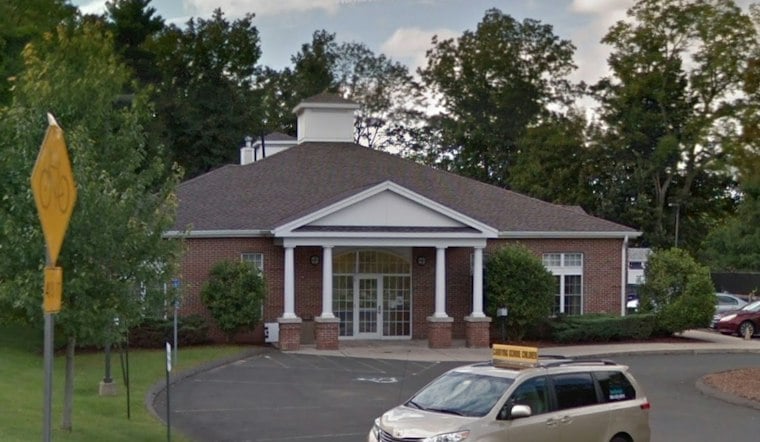
A Manchester school that serves some of Connecticut’s youngest children with autism and developmental disabilities is expanding, and it still may not be enough to keep up with demand. Ädelbrook Academy, which has operated in Manchester for 13 years, is building a new wing that will grow its capacity to 70 students ages 3 to 11, adding roughly 30 staff positions along the way.
The expansion comes after Connecticut Governor Ned Lamont announced a $1.5 million state grant on September 24, 2026, for the project, bringing total state investment to $2.5 million following an earlier $1 million award, according to the Hartford Courant. The funding, drawn from the state’s Community Investment Fund, is meant to support capital improvements in targeted Connecticut municipalities, according to Ädelbrook. State Senator MD Rahman, a Democrat representing Manchester, campaigned for the assistance and said the expansion will help students who need more resources actually receive them, the Courant reports.
A Campus Already Full, With a Waitlist to Match
The Manchester campus is Ädelbrook’s only one serving preschool and elementary-age children, and it has long been capped at 40 pupils — a ceiling it consistently fills. Two years before the expansion was announced, the school received 55 applications for new placements but could only accommodate six applicants, per the Courant’s reporting. Once complete, the new wing will add four classrooms, along with renovated offices and treatment rooms for students with complex disabilities, the school said.
Ädelbrook had originally planned a second floor after winning zoning approval in 2025, but ultimately opted to build a 2,150-square-foot addition on the northern face of the building instead, according to the same report. The project also includes a redesigned parking lot to accommodate the added traffic. Alyssa Goduti said Ädelbrook provides highly specialized services and early intervention in Manchester, and that such intervention can improve long-term outcomes — with some students returning to public school within a year or two.
Why Demand Keeps Climbing
The Manchester expansion is unfolding against a broader statewide trend. Connecticut Department of Education EdSight data for the 2025-26 school year shows 15,576 public school K-12 students identified with autism, representing 3.3% of overall enrollment and 17.7% of all special education students statewide — up sharply from 11,195 students, or 2.3% of enrollment, just four years earlier. Total K-12 special education enrollment in Connecticut reached 87,770 students in 2025-26, or 18.4% of public school students, even as overall enrollment declined over the same period.
Nationally, Centers for Disease Control and Prevention surveillance published in April 2025 estimated that 1 in 31 eight-year-old children, or about 3.22%, was identified with autism spectrum disorder across 16 U.S. monitoring sites in 2022 — up from a prior estimate of 1 in 36. Goduti said autism is the fastest-growing disability and that needs are increasing, according to the Courant’s reporting.
Beyond Manchester: A Statewide Footprint
Ädelbrook currently enrolls students from about 60 Connecticut school districts, with the Manchester campus itself serving 11 districts within roughly a one-hour drive. On a typical day, 11 buses and vans deliver students to the Manchester school; Ädelbrook anticipates serving at least 10 additional districts once the expansion opens, which would add an estimated 10 more buses and vans to the daily routine.
The organization also operates schools in Bloomfield and Cromwell for middle and high school students, along with a Middletown campus offering vocational and life-skills training for young adults ages 18 to 22. In September, Ädelbrook purchased a school building in Essex to establish its fifth academy, aimed at serving special education students ages 9 to 22, according to Ädelbrook. The new Essex campus joins the organization’s existing schools across the state.
The Fiscal and Legal Backdrop
These placements are sustained by a specific set of policy mechanisms. Under the 2020 federal court ruling in A.R. v. Connecticut State Board of Education, Connecticut school districts must provide special education services under the Individuals with Disabilities Education Act until a student’s 22nd birthday or graduation with a regular diploma, according to Disability Rights Connecticut. Previously, districts could end services at the close of the school year in which a student turned 21.
Local districts, meanwhile, can seek partial state reimbursement through Connecticut’s Excess Cost grant system when a high-cost placement — like a specialized seat at Ädelbrook — exceeds 4.5 times the district’s prior-year average per-pupil expenditure, according to the School + State Finance Project. Statewide, out-of-district tuition expenditures paid by Connecticut districts grew by $148 million over a five-year period, the same report found. The state has also backed Ädelbrook’s facilities before: in April 2024, the Connecticut Office of Policy and Management awarded the organization $350,000 under the state Nonprofit Grant Program for a playscape expansion at its main Cromwell campus.
Even as Ädelbrook’s Manchester expansion moves forward, officials expect the new enrollment slots to fill quickly. Public school districts across the region continue to bus students to and from Ädelbrook’s campuses each day, a logistical backbone for families seeking specialized services that their home districts cannot provide directly.





