

























































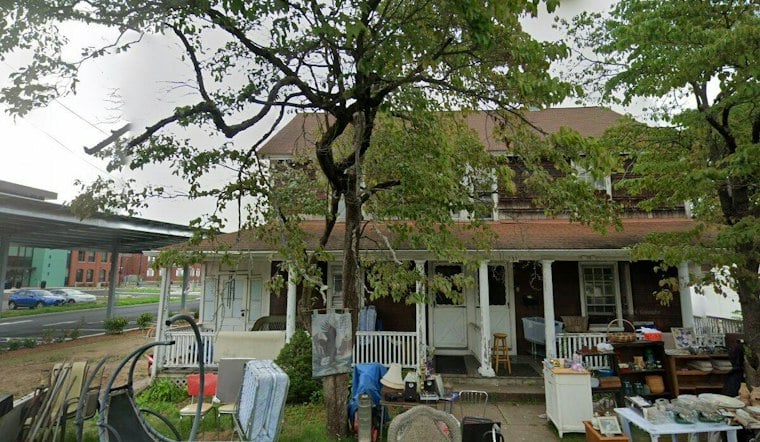
An 1886 two-family home on Eldridge Street in Manchester that the town bought to tear down for library parking is now at the center of a state review that could halt the wrecking ball. Connecticut's Historic Preservation Council voted unanimously to ask the attorney general to stop the demolition, setting up a decision that could determine whether the property becomes roughly 20 parking spaces or stays standing as a piece of the town's industrial past.
The council asked Manchester not to demolish the historic home at 29-31 Eldridge St. and requested that the state intervene under the Connecticut Environmental Protection Act, according to CT Insider. The Office of the Attorney General will now review the materials the council submitted and decide whether to initiate a legal process to stop destruction of the building, per the same report. That law allows the attorney general or another party in the state to bring a declaratory or injunctive action to prevent the unreasonable destruction of historic property, according to the Connecticut General Assembly's Office of Legislative Research.
The dispute traces back to June, when Manchester's Board of Directors voted to buy the duplex from Darrell J. Lupacchino for $455,000 so the town could create 20 more parking spaces for its new Main Street library, the outlet reported. The home sits within the Cheney Brothers Historic District, a National Historic Landmark District designated in 1978, and it was built as worker housing tied to the Cheney Brothers silk mills.
A Landmark District Built for Mill Workers
The Cheney Brothers National Historic Landmark District covers roughly 175 acres and includes more than 275 residential structures built for company workers and their families, according to the Manchester Historical Society. The historical society notes that Cheney Brothers acquired existing homes and built additional residences on School and Eldridge streets starting in 1875, laying the groundwork for the neighborhood that now surrounds the library project.
Opinions on the duplex's physical condition diverge sharply. Manchester Town Manager Steve Stephanou has called the building an eyesore and said its condition is poor and that it has not been maintained well after decades as a multifamily rental property, describing it elsewhere as unkempt and deteriorated. Preservation voices have pushed back hard: Dave Goslin rated the home's quality an eight out of 10, said it was well built and has held up over time, though he acknowledged it needs renovations.
Competing Visions for the Property's Future
Goslin has floated alternatives to demolition, including selling the property to a preservation-minded developer for restoration as a two-family home, or keeping the house while removing its garage to create 10 parking spaces instead of 20. He cautioned that the garage-removal compromise would still leave a substandard lot and turn much of the backyard into parking. Brad Schide argued the home should be rehabilitated and maintained in its present configuration, warning that removing one historic home could encourage removal of others and undermine the integrity of both historic districts.
Stephanou has said the town is not interested in removing other buildings and offered to sign an agreement ensuring no other structures are removed. Andy Horowitz countered that the National Historic Landmark designation already functions as an agreement against demolition, making any additional pledge unnecessary. Stephanou has also said removing the home would eliminate a blind spot at the rear of the parking lot and that the town cannot afford to operate and maintain the aging duplex.
Parking Math Behind the Push
Manchester's library plans already call for 54 parking spaces, and Stephanou has said the town anticipates greater demand for parking as the $50 million Main Street library project moves forward, according to Newstimes/Journal Inquirer. The site plan approved by the Planning and Zoning Commission in July 2024 described 46 parking spaces in a lot behind the three-story building, with the added 20 spaces from the Eldridge Street site intended to push total off-street parking to 74, potentially for employee use. The library project has drawn on both voter-approved bonds and additional town funding, including a 2024 purchase of 1.2 acres at 1041 Main St. and 22 Maple St. from Webster Bank, according to CT Insider's coverage of a related land transfer.
Manchester residents and historical society members have opposed the demolition plans, and some have pressed the town to pursue adaptive reuse instead, suggesting the building could serve as retail space, municipal or library offices, a community hub or affordable housing. The environmental protection act review process reportedly involves contacting the property owner and touring the site to see whether an alternative to demolition can meet the owner's goals before any matter reaches the Historic Preservation Council.
Similar fights have played out elsewhere in the state with mixed outcomes. In 2023, the attorney general's office was prepared to block demolition of a historic funeral chapel in Hartford while alternatives were considered, according to the Hartford Courant. That same year, the office reportedly declined to prevent demolition of a historic home in Waterford, per Patch. It remains unclear which path Manchester's case will follow, as the attorney general's office has not yet said whether it will act on the council's recommendation.





