

























































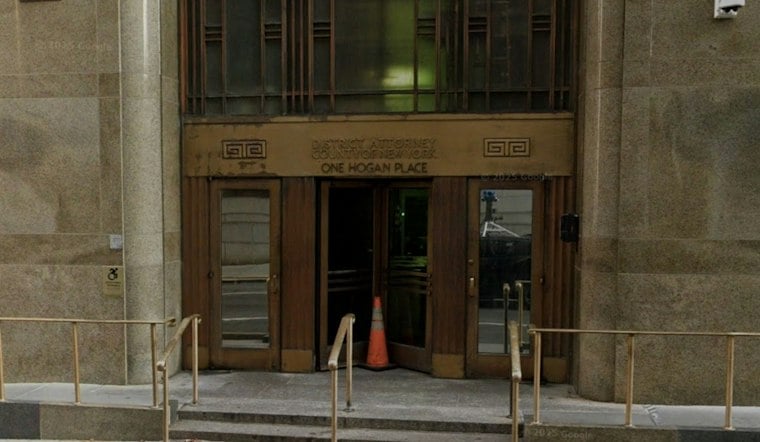
A Manhattan tax preparer has admitted to stealing at least $250,000 from at least three clients, including two elderly couples and a medical student, by promising to negotiate their tax debts and then pocketing the money for himself. Jonathan Ernest Girodes pleaded guilty to one count of grand larceny in the second degree, a class C felony, in New York State Supreme Court.
Manhattan District Attorney Alvin L. Bragg, Jr. announced the plea in a social media post, saying Girodes had admitted to stealing from clients of his tax preparation business, American Accounting Services, Inc. According to Alvin Bragg on X
, “Today we announced the guilty plea of Jonathan Girodes for stealing at least $250,000 from at least three clients through his tax preparation business, American Accounting Services, Inc.” Girodes is identified as residing in Miami, Florida.
The case traces back to an October 2025 indictment that laid out how Girodes allegedly ran his scheme between October 4, 2022, and July 31, 2025. He originally faced two counts of grand larceny in the second degree, one count of grand larceny in the third degree, and one count of scheme to defraud in the first degree, according to the Manhattan District Attorney's Office.
Targeting Clients With Sudden Windfalls
Prosecutors say Girodes went after clients who had just come into unexpected money, then convinced them he could help lower what they owed in taxes. One elderly couple had sold their home of 40 years to fund their retirement, while another elderly couple was trying to manage money left to them after a loved one's death, per the same account. A third client was a medical student who had received an inheritance from a deceased family member specifically to pay for medical school.
Girodes allegedly told these clients he could reduce their tax bills by applying for an offer in compromise with the IRS and the New York State Department of Taxation and Finance, arrangements that allow taxpayers to settle debt for less than they owe, according to the office's account of the scheme. He then instructed them to send him a portion of their anticipated tax liabilities in advance, telling them he would hold the money in escrow while he negotiated on their behalf. Instead, the District Attorney's Office says he never negotiated any offer in compromise for the victims and never paid any of the taxes he was entrusted to handle.
Forged Letters Kept the Lie Going
To keep clients from getting suspicious, Girodes allegedly sent them forged letters made to look like they came from the IRS or the state tax department, and at times claimed those agencies were demanding additional escrow funds. The office's account states he used the stolen money for his own personal use rather than paying down the tax debts he had promised to resolve. Victims were ultimately left to foot their own tax bills along with penalties and interest, losing tens of thousands of dollars each.
Assistant District Attorney Benjamin Reed of the office's Financial Frauds Bureau is handling the prosecution. District Attorney Bragg said Girodes broke his clients' trust and stole approximately $250,000 for his own personal gain, and urged anyone who believes they may be a victim of a financial crime to call 212-335-8900.
Investigation Drew on Multiple Agencies
The investigation involved the New York State Department of Taxation and Finance, the United States Postal Inspection Service, and the U.S. Treasury Inspector General for Tax Administration. Michael L.J. Carpenter said TIGTA takes investigations into tax preparer misconduct seriously. The Manhattan District Attorney's Office has said the investigation remains ongoing and that there is reason to believe additional victims may exist.
Girodes is expected to be sentenced to a promised term of four to eight years in state prison on November 23. The case echoes other tax-preparer fraud prosecutions seen around the country in recent years, including one in which the Internal Revenue Service reported a Yonkers tax preparer pleading guilty after causing nearly $6 million in tax losses, underscoring how vulnerable clients can be when they place blind trust in preparers handling sensitive financial negotiations.




