

























































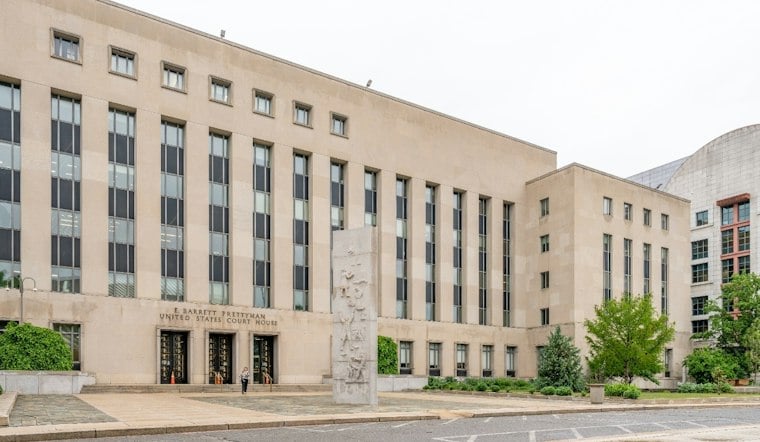
Maryland Attorney General Anthony Brown has joined a coalition of 22 attorneys general in challenging federal immigration agents' practice of making civil immigration arrests without warrants, arguing the fallout is already landing on Maryland families. The coalition's brief, filed in a case over enforcement activity in Washington, D.C., says agents are detaining people without first determining whether they are actually likely to flee before a warrant can be obtained.
Brown filed an amicus brief in the U.S. Court of Appeals for the D.C. Circuit supporting a lawsuit challenging the Department of Homeland Security's arrest practices, according to coasttv.com. Maryland joined 20 other states and the District of Columbia in submitting the filing, part of the broader case known as Escobar Molina v. DHS. The underlying lawsuit, detailed in a U.S. District Court opinion posted on Justia, challenges warrantless civil immigration arrests in Washington, D.C. made without individualized probable-cause determinations as to each arrestee's risk of escape.
Brown said ICE's widespread unlawful arrests in Washington, D.C. affect entire families in the capital and surrounding communities, and that enforcement operations have affected Maryland residents directly, as The MoCo Show reported. Among the examples cited: a Maryland mother who feared visiting her hospitalized son in D.C., and a Prince George's County educator who reported increased demand for student mental health support following immigration raids.
What the Injunction Actually Changed
The legal fight centers on a federal statute, 8 U.S.C. § 1357, which allows immigration officers to skip the warrant requirement only when there is a likelihood that a person will escape before one can be obtained, per the U.S. Code. Brown and the other attorneys general argue federal agents are making arrests without properly determining whether people are likely to flee, as coasttv.com reported.
On December 2, 2025, the U.S. District Court for the District of Columbia preliminarily enjoined DHS from enforcing a policy of conducting warrantless civil immigration arrests without probable cause to believe the arrestee is likely to escape, according to the opinion on Justia. The court also provisionally certified the plaintiffs' proposed Unassessed Escape Risk Class, while reserving a final decision on broader class-certification requests, the same filing shows.
Plaintiffs Say Enforcement Continued Anyway
Enforcement in D.C. didn't stop there, according to plaintiffs' court filings. A February 2026 motion states that defendants produced documentation for 33 warrantless civil immigration arrests in Washington, D.C. that occurred after the injunction took effect, according to the National Immigration Project of the National Lawyers Guild. The same filing alleges that nine of the reviewed arrest forms contained no analysis of escape risk at all.
Plaintiffs later argued the problem traced to a new policy memo. A supplemental brief filed by the ACLU of the District of Columbia contends that the January 28, 2026 Lyons Memorandum violates the court's preliminary injunction by permitting warrantless arrests without an individualized, pre-arrest determination that a person is likely to escape. The ACLU's case page on Escobar Molina notes that federal officers from multiple agencies have made hundreds of immigration arrests in the District since enforcement ramped up in August.
Brief Points to Broader Harm to Families and Businesses
The coalition's brief argues that aggressive immigration enforcement has disrupted education, affected public health and safety, separated families and hurt local businesses, according to coasttv.com. That framing echoes patterns researchers have documented elsewhere. In Washington state, 74% of ICE arrests in June and July did not involve people with criminal convictions or pending charges, The Seattle Times reported, as cited by The Urbanist.
University of Washington Center for Human Rights researchers confirmed 356 arrest incidents between August 1, 2025 and October 13, 2026, per that same Urbanist report, which also described a tactic known as “jump outs,” in which multiple unmarked vehicles, sometimes lacking license plates, surround a driver before officers move in to detain the person. The evidence does not establish how the D.C. Circuit appeal or the underlying Escobar Molina lawsuit will ultimately be resolved, and there is no verified response from DHS or ICE to the attorneys general's allegations.





