

























































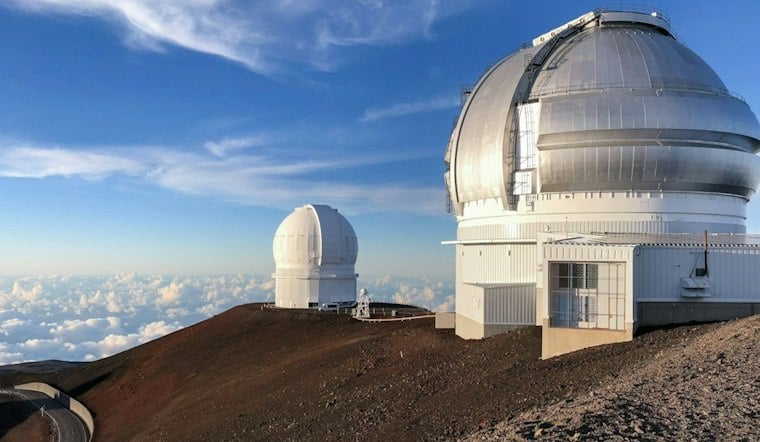
The board overseeing Maunakea's future declined to take sides this week on a proposal that would let the University of Hawaii reuse decommissioned telescope sites for new astronomy facilities, instead kicking written testimony and a meeting recording up to UH's governing body. The vote leaves a contentious question hanging over the mountain just as the university tries to update its summit management rules ahead of a looming leadership handoff.
According to the Honolulu Star-Advertiser, the Maunakea Stewardship and Oversight Authority (MKSOA) board decided not to take a stance on the University of Hawaii's proposed amendment to its summit management plan. Board chair John Komeiji said the board was serving only in an advisory capacity and that the actual decision belonged to the UH Board of Regents, though he personally supported the amendment and criticized how the university handled public feedback on it, per the same report. The board received written testimony from about 80 people, split relatively evenly between support and opposition, the paper noted.
What the Amendment Would Change
UH's current plan prohibits reusing decommissioned observatory sites for future astronomy facilities, but the proposed amendment would allow it, according to the Star-Advertiser's reporting. Gregory Chun, executive director of the UH Hilo Center for Maunakea Stewardship, presented the amendment to the MKSOA board for input last month and said the primary goal was to align the university's plan more closely with Act 255, the 2022 state law establishing astronomy as a statewide policy priority. Act 255 directed that future astronomy development on Maunakea should prioritize reuse of existing observatory footprints over undeveloped land, according to University of Hawaii System News.
UH has managed the Maunakea summit region since 1968 and plans to hand that responsibility to MKSOA in 2029, the Star-Advertiser reported. During the transition period, UH's existing plan is set to remain in place, and the university is prohibited from extending, renewing, or issuing new observatory leases in the meantime. Hawaii House Bill 2592, passed during the 2026 legislative session, extended MKSOA's target takeover date and requires the authority to adopt a comprehensive management plan by June 30, 2028, or see management revert back to the university, according to Hawaii Free Press.
Community Members Split on Reuse
Testimony at the meeting reflected the same divide seen in written comments. Tara Rojas opposed the amendment, saying the land should be allowed to heal and be returned to a natural state, the Star-Advertiser reported. Leinani Lozi supported it, arguing that astronomy and caring for the land can go hand in hand, and that reusing already-developed sites is necessary for astronomy grounded in aloha aina alongside continued world-leading research, per the same account.
Jonelle Fukushima testified that the Thirty Meter Telescope's willingness to explore a previously disturbed footprint deserved fresh assessment rather than automatic approval or rejection, calling for cultural and environmental review, water safeguards, restoration, and transparency, according to the Star-Advertiser. The TMT, a proposed $2 billion observatory put on hold following large protests in 2019, has said it would explore using a decommissioned site instead of its originally intended location, per the same report. Those 2019 protests led to the arrest of 38 kupuna, or elders, and effectively halted the project, according to Hawaii Free Press.
Skepticism From Cultural Leaders
Noe Noe Wong-Wilson, one of the 2019 protest leaders who now sits on the MKSOA board, questioned the motive behind the amendment and whether it was even needed ahead of the governance transition. She said she did not think UH could act on the change even if its plan were amended, and argued the proposal had created unnecessary confusion and alarm in the community, the Star-Advertiser reported.
Fellow board member Lanakila Mangauil, also a 2019 protest leader, said the amendment appeared to some community members to favor particular construction projects. He called for broader discussion of the environmental impacts of reusing already-developed sites versus disturbing undisturbed land, per the same account. Under existing observatory lease terms, decommissioned sites are required to be returned to a natural state, a standard already met at two sites: the UH Hōkū Keʻa teaching observatory and the Caltech Submillimeter Observatory, both fully decommissioned and restored in 2024, according to the University of Hawaii at Hilo.
What Happens Next
UH's current master plan caps the total number of astronomy facilities on the summit at no more than nine operational observatories after 2033, down from 14 sites in 2020, per University of Hawaii System News. The university's master lease for nearly 11,000 acres on the summit, along with all individual observatory subleases, expires December 31, 2033.
Public feedback on the proposed amendment will be accepted online until Wednesday, after the comment window was extended from its original mid-September deadline, per University of Hawaii System News. The UH Board of Regents Facilities and Long Range Planning Committee is scheduled to discuss the amendment at its November 5 meeting, where it will determine whether the changes move forward. MKSOA's own board has deferred further discussion of the proposal to its October meeting to allow more time for review, the Star-Advertiser reported.





