

























































Families of wildland firefighters killed on the job currently receive a maximum of $10,000 in federal death benefits — a tenth of what military families get when a service member dies. A new bipartisan bill introduced this month would close that gap entirely, raising the payout to $100,000 and extending it well beyond the federal workforce.
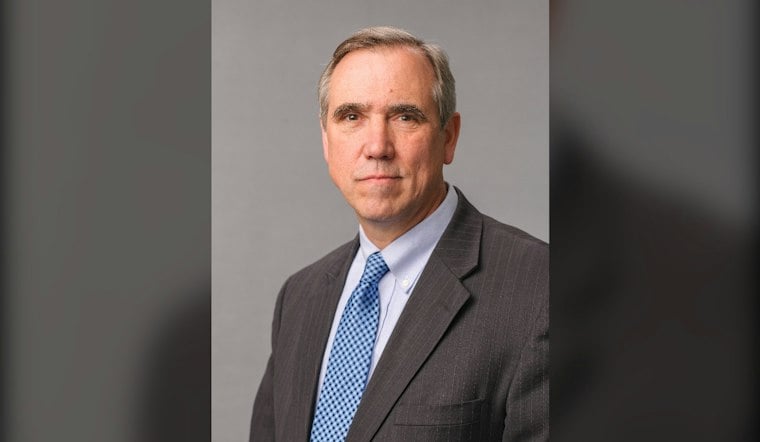
The Honoring Fallen Wildland Firefighters Act was introduced by Oregon Democratic Senator Jeff Merkley and Utah Republican Senator John Curtis, according to KATU. The bill specifically amends the Federal Employees' Compensation Act under Title 5 of the U.S. Code to create a dedicated line-of-duty death benefit for wildland firefighters, according to the Office of U.S. Senator Jeff Merkley. Public Law 104-208 authorizes a discretionary death gratuity of up to $10,000 for federal civilian wildland firefighters killed in the line of duty, compared to the up to $100,000 military families receive under a separate statute, per the U.S. Department of Labor.
A Bipartisan Western Partnership
Merkley said wildland firefighters risk their lives to protect communities and that the legislation would ensure their families are supported if they are killed in the line of duty, per the same KATU report. He added that the bill expands death benefits to survivors of fallen firefighters. The pairing of an Oregon Democrat and a Utah Republican reflects a Western state partnership, as both states face significant wildland fire threats on public lands, Merkley's office notes.
The bill lays out a specific order of eligible survivors, which can include spouses, children, designated family members, parents or guardians, and siblings, the station's report states. The one-time death benefit would come in addition to any other compensation already owed to a firefighter's family. Separately, eligible survivors can also apply for the Department of Justice's Public Safety Officers' Benefits Program, a distinct lump-sum benefit for qualified first responders killed on duty, according to the National Fallen Firefighters Foundation.
Coverage Extends Beyond Federal Crews
Notably, the bill would not be limited to federal employees. It explicitly extends eligibility for the $100,000 death benefit to state and local firefighters as well as eligible private contractors working on firelines, according to Merkley's office — a reflection of how wildland fire response increasingly relies on blended federal, state, local and contract crews working under unified command. The legislation also sets a retroactive eligibility date of January 1, 2026, meaning families of firefighters killed earlier this year during the current wildfire season could still receive the higher payout, per the same KATU account.
The bill arrives as the 2026 fire season has already proven severe. By early October, the National Interagency Coordination Center reported that more than 62,800 wildfires had burned over 9 million acres across the country this year, according to the National Interagency Fire Center. The toll on crews over time has been steep: NIOSH surveillance data recorded more than 400 on-duty wildland firefighter fatalities nationwide between 2000 and 2019, per the Centers for Disease Control and Prevention.
Part of a Broader Workforce Reckoning
Historical tracking shows the death toll has climbed over the decades — wildland firefighter line-of-duty deaths averaged 17.0 per year between 1990 and 2015, up from 10.2 annually between 1960 and 1989, according to Wildfire Today. The benefits push also lands amid broader scrutiny of pay and working conditions in the field. A 2022 Government Accountability Office report cited low base pay, dangerous working conditions, and high stress as primary drivers of severe recruitment and retention shortfalls across federal wildland fire agencies.
For now, the Honoring Fallen Wildland Firefighters Act remains a proposal before Congress, with no timeline yet for a vote. But for families who have already lost someone this year, the retroactive date means the outcome of the bill could still reach back to cover their loss.





