

























































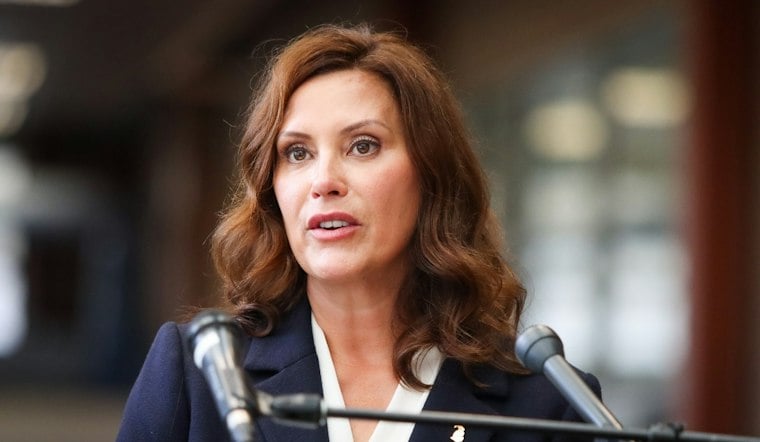
Michigan is one of only two states in the country that fully shields its governor's office and Legislature from public records requests, and both major candidates running to replace Gretchen Whitmer say they will change that. Republican John James and Democrat Jocelyn Benson have both said they would act without waiting for lawmakers, though Benson has specifically pledged to voluntarily comply with the state's Freedom of Information Act if elected, opening her office to the kind of scrutiny that currently stops at the governor's door.
A Bipartisan Promise, With a History of Falling Short
The pledge is notable because a version of it has been made before. According to the Detroit Free Press, Whitmer vowed during her first run for governor in 2018 to voluntarily open her office to FOIA requests, but she has not issued such a directive and her office has not opened to public records requests since. Whitmer cannot run again due to term limits, leaving the question of who will finally deliver on that long-standing promise to her potential successors.
Michigan's exemption is not a minor loophole. As reported by Bridge Michigan, the state is one of only two in the nation to fully exempt the governor's office and Legislature from public records requests, even as the state's broader public disclosure law applies to public bodies ranging from small police departments to state agencies. Transparency advocates have long called on Michigan policymakers to close that gap.
What James and Benson Are Promising
James, a Republican congressman from Shelby Township, has pledged to pursue transparency without waiting for lawmakers to act, according to the Free Press. He has also said he would support ending FOIA exemptions so that the governor's office, the executive branch and the Legislature are all subject to public scrutiny, as he told WLNS. James's broader transparency platform includes full disclosure of personal finances, ethics clauses for administration employees, a decade-long audit of state spending and stronger whistleblower protections, per the same report.
Benson, the sitting Michigan secretary of state and a Detroit Democrat, has made a similar pledge, saying she would voluntarily comply with Michigan's Freedom of Information Act if elected and that she would do so without waiting for lawmakers. Bridge Michigan reports that Benson said she would finally open the governor's office to FOIA if elected.
Whitmer's Office Points to Legislature
Whitmer's office, through spokesperson Stacey Larouche, has said the governor believes state government must be open, transparent and accountable to taxpayers. Larouche said Whitmer established FOIA liaisons at state departments in 2019 and supports legislation to extend FOIA to the governor's office and state lawmakers. Larouche also said Whitmer will sign a bill applying FOIA equally to the legislative and executive branches if the Legislature sends her one.
That bill has not reached her desk. The Democratic-controlled Senate approved FOIA expansion bills in January 2025, but as MLive reports, those bills had not come to a vote in the House by this summer. House Speaker Matt Hall, a Republican representing Richland Township, did not allow the legislation to come to a vote and has favored an alternative transparency plan focused on disclosing lawmakers' earmark requests, according to Bridge Michigan. Michigan Advance reported that Hall said expanding FOIA was not a priority for his caucus this year.
Wide Public Support, Little Legislative Movement
The stalemate persists despite overwhelming public backing. Per MLive, nearly nine in 10 Michigan residents support requiring the governor and Legislature to comply with FOIA, including 76% who strongly support it. Michigan's FOIA law itself dates back to 1976, when it was enacted to establish a policy of public access to government information, according to the Reporters Committee for Freedom of the Press.
With the House unwilling to move the bills, some officials have floated taking the question directly to voters. Michigan Advance reported that there were active conversations underway about a Michigan FOIA ballot question, following unsuccessful ballot efforts in 2020 and 2022. Massachusetts, meanwhile, is angling to put a similar public records question on its own 2026 ballot, the outlet noted.
Skepticism From Press Advocates
Lisa McGraw, public policy manager for the Michigan Press Association, has spoken about past legislative failures over FOIA.





