

























































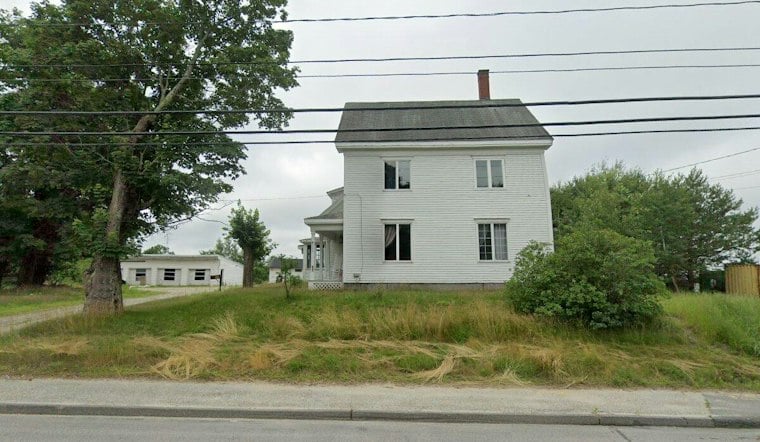
SecondBloom Auctions has put Michigan's largest vertical farm up for sale, offering the entire Planted Detroit campus at 6301 E. Lafayette Street and 1050 Mt. Elliott Street as a sealed-bid package. The 1.49-acre site in Detroit's East Industrial corridor includes two renovated industrial buildings totaling 37,637 square feet, plus a fully built-out controlled-environment agriculture and food-processing operation, all to be sold together rather than piecemeal.
The timing is no coincidence: Planted Detroit, which began operations in 2018 and grew into the state's largest vertical farm, is winding down operations in November 2026, according to Hortidaily. The company added roughly $16.9 million in gross assets to the campus between 2019 and 2023, building out a system that includes two Planted Automated Racking Systems NFT growing setups and 98 Pipp Horticulture mobile vertical grow racks, per the same report.
What's Actually Inside the Buildings
Beyond the racks and growing systems, the offering includes a full nursery, a harvest room, food-grade processing space, cold storage, grow-room HVAC and standby generation, the listing details show. The facility carries USDA Harmonized GAP Plus+ certification and about 28,000 square feet of growing canopy. The two sprinklered buildings have clear heights up to 22 feet, sit on five parcels zoned M2 restricted and M3 general industrial, and fall within Opportunity Zone census tract 5164 — zoning that permits food processing, manufacturing, warehousing and laboratory uses by right.
The campus offers direct access to I-75 and I-375. Blake Lange, co-founder and managing partner of SecondBloom Auctions, described the sale as a rare shortcut for buyers. Replicating the automated systems, irrigation, lighting and food-grade processing space would cost many multiples of the real estate's value, Lange said, framing it as a chance to acquire a commissioned indoor farm without the usual two-year build. SecondBloom expects interest from controlled-environment agriculture operators, food processors and industrial users.
How Day-to-Day Operations Looked Before the Wind-Down
Before its closure announcement, Planted Detroit was known for growing roughly 35 varieties of greens entirely indoors in a controlled setting, according to ClickOnDetroit. Workers and visitors had to dress head to toe in personal protective equipment before entering the nursery, and every seed was tested for E. coli, Listeria and Salmonella before going into a tray. The farm also ran its municipal water supply through a double filtration process before use.
Even with those safeguards, the station noted the farm shipped produce Monday through Friday but acknowledged it could not supply everyone in the region. The company's struggles ultimately came down to economics rather than production: Planted Detroit told Vertical Farm Daily that its fixed costs were too high compared with the revenue it was generating, and that without reaching scale it was difficult to cover expenses.
Layoffs, Rising Power Costs and a Search for a Buyer
The company pointed to electricity costs of 14 cents per kilowatt-hour as part of the problem, saying the rate remained fairly unsustainable even after a slight reduction. Planted Detroit laid off more than 70 employees as the financial pressure mounted, and said this week and next it would facilitate final customer orders before stopping production, per the outlet's reporting. The company also said competitors had canceled plans to open facilities in the Detroit area because of the same high costs, and it is still looking for a major investor, strategic partner or political stakeholders to discuss its role in the food system — staying hopeful that a commercial takeover could revive the brand and keep production going.
Planted Detroit's troubles echo a rough stretch for indoor farming nationally. Vertical farming startup 80 Acres Farms filed for Chapter 7 bankruptcy in federal court in Delaware, estimating combined assets between $110 million and $550 million and more than 1,000 creditors, according to a report from Yahoo Finance. That company announced on Aug. 3 it was winding down after running out of money, citing pressures that included rising grocery prices, higher gas prices and inflation concerns, as well as a summer cyclosporiasis outbreak that sickened more than 10,000 consumers and dented lettuce sales.
Auction outcomes in the sector have varied widely. In Maine, Springworks Farm in Lisbon — a 168-acre property with 117,000 square feet of greenhouse growing space and 56,000 square feet of light industrial buildings — opened bidding at $6 million but ultimately sold for just $1.1 million to an anonymous private investor from Lisbon, according to the Portland Press Herald. Whether the Planted Detroit campus draws similar bargain-hunting or a stronger result from buyers eyeing its ready-built infrastructure remains to be seen.





