

























































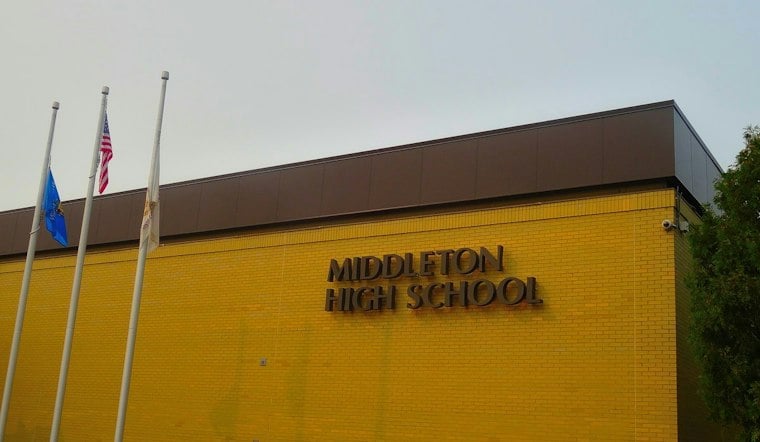
Middleton-Cross Plains Area School District voters head to the polls Nov. 3 to decide whether the district can keep collecting nearly $25 million a year in local operating funds, or watch as officials carry out what they say could be budget cuts equal to roughly a fifth of the district's spending. The ballot question asks residents to approve a four-year, nonrecurring operational referendum that would replace funding voters approved back in 2022, which expires at the end of the 2026-27 school year.
The school board voted in August to put the question before voters, according to the Middleton-Cross Plains Area School District, which says the referendum would let the district exceed its state-imposed revenue limit for another four years. WMTV reports that the measure would fund ongoing expenses rather than new construction.
If voters say no, the district estimates it would need to cut approximately $24.9 million beginning in the 2027-28 school year, equal to roughly 20% of its operating budget, according to WMTV. Even if the referendum passes, the station reports the district still anticipates roughly $5 million in budget reductions spread over the four years covered by the request.
Why the District Says It's Short on Cash
District officials point to an estimated $25.4 million inflation-related funding gap, calculated using enrollment from the 2025-26 school year, the same WMTV report notes. The district says about 94% of its operating revenue is dictated by the state's funding formula, leaving little room to maneuver when costs rise faster than that formula allows, per the district's own materials.
If approved, the proposal would provide $24.9 million in its first year, 2027-28, then climb annually to reach $34.6 million by 2030-31 to help keep pace with inflation, the district says. The money would go toward ongoing expenses such as educational programs, extracurricular activities, employee compensation and day-to-day operations, the station's report notes, rather than new buildings or capital projects. The district has not finalized which specific programs or positions would be eliminated if voters reject the measure, according to the same account.
Conflicting Figures on the Tax Hit
How much the referendum would actually cost property owners depends on which source you check. The district's own explanatory material estimates the added tax impact on a $100,000 property would reach approximately $64 annually by the fourth year, according to the Middleton-Cross Plains Area School District. A separate district explanatory page cited by the Wisconsin Examiner put the added cost at $21 in the second year, $40 in the third year and $59 in the fourth year for that same $100,000 property. Meanwhile, the Capital Times reported the proposal would raise tax bills by $120 per $100,000 of property value over the full four years. The district does estimate there would be no additional referendum-related tax increase in the first year, since the measure initially just renews funding already in place, per WMTV's reporting.
Part of a Statewide Pattern
Middleton-Cross Plains isn't alone in going back to voters. Wisconsin Watch has reported that the lack of inflationary increases to state revenue limits, combined with declining enrollment in many districts, has pushed schools statewide toward operating referendums. The Middleton-Cross Plains request ranks as the second-largest referendum ask on November's statewide ballots, trailing only the Green Bay Area School District's $158 million request over four years, according to the Wisconsin Examiner.
The trend carries real risk at the ballot box. Wisconsin Public Radio has reported that passage rates have slipped in recent cycles, with the Capital Times noting the rate fell from 90% in 2018 to roughly 70% two years ago and around 60% this past spring. The Wisconsin Examiner cited Wisconsin Policy Forum figures showing 75 referendum questions went before voters statewide, with 46 passing and 29 failing.
The stakes for failure can be steep. Wisconsin Watch has reported that at least 11 districts announced cuts after that spring vote, while three others began weighing school closures. In Monroe, the district cut 22 positions after its referendum failed, and Ellsworth Community School District planned roughly $1.9 million in reductions, including about 15 staff positions, after its own $8.7 million request was rejected, according to Wisconsin Watch. The Necedah Area School District's $5.8 million, four-year request was voted down as well, the Wisconsin Examiner reported, while Hustisford's two-year request failed by about 200 votes, prompting that district to consider dissolving altogether.
Locally, the pressure on Dane County schools is widespread: eight of the county's 16 districts have sought spending approval, with requests spanning operational and capital questions. For now, the outcome of the Nov. 3 vote, and the specific programs or staff positions that could be on the chopping block if it fails, remain undetermined.





