

























































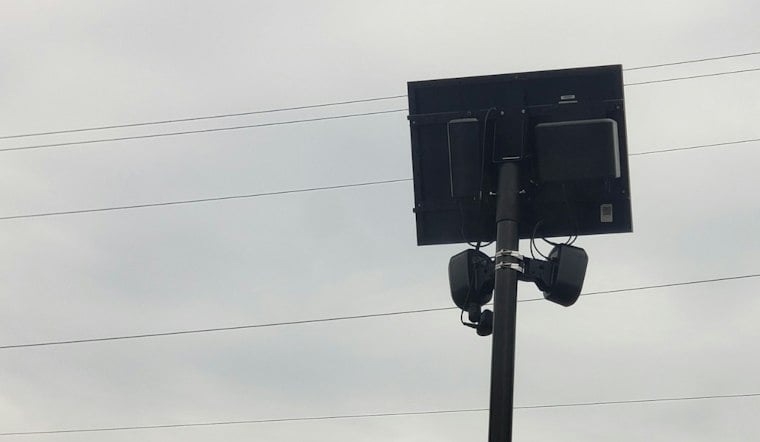
Milford's Board of Aldermen voted 9-5 on Monday to hit pause on the city's network of Flock Condor surveillance cameras, sending the matter to a newly created technology committee instead of killing the contract outright. The decision followed months of escalating pressure from residents who said the AI-enabled cameras amounted to government overreach, and it came after a city hall meeting where dozens of Milford residents lined up to share their privacy concerns directly with city leaders.
The vote affects all 47 Flock Condor cameras deployed across Milford, which had allowed local police to remotely access live feeds and review recorded footage, according to WFSB. Unlike traditional license plate readers that simply snap a still image of a passing vehicle's rear plate, Condor units are pan-tilt-zoom video cameras that can auto-track pedestrians on foot and zoom in on faces and phone screens, a distinction 404 Media has detailed as central to why the devices generate sharper privacy fears than standard plate readers.
Monday's outcome was the result of what Patch described as intense public debate and procedural maneuvering, with the board opting for a temporary moratorium rather than a full termination of the city's relationship with Flock Safety. The decision didn't come out of nowhere. The aldermen had already taken a first swing at Milford's camera network in late August, when they voted to pause traffic-enforcement devices and limit Flock cameras at entry points, as reported by WTNH News 8 at the time.
Packed Hearings and a Police Chief's Objection
The pressure that led to Monday's vote built over weeks. At a recent city hall meeting, 64 residents delivered public comments criticizing the expansion of Flock technology, raising concerns over transparency, data collection, and government overreach, according to CT Insider's account of the hearing. That level of turnout became a recurring talking point among aldermen weighing whether to keep the cameras running.
The debate also picked up an unexpected wrinkle in September, when Milford's police chief said publicly that he had not consented to having his likeness used in a Flock promotional video. Residents cited that detail during public hearings as evidence they were being tracked without their consent, a moment captured by WFSB. It became a rallying point for anti-surveillance advocates making the case that the city's relationship with its own camera vendor lacked basic transparency.
Not everyone welcomed the rollback. The Milford police union publicly opposed the camera cuts in late August, arguing that removing Flock equipment compromised officer safety during traffic stops and asserting that eliminating the devices violated existing collective bargaining agreements, per CT Insider's reporting on the internal municipal conflict. That dispute between law enforcement leadership and elected city officials has simmered alongside the broader public debate over the cameras' fate.
A Vendor With a National Security Problem
Milford's privacy worries aren't happening in a vacuum. In December 2025, independent security research found that Flock Safety had left administrator control panels and live feeds for at least 60 AI-enabled Condor cameras exposed to the open internet without password protection, letting unauthenticated users view live video and pull up to 30 days of archived footage nationwide, per 404 Media's investigation. The exposure applied to the exact camera model Milford had deployed across its 47-unit network.
Flock Safety has pushed back on the severity of that incident. The company said the issue stemmed from an isolated configuration flaw on a troubleshooting debug interface affecting only a small subset of Condor devices, maintaining that its central cloud network and customer databases were never accessed, according to Jalopnik's reporting on the vendor's official response.
Part of a Wider Reckoning With Flock
Milford isn't an outlier here, either. Municipalities including Cambridge, Massachusetts, Redmond, Washington, Mountain View, California, and Los Angeles all voted between late 2025 and mid-2026 to pause, suspend, or terminate their own Flock Safety contracts over data-sharing, liability, and privacy concerns, as CNET has chronicled. Milford's own moratorium now lands squarely within that national pattern of cities reassessing automated surveillance deals.
For now, the newly formed technology committee is expected to take up the review, though the city has not detailed what guidelines that panel will set or how long the pause will last. It also remains unclear whether the police union will pursue a formal labor grievance over the equipment cuts, or how Milford intends to manage its existing contractual obligations to Flock Safety while the review plays out.



