

























































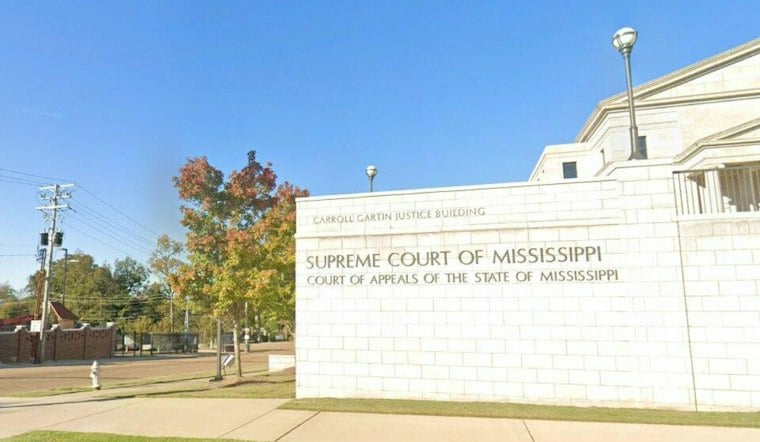
A federal appeals court has revived Mississippi's ban on diversity, equity and inclusion programs in public schools, wiping out a lower-court order that had blocked the law and stripping the case from the judge who issued it. The U.S. Court of Appeals for the Fifth Circuit ruled Thursday that the preliminary injunction against the law could not stand, and reassigned the lawsuit to a different district judge after finding the original ruling riddled with errors tied to artificial intelligence.
The appeals court, based in New Orleans, recognized the state's authority over curricula and said the law does not directly regulate students' speech, according to Reuters. The three-judge panel's decision strips away the injunction that U.S. District Judge Henry Wingate had issued, first through a temporary restraining order and then through a preliminary injunction, both of which kept the law from taking effect while the case proceeded. The case is formally known as Jackson Federation of Teachers et al. v. Lynn Fitch et al., numbered 25-60496 in the Fifth Circuit.
A Ruling Marked by Errors
The trouble began with Wingate's initial restraining order, which contained inaccuracies, including incorrectly listed plaintiff names and errors concerning the bill's language.
At oral argument, Circuit Judge Jerry Smith pressed on whether the errors went deeper than typos, asking pointedly, “Are you saying that we can be confident that that didn't infect his ultimate reasoning?” according to the same Law360 account. Smith went further in writing, stating that the district court — or, being charitable, its AI agent — had ignored and manipulated governing law, apparently to satisfy a policy agenda, per Reuters. The panel ultimately reassigned the case.
Wingate Points to a Law Clerk's Use of Perplexity
Wingate has acknowledged that a key ruling contained AI-generated errors. In response to an inquiry from Senate Judiciary Committee Chairman Chuck Grassley, the Republican senator who has pressed federal courts on the issue, Wingate sent a letter to Robert Conrad, director of the Administrative Office of the Courts, saying a law clerk used the AI tool Perplexity as a foundational drafting assistant, and that the version docketed on July 20, 2025 was an early draft that had never gone through the court's standard review process, according to the Magnolia Tribune. Grassley's office has also flagged AI-related problems with court orders from staff for a second federal judge, which the senator called error-ridden, the Clarion Ledger reported.
Lawyers Clashed Over What the Errors Meant
At the heart of the appeal was a dispute over how much the mistakes mattered. Lawyers for Mississippi, including Anthony Shults of the state attorney general's office, argued the AI-related errors undermined confidence in the court's core legal reasoning and urged the panel to reassign the case to a new judge entirely. Attorney General Lynn Fitch's office also argued for the state's authority.
Plaintiffs' attorneys, led by Robert McDuff of the Mississippi Center for Justice, pushed back, framing the AI use as a regrettable shortcut that did not affect the constitutionality of the state's DEI restrictions. They asked the appeals court to leave the case with Wingate rather than start over with a new judge. The panel sided with the state on reassignment, sending the case to a different district judge for further review.
What the Law Actually Requires
House Bill 1193, which the Mississippi Legislature enacted in 2025, bars government-run educational institutions from mandating activities such as diversity training or promoting DEI programming. Under the bill's text, public schools and public postsecondary institutions are prohibited from creating, promoting or implementing DEI programs, maintaining offices that promote or endorse specified divisive concepts or related concepts, requiring or weighing diversity statements in hiring and admissions, or compelling participation in DEI training, according to the Mississippi Legislature's bill text. The same text would require the State Department of Education, the Board of Trustees of State Institutions of Higher Learning, and the Mississippi Community College Board to teach and promote the position that there are two genders, male and female, based on chromosomal makeup.
The law also allows the attorney general and private parties to enforce the statute and calls for annual reporting.
The Plaintiffs and Their Claims
The lawsuit, filed June 9, 2025 against the Board of Trustees of State Institutions of Higher Learning, the Mississippi Charter School Authorizer Board, the Mississippi Community College Board and the Mississippi State Board of Education, according to the case's CourtListener docket, was brought by a group of teachers, professors, students and advocacy organizations. They argued the law violates the First and Fourteenth Amendments. The Fifth Circuit's ruling recognized the state's authority over curricula and said the law does not directly regulate students' speech.
With the injunction vacated and the case reassigned, the dispute over Mississippi's DEI restrictions now returns to the district court under new judicial oversight, with the constitutional questions the plaintiffs raised still unresolved.


