

























































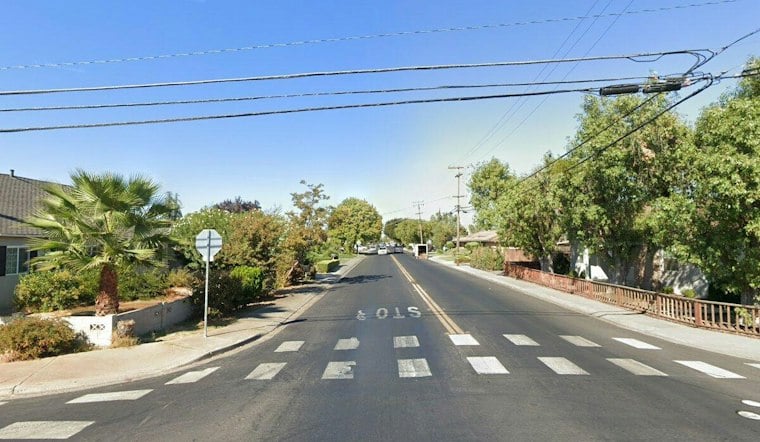
A passerby rescued a woman from a burning Modesto home after finding her in a wheelchair inside. The fire was near East Roseburg and Sunrise avenues; the rescue took place before firefighters arrived.
CBS Sacramento, citing the fire department, reported that the bystander first could not get inside because of the heat. The passerby urged the woman to get down, then crawled into the home and pulled her out.
The woman was taken to Doctors Medical Center in Modesto; her injuries and condition were not known, the outlet reported. Fire officials also reported downed live power lines in the area. The cause of the fire remains under investigation.
A Pattern of Close Calls Across the Region
In 2007, firefighters rescued 73-year-old Joyce Evans, who used a wheelchair, and her 49-year-old son, Wayne Michael Evans, from a burning home on Roble Avenue in east Modesto, The Modesto Bee reported. Crews arrived within three minutes of the emergency call. The fire collapsed a backyard patio, gutted the home and caused an estimated $150,000 in damage.
Hoodline has reported two more recent Ceres fires in which residents could not escape on their own. In a fire in the 2300 block of Joy Avenue, two older residents were rescued and taken to Doctors Medical Center after receiving advanced life support at the scene. In a February fire in the 3000 block of Burton Drive, one person was rescued, given advanced lifesaving measures and hospitalized; that person's condition was not immediately released, according to earlier Hoodline reporting.
Why Mobility and Fire Risk Are Linked
The U.S. Fire Administration says physical disability was the second-leading human factor contributing to residential-building fire fatalities, accounting for 30% in data from 2017–2019.
Modesto Fire's Operations Division responds to more than 1,400 fires each year, underscoring how often crews across the region confront exactly this kind of emergency. In Ceres alone, the department fielded 5,947 calls for service in 2024, including 4,589 EMS calls and 406 fire calls, illustrating the steady volume of emergencies local crews are built to handle even before a bystander's intervention changes the outcome.


