

























































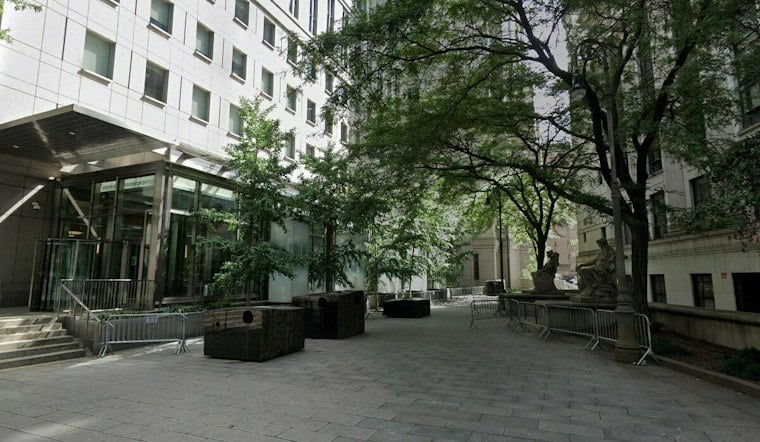
A federal judge in Manhattan has handed Shenzhen Molly Tea a second legal defeat in its escalating fight over three New York City boba tea shops, denying the company's bid for a new preliminary injunction that would have let an affiliate seize control of the stores. The ruling keeps the dispute over who truly owns the Molly Tea name in the United States unresolved, even as the viral Chinese tea chain's legal troubles pile up on two continents.
The case, formally known as Shenzhen Molly Tea Food & Beverage Management Co., Ltd. v. MHL NY LLC, is playing out in the Southern District of New York under case number 1:26-cv-04051, according to The Fashion Law. Shenzhen Molly Tea accuses MHL NY of breaching a 2023 licensing agreement covering three New York City stores, operating unauthorized locations, and infringing its trademarks, per the outlet's reporting. MHL NY is the U.S. partner, and the first overseas store opened in Flushing. MHL NY disputes Shenzhen Molly Tea's ownership of the marks altogether, arguing that its store was first to use the Molly Tea name in U.S. commerce.
That ownership question sits at the center of the fight. U.S. District Judge John P. Cronan, in denying MHL NY's motion to reconsider an earlier injunction in August, found that the company had failed to raise its ownership challenge during the original injunction proceedings — even though the court acknowledged MHL NY had raised a potentially viable challenge to Shenzhen Molly Tea's ownership of the U.S. marks. The court did not decide whether Molly Tea NYC's use of the marks could be attributed to Shenzhen Molly Tea to establish ownership, leaving that question open. Trademark rights generally depend on priority of use, and under the Lanham Act's related-company doctrine, one company's use of a mark can establish rights for another only if the latter exercises the necessary quality control.
A Second Injunction Bid Falls Short
Shenzhen Molly Tea and its co-plaintiffs didn't stop after the August ruling. The company filed a second motion for a preliminary injunction, which Judge Cronan denied on October 9. That motion came from MollyTea Shops, which sought to dissolve the entities operating the three New York stores and gain control of their operations. MHL NY refused to relinquish control.
Shenzhen Molly Tea accused MHL NY of breaching joint-venture shareholder agreements by operating unauthorized stores, disclosing confidential information and trade secrets, and competing against the parent company — breaches it argued entitled MollyTea Shops to take over the stores. The court found Shenzhen Molly Tea had not shown a clear or substantial likelihood of success on the merits, according to the same reporting. An earlier preliminary injunction issued June 8 remains intact, barring MHL NY from using the Molly Tea marks while the case is pending, even as the deeper ownership dispute goes unresolved.
Ghost LLCs, Bootleg Ingredients, and a Question Mark on the Door
The courtroom fight traces back to allegations that go well beyond a simple licensing spat. The dispute also involves supply-chain compliance and ingredient use, as a detailed account published by China Insider reported.
Following court orders and brand authorization revocations in June, affected New York storefronts — including locations in Flushing and near Columbia University — painted over their logos and temporarily rebranded as “? Tea” while keeping operations running, China Insider reported. Before the fight reached federal court, MHL NY sued in Queens County Supreme Court on April 16, 2026, and received a temporary restraining order the next day.
Trademark Troubles Stretch From Flushing to Shenzhen
Molly Tea's U.S. legal exposure isn't confined to New York. The dispute initially expanded to California in December 2025, when tea wholesaler The Art of Tea, LLC filed a federal trademark lawsuit in the Central District of California over logo similarities, a case tracked by PacerMonitor. Shenzhen Molly Tea currently holds two U.S. federal registrations for the Molly Tea name.
Louis Vuitton was separately pitted against Molly Tea in a trademark dispute in China, and the fallout there has been costly. The Suzhou Intermediate People's Court ruled against the Shenzhen-based chain in late June, ordering it to pay 10.3 million yuan — roughly $1.5 million — for infringing Louis Vuitton's registered four-petal floral monogram, as reported by the South China Morning Post. The ruling reportedly prompted domestic consumer backlash. Separately, PYMNTS reported a 5% year-over-year decline for LVMH's fashion and leather goods unit and a 5% decline in the region including China in the third quarter.
Founded in Shenzhen in 2021, Molly Tea expanded into a global franchise with more than 2,000 stores by late 2025 across China, North America, Europe, and Southeast Asia — a pace of growth that has fueled the brand's U.S. footprint, including a planned Carrollton shop reported by Hoodline and a planned Plano location. Whether that expansion was built on solid trademark footing in the United States is now a question for a federal judge to sort out, with the ownership dispute between Shenzhen Molly Tea and its New York operators still far from settled.





