

























































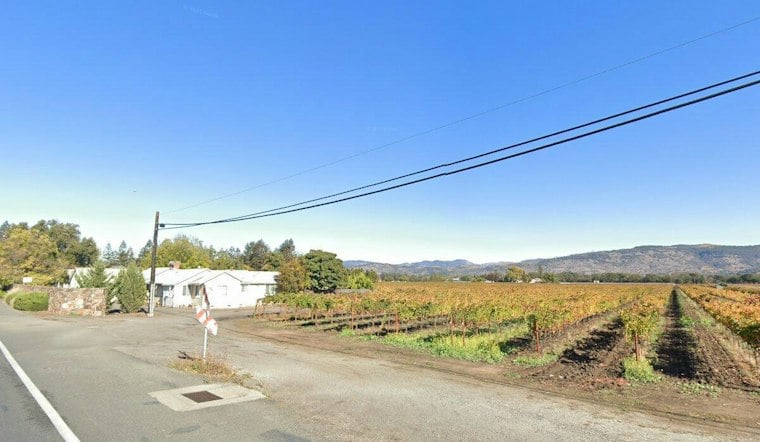
On Napa Valley's eastern ridgeline, the Mondavi family has quietly built a new wine empire from scratch, one vineyard block at a time, and this summer that two-decade project reached a milestone: a 5,000-square-foot Estate House tasting space, perched near the family's vines on Pritchard Hill. It's the latest and most visible step in a comeback that began not long after the family lost its original winery.
A New Chapter After a Billion-Dollar Sale
Continuum Estate was founded in 2005 by Robert Mondavi and several of his children and grandchildren, according to a report detailing the family's two-decade rebuild. The timing was no accident: the same report notes Continuum was established after the family's sale of Robert Mondavi Winery, which had gone to Constellation Brands in 2004 for more than $1 billion.
Tim Mondavi, Continuum's co-founder and Robert Mondavi's son, has called the new venture the family's new love, per the same Yahoo-published account, which also reports that Mondavi is now 75 years old and worked alongside his father since 1974. The report notes that the Estate House represents the final step in the family's two-decade journey. Continuum's roots trace back further still: Cesare Mondavi, the family's patriarch, moved to Lodi in the 1920s and started a grape packaging business, laying early groundwork for a dynasty that would eventually span, lose, and rebuild a California wine name.
Building the Estate, Acre by Acre
Tim Mondavi and Marcia Mondavi Borger purchased the first parcel of what would become the Pritchard Hill estate in 2008, adding a second contiguous parcel in 2009, the outlet reports. Robert Mondavi died in 2008, at age 94, according to the dossier's sourcing. The estate now includes 173 acres total.
The Yahoo-published account describes more than 40 individual vineyard blocks. Continuum Estate describes its site — which it calls Sage Mountain Vineyard — as sitting roughly 1,500 feet above sea level, with vineyard elevations ranging from 1,325 to 1,600 feet, according to the estate's own website. The property says it applies elements of organic and biodynamic farming, alongside what it describes as regenerative and experimental data-driven practices, to keep the land healthy long-term.
Inside the Winery and the New Estate House
Continuum's winery itself was completed in 2013 and relies entirely on concrete and oak fermenters, with no stainless steel tanks anywhere in the building, the outlet notes. The estate grows, produces and bottles all of its wine on-site, turning out about 4,500 cases a year — a tightly controlled, small-production approach befitting a label whose flagship wine, a blend of Cabernet Sauvignon and Cabernet Franc called Continuum, sells for $310 a bottle.
The family isn't finished building. Later this year, the estate plans to complete more than 12,000 square feet of caves, adding to the infrastructure supporting the Estate House that opened this past summer. Visits to Continuum run $200 per person, or are complimentary with purchase of a three-pack of Continuum, and include a vineyard and winery tour along with tastings of both Continuum and the estate's Novicium wine. There's no set food pairing offered with tastings, but visitors are encouraged to request customized lunch, dinner or cooking-class experiences.
A Culinary Pedigree and Family Roles
Sarah Scott is the chef for Continuum's customized experiences. Carissa Mondavi now serves as Continuum Estate's head of hospitality and communications, overseeing the family's next generation of visitor experiences.
A Rebuild Against the Industry's Current
Continuum's expansion arrives as the broader wine business contracts sharply. U.S. wine case sales fell 23%, from 427 million cases in 2020 to 329 million in 2025, while total U.S. wine spending dropped 22% over the same period, from $94 billion to $74 billion, according to ABC News. The same report notes that California growers have removed or stopped actively growing grapes on roughly a quarter of the state's vineyard acreage, and that about half of this year's California wine-grape crop entered harvest without buyer contracts in place, compared with 70% to 80% of the crop having contracts in a typical year. Global wine consumption, ABC News reports, declined 2.7% in 2025 from the prior year and 14% since 2018.
Continuum's comeback isn't happening in isolation on Pritchard Hill, either. Constellation Brands, which still owns Robert Mondavi Winery, unveiled its own $200 million transformation of the original Oakville property this spring, reopening the estate after a three-year renovation that the company calls the most significant change to the site since its 1966 founding, according to Decanter. The doors officially reopened on April 20, 2026, timed to the winery's 60th anniversary, Decanter reports, with industry estimates — not confirmed by Constellation itself — putting the investment at around $200 million. The renovated property now features a new To Kalon Cellar with optical sorting, gravity-flow systems and temperature-controlled fermentation vessels, and its 178-hectare portion of the To Kalon Vineyard gained CCOF organic certification in 2023. Tasting experiences there now range from $60 to $150 per person, per the same outlet.
Two Mondavi-linked properties, both reshaped within months of each other, now sit on opposite sides of the same valley floor — one still carrying the family name under corporate ownership, the other built from the ground up by the family that once owned it all.





