

























































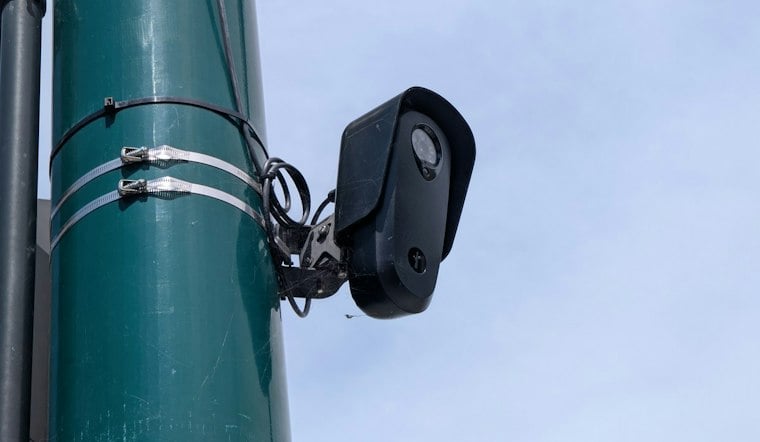
A Moody City Council meeting turned tense Monday night when resident Chris Pridmore pressed Mayor Nick Rutledge over safeguards governing the city's Flock license plate reader system, months after the police department fired an officer for violating its Flock policy. The exchange capped weeks of simmering frustration in the St. Clair County city of roughly 14,000, where officials insist the system worked exactly as intended and skeptics say firing one officer isn't the same as fixing the problem.
Moody Police fired the officer in July after an internal investigation found a violation of the department's Flock policy, according to WBMA. Pridmore told the station he believes the city hasn't done enough publicly to address the misuse, and he's calling for greater oversight and public discussion going forward. He says he supports law enforcement but wants public access to audit logs so residents can evaluate how the system is actually being used.
Rutledge sees it differently, telling WBMA the safeguards worked precisely because the officer was identified and terminated. Moody Police Chief Reece Smith acknowledged officers can misuse the technology but said anyone who violates Flock policy for a non-law-enforcement reason should be fired. Smith supports strengthening the laws governing Flock technology but opposes scrapping it altogether, arguing that people have no expectation of privacy for a vehicle's exterior on public roadways.
What the City's Policy Actually Requires
Moody has used Flock since 2019, and its license plate reader policy requires that every search serve a criminal justice or public-safety purpose, backed by a dispatch-generated case number, per WBMA's review of the policy. The department must document who accessed data, when, and why, and it must log any information shared with other agencies. Selling the data is prohibited, and sharing it for purposes unrelated to criminal justice or public safety is restricted — rules the department says follow the Alabama Administrative Code governing license plate recognition systems. That code, Chapter 265-X-6, requires agencies statewide to log the accessing officer's name, timestamp, and purpose for every search while barring data sharing or sales for non-public-safety reasons.
Smith maintains that Flock records themselves are not public information and that the department simply follows the state rules governing access. The internal investigation's findings on the fired officer were sent to the Alabama Law Enforcement Agency, per information previously provided to WBMA's I-Team. Smith also pointed to a case where the technology helped: Moody Police used Flock to track a vehicle involved in the taking of a 13-year-old girl from a Circle K, finding her safe near Bessemer before an Amber Alert could even be issued. The suspect was charged with second-degree kidnapping.
A Neighboring County's Similar Scandal
Moody isn't the only St. Clair County department dealing with Flock fallout. An internal audit by the neighboring Springville Police Department found that an officer there conducted multiple unauthorized Flock searches on a family member, leading to that officer's resignation and a referral to the Alabama Law Enforcement Agency alongside Moody's terminated officer, according to The Trussville Tribune. Both departments' internal audits were conducted in June and July before the findings were forwarded to state authorities.
At Monday's meeting, resident Alan Thomas questioned the broader purpose of collecting information about residents' movements, while another resident, Bill Morris, voiced support for the police chief and the department's policy, WBMA reported. Pridmore argued that citizens should be able to challenge surveillance technology and demand stronger protections rather than take assurances at face value.
How Alabama's Camera Count Compares
The debate in Moody is unfolding against a statewide backdrop of rapid camera growth. Records obtained from the Alabama Department of Transportation in September showed 872 approved permanent public-safety sensors in state highway rights-of-way across Alabama, with Birmingham Police holding the largest single-agency allocation in the state at 70 approved sensors, according to NBC 15. Of those, 430 sensors sit within WBMA's local viewing area, broken down into 356 license plate readers and 74 public-surveillance sensors, including 133 in Jefferson County, 79 in Shelby County, 37 in Calhoun County, 34 in St. Clair County, 21 in Blount County, and 20 each in Etowah and Talladega counties. Those figures don't establish how often the devices are used, how many searches are conducted, or whether any particular search violated policy.
The scale of deployment is prompting pushback elsewhere. Walker County's Commission voted in September to ban automated license plate readers from county rights-of-way and property, becoming the first county governing body in Alabama to restrict Flock systems, though the ban applies only to county-maintained roads and leaves municipal decisions up to individual cities, per the same NBC 15 report. Florida officials recently ordered license plate readers removed from state highways entirely, a mandate the Florida Department of Transportation tied to rapid growth and reports of officer misuse, while still allowing municipalities to keep cameras on local roads.
National Scrutiny Keeps Mounting
Moody's controversy fits a pattern playing out nationwide. Five current and former Indianapolis Metropolitan Police Department officers were criminally charged in September with official misconduct and fraud after prosecutors alleged they used Flock cameras to track personal acquaintances, according to reporting covered by Hoodline. In Alabama, Huntsville Police denied a resident's public records request for a year's worth of Flock search audit logs, citing investigative and law-enforcement-sensitive exemptions, a dispute Hoodline previously detailed in its piece on Huntsville's denied records request.
Flock Safety itself has responded to the wave of misuse cases, shortening its default recommended data retention period from 30 days to seven days and introducing automated audit software to flag irregular search patterns. More than 50 local governments across 20 states have canceled or declined to renew Flock contracts as of October, according to tracking data from privacy advocacy group Secure Justice. U.S. Senate Majority Leader Chuck Schumer has also called on Flock Safety to delete data unrelated to active criminal investigations and disclose the extent of federal access to its database.
Whether Alabama lawmakers will respond with formal statutory changes, and whether the Alabama Law Enforcement Agency will pursue charges in the Moody and Springville cases, remains to be seen. For now, WBMA's I-Team says it will air its full in-depth report on the Moody debate Tuesday at 6 p.m.





