

























































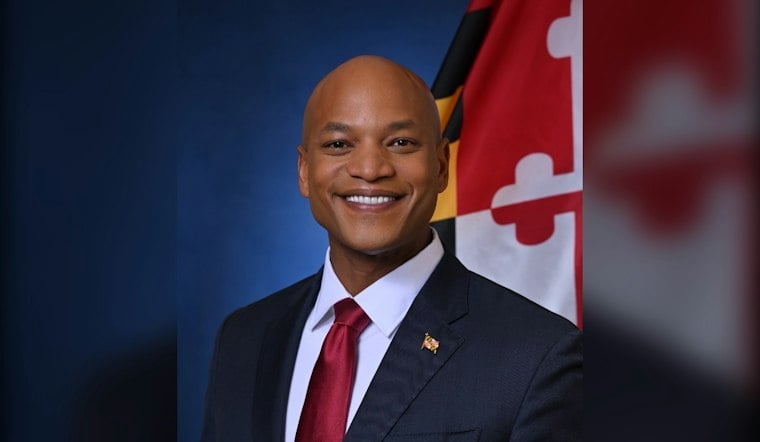
Governor Wes Moore signed a directive last Wednesday instructing Maryland's higher education agency to recommend ways to strengthen campus sexual assault policies statewide, pointing to recent reports of sexual assault at colleges in other states as part of the reason for the action. The order gives the Maryland Higher Education Commission 90 days to produce comprehensive, actionable recommendations covering sexual misconduct policies, reporting frameworks, and disciplinary standards across the state's colleges and universities.
Moore referenced the wave of national attention focused on allegations at Cornell University in New York, where a woman alleges she was drugged and sexually assaulted by multiple men at a fraternity house in 2024, according to CBS News. Cornell conducted an internal investigation and expelled or suspended several of the accused men, but no criminal charges were initially brought against them, the outlet reports. The case at the center of that controversy, detailed in a September 2026 civil lawsuit, alleges the former student was coerced into taking ketamine and gang-raped over seven hours by members of the Chi Phi fraternity, according to The Cornell Daily Sun.
The fallout has already reshaped how New York handles the matter. New York Governor Kathy Hochul signed an executive order on October 1 appointing state Attorney General Letitia James as a special prosecutor to investigate the allegations, as reported by CBS News. The Tompkins County District Attorney had separately reopened the local criminal investigation in late September after acknowledging earlier police summaries had omitted critical details. On October 13, Cornell President Michael Kotlikoff suspended all fraternity parties for the remainder of the academic year and announced that New York State Police officers would directly assist in investigating campus sexual assault reports, according to the Associated Press.
A Federal Rollback Pushes States to Act Alone
Part of what's driving Moore's directive is regulatory chaos at the federal level. In January 2025, a federal judge in Kentucky issued a summary judgment vacating the U.S. Department of Education's 2024 Title IX regulations nationwide, forcing schools to revert to 2020 procedural standards, according to Holland & Knight. That ruling struck down administrative expansions of Title IX protections, leaving state officials to fortify local protections for student survivors on their own. Moore said in the directive that Maryland will continue to seek ways to improve campus safety and ensure accountability when efforts fail, per CBS News.
Maryland isn't starting from scratch. Under Section 11-601 of the Maryland Education Article, all colleges and universities in the state are already legally required to adopt written sexual assault policies, conduct biennial campus climate surveys, and submit aggregated incident data to state regulators every two years, per the Maryland General Assembly. State law also requires the Maryland Higher Education Commission to compile that survey data into a comprehensive report delivered to the governor and legislative committees by October 1 of every even-numbered year.
Thousands of Reported Incidents Set the Backdrop
The numbers behind the directive are substantial. Maryland higher education institutions reported 3,435 incidents of sexual assault and other sexual misconduct during the 2024–2026 reporting cycle, with roughly 92% of those incidents occurring at four-year colleges and universities, according to the Maryland Higher Education Commission. Of those reported incidents, the commission classified 13.9% as non-consensual sexual intercourse, 7.9% as non-consensual sexual contact, and 69.1% as other sexual misconduct.
Moore addressed his directive to Elena Quiroz-Livanis, who has served as interim secretary of the commission since March 2026 following the departure of former Secretary Dr. Sanjay Rai, according to the Office of Governor Wes Moore. Quiroz-Livanis previously served as the agency's deputy secretary, where she oversaw statewide higher education policy implementation. The directive calls for the commission to coordinate closely with the Office of the Attorney General to develop the new policies, per CBS News.
Existing Protections Maryland May Build On
Maryland already has some survivor-focused infrastructure in place that the review could expand. State regulations require the commission to maintain a roster of trained attorneys who represent college students in Title IX proceedings at capped fees of $100 per hour, reimbursable directly by the commission upon application, with participating attorneys required to complete state-approved training before joining the panel.
The state also incorporates a Good Samaritan rule across college campuses that protects student survivors and witnesses from disciplinary action for minor policy infractions, such as underage drinking, when reporting a sexual assault, according to the Maryland Coalition Against Sexual Assault. The provision is intended to remove the fear of conduct penalties so students report incidents right away.
Moore's administration has previously tied campus safety funding to broader security efforts, including $18.75 million in statewide campus safety grants distributed through the commission, among them a $2.9 million security grant awarded to Morgan State University, as Hoodline previously reported. That program was aimed at enhancing physical security infrastructure and campus police capabilities at public and private institutions across the state.
How the commission and the Attorney General's office align new disciplinary standards across public, private, and community colleges, without running afoul of ongoing federal Title IX litigation or student due process protections, remains the central question for the 90-day review, according to The Baltimore Banner.




