

























































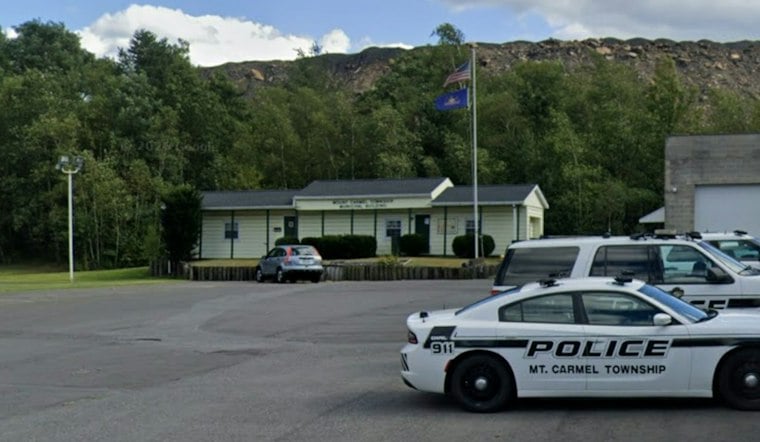
Mount Carmel Township supervisors unanimously approved a new zoning ordinance regulating data centers, setting rules on setbacks, noise and financial guarantees for site cleanup — but residents who spent months pushing for tougher protections say the final measure still leaves gaps. The vote comes as a developer's preliminary plans for two data centers in the township sit in limbo after being rejected as administratively incomplete.
The ordinance requires at least a 600-foot setback from sensitive locations such as schools and places of worship, and at least 1,500 feet from parcels with existing residential uses, according to The News-Item. Buildings are generally limited to 60 feet. The ordinance sets property coverage limits and vegetative screening requirements, and establishes noise limits that include low-frequency sound standards. Data centers would be allowed as conditional uses only in the township's I-1A industrial and S-2 special coal land reclamation zoning districts.
Before any project can move forward, developers must complete a conditional-use approval process backed by technical studies covering water consumption, electrical demand, traffic, mine stability and emergency response, per the same report. They must also disclose the identities of a facility's proposed owner, operator and ultimate end user, and submit a community development agreement addressing infrastructure, public safety and reporting responsibilities. An informational meeting for residents is required before the first formal conditional-use hearing, and supervisors must determine whether each project meets the ordinance's requirements — though that approval alone doesn't eliminate the need for separate land development, stormwater, building and fire approvals.
Financial Security Tied to Eventual Cleanup
The ordinance requires financial security equal to 110% of estimated decommissioning costs before a facility receives its initial certificate of occupancy, intended to fund eventual closure and site restoration, the outlet reported. That figure is notably smaller than some other Pennsylvania proposals: Luzerne County's draft ordinance would require developers to set aside 100% of estimated decommissioning costs, while Bradford County's proposal calls for 125%, according to lehighvalleylive.com.
The cleanup question isn't hypothetical. Servers themselves typically last only three to five years. Pennsylvania currently has no state law requiring data-center developers to escrow funds for cleanup once a facility closes, the same report noted.
Coalition Says Protections Should Be Mandatory, Not Optional
Coal Region Advocates for a Neighborhood-First Environment, or CRANE, urged the township to make safeguards enforceable requirements rather than leaving them to township discretion, per The News-Item. The group said the ordinance lacked protections residents had requested during the six-month moratorium period and pushed for independent technical reviews, annual compliance audits, continuous noise and air-quality monitoring, stronger enforcement, and additional environmental studies.
Specifically, CRANE requested mandatory inspections during construction and operation, a publicly accessible compliance dashboard, a $2 million environmental remediation bond, and public supervisor votes on each data center construction permit. Supervisor Aaron Domanski said the board believed several resident concerns were already addressed, and that additional provisions could still be incorporated through future amendments. Township special counsel Sean Logsdon said the proposed changes were tweaks.
Supplemental Rules Under Consideration
Supervisors authorized the township solicitor and engineer to prepare supplemental zoning regulations covering independent professional compliance review, operational sound monitoring, periodic audits, repeated violations, setbacks and public health and safety protections. Those amendments had not been enacted as of publication, and the township intended to begin advertising them starting Thursday.
Independent review and compliance auditing were among the measures under consideration for ongoing data-center compliance.
In Salem Township, a separate community benefits agreement for an Amazon data center delivered a one-time $9 million payment for water-line extensions, public-safety projects and other township expenses, according to pennlive.com.
Developer's Plans Rejected as Incomplete
The urgency behind the ordinance traces back to Blue Creek Investments, which submitted preliminary land development plans on Oct. 9, 2026, for the Mount Carmel Township North Data Center and Mount Carmel Township South Data Center. Those plans were deemed administratively incomplete and were not accepted for filing, per The News-Item. Domanski said the arrival of the plans accelerated the township's decision to adopt the ordinance. The ordinance took effect immediately upon adoption, ahead of a township data center moratorium that was scheduled to expire Nov. 13, 2026.
Mount Carmel Township's approach sits within a broader wave of Pennsylvania municipalities racing to write local rules before developers show up at their doorsteps, as more communities across the Commonwealth work to prepare for data center proposals, according to the Penn State Center for Energy Law and Policy. Townships are authorized to govern development through zoning, subdivision and land-development ordinances under the Pennsylvania Municipalities Planning Code, which took effect in 1969 and empowers planning commissions and zoning hearing boards to charge fees, conduct inspections and hold public hearings, according to the Pennsylvania General Assembly.
Other municipalities have gone further on specific fronts. Somerset County's newly approved ordinance sets a 1,000-foot setback from existing homes outside a project property and requires developers to hold their own public meeting before submitting an application, per WJAC-TV. Middlesex Township's proposed agreements call for two years of post-construction noise monitoring alongside a $14 million community benefits package, pennlive.com has reported. Whether Mount Carmel Township's supplemental regulations end up matching those benchmarks remains to be seen as the township's amendment process continues into November.



