

























































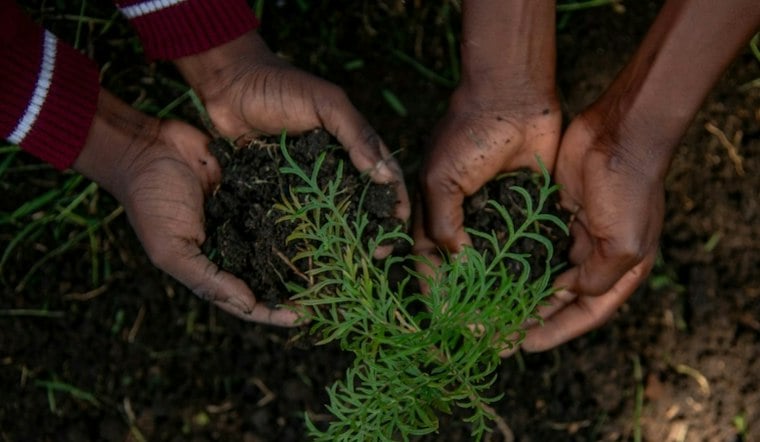
Mount Pleasant wants 30,000 more trees in the ground by 2046, a goal town leaders say could nudge overall tree coverage from 55% to 56% over the next two decades. The target comes from a citizen-led task force that recommended planting 1,500 trees every year for 20 years, and Tree Task Force chair Jaime McKee says the town has 1,200 acres of available land to work with as the effort gets underway.
The push follows a sobering number: Mount Pleasant lost 22% of its tree canopy to natural disasters and development between 1992 and 2016, according to The Post and Courier, the steepest drop among Charleston County municipalities during that period. That loss helped spur Town Council to establish a Tree Task Force by resolution in June 2025, according to the Town of Mount Pleasant, charged with recommending strategies and ordinance improvements to preserve, enhance and sustainably manage the town's urban forest.
As WCBD News 2 reports, the numbers behind the 2046 goal — the 55% to 56% canopy projection, the 1,500-trees-a-year recommendation and the 1,200 acres of available land cited by Tree Task Force chair Jaime McKee — all trace back to the same task force effort now steering the town's planting strategy. Mount Pleasant Assistant Town Administrator Christiane Farrell has said planting can target gaps in the public tree inventory and in specific neighborhoods, per that station's reporting, while a newly created tree canopy manager position would lead the broader planting effort going forward.
Flood Resilience and a Slower-Moving Threat
Flood resilience sits at the center of the task force's mandate alongside urban-forest management, according to the town's own meeting minutes from July 2025. During that meeting, task force members also raised concerns about what they described as a “slower hurricane” of development and redevelopment threatening established communities and natural areas, along with worries that mitigation for removed trees has not kept pace. The task force, which included members David Quick, Michelle Mansour, Shanna Harris, James McKee, Edward Oswald, Deidre Kennedy and George Grice, met to hash out those recommendations, the minutes show.
Town leaders have said a medium-sized tree can absorb up to 2,300 gallons of rainfall each year, and the town notes separately that trees reduce air pollution, filter dust, prevent soil erosion, improve surface drainage, provide cooling shade and help minimize flooding. Trees also provide wildlife habitat and shade that can lower home cooling costs, benefits town leaders are leaning on as they frame the planting campaign as both an environmental and a financial pitch to residents. Mount Pleasant, which includes live oaks and pines among its canopy, has held Tree City status for decades, officials say, and leaders describe residents as attached to that identity and eager to protect, preserve and enhance it.
How the Town Is Tracking Its Trees
Mount Pleasant has completed its first Community Forest Master Plan, described by the Town of Mount Pleasant as a long-term roadmap for a healthy, proactively managed community forest. The town also contracted with ArborPro to inventory trees on public property using GPS and tree-data collection, with the goal of creating a database of town-owned and maintained trees to support maintenance, management and replacement plans.
Much of the on-the-ground planting work falls under the town's Tree Canopy Project, led by the GREEN Commission and Take Root program, according to ABC News 4. A first community survey in 2024 resulted in 69 new trees planted at Carolina Park Recreation, the Jones Center and in the Old Village. That station notes officials point to tree canopy's role in heat management and stormwater management, adding that it can even lower energy bills for residents.
Who Pays for New Trees
The Tree Canopy Project is funded through tree-mitigation money — fees developers pay when trees are removed under certain zoning ordinances, the same station reports. Developers tied to new residential or commercial projects may be required to replant a set number of trees on-site or pay into that mitigation fund instead.
The town's tree-protection rules set specific thresholds for what counts as protected. Residential trees measuring at least 16 inches in diameter at breast height require a permit before removal, while pine trees need to reach 24 inches in diameter before the same protections kick in, according to the Town of Mount Pleasant. Removing a historic tree of at least 24 inches requires an arborist report as part of the request, and the town says both homeowners and tree-removal companies can face fines if a protected tree comes down without an approved, displayed permit. Current mitigation rules require planting at least one 2.5-inch replacement tree and either completing or paying for any remaining required mitigation inches.
A Regional Pattern Taking Shape
Mount Pleasant isn't alone in leaning on data to guide where new trees go. Charleston's ReLEAF initiative uses geographic imaging, the city's own tree inventory and NOAA heat-mapping data to pinpoint priority planting sites, with a tentative citywide start date of spring 2026, The Post and Courier has reported separately. That outlet found Charleston has logged an average of 14 more extremely hot days above 92 degrees per year compared with 1970, a trend officials there hope expanded canopy can help offset. Summerville has pursued its own urban-forest master plan calling for regular canopy assessments and a fuller tree inventory.
Town officials describe the broader goal in Mount Pleasant as more than a numbers exercise — an effort to conserve and protect land while connecting future generations of people and plants. With Tree Task Force Chair Jaime McKee and Councilman Mike Tinkey among the local figures tied to the effort, the 30,000-tree target now gives that ambition a concrete, if distant, deadline.





