

























































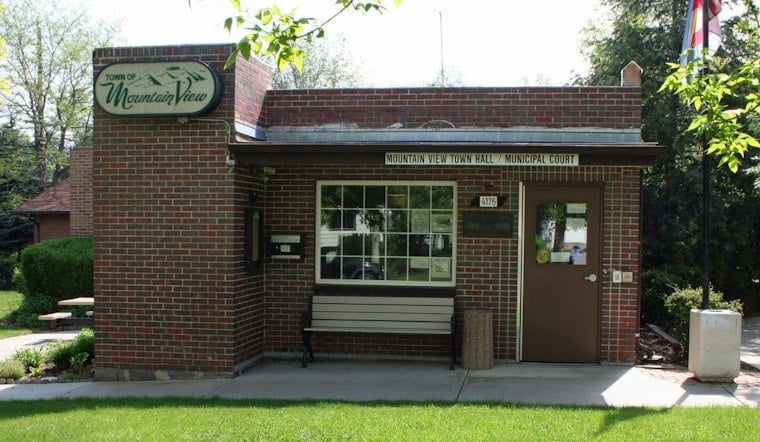
Editor's Note: This article has been updated to clarify Charity Campfield's official role, the history of Mountain View's governance proposal, and differences between the Mountain View and Pueblo measures.
Voters in Mountain View, a roughly 600-person town tucked along Denver's northwestern border, will decide on Nov. 3, 2026, whether to transfer day-to-day administration from the mayor to a professional manager appointed by Town Council. Question 2B would change the town's council-mayor government to a council-manager structure rather than eliminate the mayor's office. The proposal revisits a governance change voters rejected in 2024; town staff reported that Council unanimously directed staff on January 12, 2026, to bring the question forward again.
According to Jefferson County's official ballot language, the appointed manager would oversee general operations, supervise town departments and prepare an annual budget for Council approval. Elected officials would continue setting policy, while the manager would implement Council's direction.
Mayor Emilie Mitcham has about three years left in her mayoral term, according to Denverite, and she says she intends to keep working with the council no matter how the vote turns out. The outlet reports she believes she can become a better leader whether she remains a strong mayor or becomes what's often called a weak mayor under a new system.
A Governance Debate With A Longer History
Mountain View's consideration of professional management predates this year's ethics disputes. In a February account written by town staff, the town reported that voters rejected a similar proposal in November 2024 by 173 to 128. That account also reported Council's unanimous January 12 direction to bring forward another ballot question.
The distinction between elected policy-making and professional administration is central to the proposal. In a June explanation, Town Administrator/Clerk/Treasurer Charity Campfield described a council-manager structure as one in which elected officials set policy and a professional manager oversees operations under Council's direction. Supporters argue that the arrangement can provide clearer responsibilities, administrative expertise and continuity; critics question whether it can distance residents from executive accountability.
A Year Of Complaints And A Failed Ouster
The vote also comes after a contentious year in which five of the town's six council members tried unsuccessfully to remove Mitcham from office. According to Denverite's earlier reporting, council members pursued hearings to remove both Mitcham and Councilmember Brittany Loecher. Those hearings were ultimately tabled, with the council instead taking its concerns to a legal magistrate. The same reporting found Mitcham was the subject of at least 11 formal complaints filed with the town, and she was elected mayor in 2021.
The complaints piled up from a range of town officials and residents, Denverite's more recent account shows: Ryan Debner, Kathleen S. Bailey, Leal Algiene, Jeff Kiddie, the Mountain View police chief, and the town clerk each filed ethics complaints against Mitcham, and the total eventually numbered around a dozen. The allegations touched on misspending and on Mitcham's conduct in text conversations and behind closed doors. A magistrate process ultimately cleared Mitcham in eight of those complaints, while four others were dropped.
Among the specifics, Algiene filed three separate complaints in one stretch, including one alleging Mitcham disclosed confidential information to Brent Metz about Algiene speaking with an attorney. A magistrate found that disclosure did not violate council rules because it did not occur during a council meeting. Bailey's complaint alleged Mitcham had a conflict of interest during a council discussion of a mayoral compensation raise, but a magistrate determined the matter did not meet the conflict-of-interest threshold. The magistrate's report also found Mitcham was not solely responsible for alleged inefficient or negligent government, and that some alleged actions fell outside town rules and laws entirely.
The Police Pay Freeze And A Withdrawn Complaint
One complaint came from Michael Nesbitt, who alleged Mitcham broke town code while discussing an ongoing police-officer pay freeze expected to last through 2026. Nesbitt said every option had been explored and that the freeze was the only way to help the department's budget. Mitcham called the police chief's related claim absurd.
Charity Campfield, Mountain View's town administrator, clerk and treasurer, filed a complaint in the spring over compensation and other issues but withdrew it. Her official positions are listed in the town's staff directory. Mitcham has said the full slate of complaints cost the town thousands of dollars and produced zero findings that she violated the town charter, code or council rules.
Who's Supporting The Change
Denverite identified Melinda Plemel as a leader of the current effort supporting Question 2B. Plemel is a community activist who has clashed with Mitcham and is married to Mountain View Mayor Pro Tem Leal Algiene. Her advocacy comes within a governance debate that was already before voters in 2024 and returned to Council's agenda in January 2026.
A separate question on the November ballot would allow Council to create town boards and commissions by ordinance rather than requiring a voter-approved charter amendment, according to Jefferson County's official ballot listing.
Pueblo Considered A Different Strong-Mayor Proposal
Pueblo voters considered a related, but materially different, governance proposal in 2025. Unlike Mountain View's proposal to transfer administrative authority while retaining the mayor's office, Pueblo's Ballot Question 2C would have eliminated the positions of mayor, deputy mayor and chief of staff and established a council-selected city manager, according to Colorado Newsline.
Pueblo voters approved the switch to a strong-mayor structure in 2017. In 2025, City Council overrode Mayor Heather Graham's veto of the ordinance referring the reversal proposal to voters by a 6-1 vote. Graham described that proposal as an attempt to remove her from office. That dispute provides context for debates over municipal executive authority, but the two ballot proposals would not make the same changes to elected leadership.
Growth Pressures Add To The Backdrop
The governance fight is unfolding as Mountain View's council has also unanimously passed a new land-use code allowing accessory dwelling units and taller development. Mitcham has said the town could potentially double its population depending on how that development proceeds, adding another layer of change for a community that, for now, still counts fewer than 700 residents across just 12 blocks.





