

























































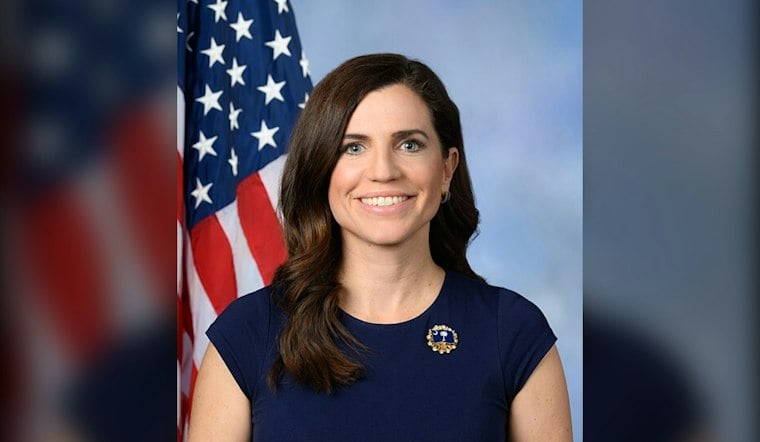
U.S. Rep. Nancy Mace has introduced federal legislation that would force people who lose certain defamation or libel lawsuits against sexual assault survivors to pay the survivor's attorney fees and legal costs. The bill, called the Speak Your Truth Act, targets a legal tactic survivors' advocates say has long been used to punish people for speaking publicly about abuse they say they experienced.
According to WPDE, the legislation would require plaintiffs who lose qualifying federal defamation or libel cases to pay defendants' reasonable attorney fees and legal costs. It covers factual statements made without malice about sexual assault, sexual harassment, or discrimination personally experienced by the speaker, along with certain workplace harassment claims, retaliation claims for reporting discrimination, and certain housing-related harassment or discrimination claims. The bill would apply to qualifying lawsuits filed in federal court or transferred there from state court, and it still needs congressional approval before it could become law.
Mace, a U.S. Representative, said the legislation is intended to prevent costly lawsuits from discouraging survivors from sharing their experiences, per the station's report. The bill arrives with a personal backstory for its sponsor: Mace herself was sued for defamation in 2025 after naming men on the House floor regarding sexual assault allegations, though a federal judge dismissed the claim, citing constitutional speech immunity under the Speech and Debate Clause, as reported by the Post and Courier.
The Law Professor Who Wrote the Blueprint
The model text behind Mace's bill traces back to Victoria Burke, a professor at Southwestern Law School who supports the proposed legislation, per the same WPDE account. Burke conceptualized and drafted the original Speak Your Truth Act following her own experience as a sexual assault survivor in December 2019, according to Southwestern Law School. Burke said every survivor deserves freedom to speak their truth, according to the station's report.
Burke's framework has already moved well beyond the drafting table. Similar protections have been enacted in five states, Burke said, and California became the first to put the model into law in January 2024, when its version, AB 933, took effect as Civil Code Section 47.1, establishing a conditional privilege for factual disclosures of sexual assault made without malice, according to the Journal of Law and Policy. That statute also created fee-shifting remedies for defendants who prevail in retaliatory suits, the journal notes.
Delaware's Signature Adds to a Growing List
Delaware joined the movement when Governor Matt Meyer signed its version, HB 355, into law on September 14. An October 5 ceremony marked the bill alongside four other survivor protection measures during Domestic Violence Awareness Month, WBOC reports. Variations of the Speak Your Truth Act had been introduced in over 16 state legislatures.
Why Federal Court Is a Different Battle
Legal advocates have argued that a federal statute is needed to protect survivors sued in federal court, according to the National Women's Law Center. The issue matters because state protections do not travel smoothly into federal jurisdiction: the U.S. Court of Appeals for the Second Circuit held in La Liberte v. Reid that state special motions to strike cannot apply in federal actions because they conflict with the Federal Rules of Civil Procedure, Courthouse News reported. Federal judges remain divided over whether state fee-shifting mechanisms can be invoked under federal civil procedure, according to the same Courthouse News account.
California's law has already faced a very public stress test. The statute became the subject of national media and legal scrutiny during high-profile federal civil proceedings in 2025 and 2026 involving actress Blake Lively and director Justin Baldoni over claims for legal fee recovery under Civil Code Section 47.1, Southwestern Law School notes.
The Numbers Behind the Policy Argument
Supporters of the model legislation point to research showing false allegations of sexual assault consistently account for only 2% to 10% of total reports, while the threat of retaliatory litigation deters a substantial portion of genuine victims from coming forward, according to the Journal of Law and Policy. A 2025 legal analysis found that because workplace assault and harassment victims typically retain counsel on a contingency basis, defending against hourly-billed retaliatory defamation suits inflicts crippling financial strain and risks secondary trauma, per Contra Costa Lawyer Magazine. Advocates say that imbalance is exactly what the fee-shifting mechanism is designed to correct, by making plaintiffs who lose weigh the financial risk before filing suit.
For now, the Speak Your Truth Act remains a proposal. It requires congressional approval before becoming law, and its path through Congress will unfold alongside the ongoing state-level expansion and the unresolved federal court disputes over how survivor protections apply once a case leaves state jurisdiction.




